

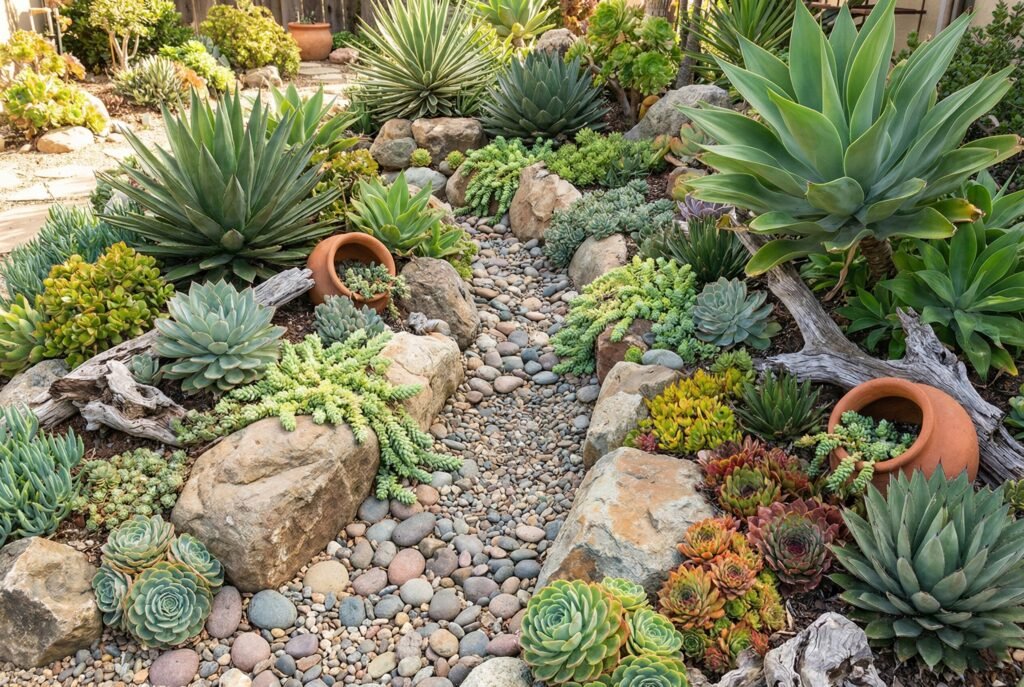
Do you want a beautiful garden that doesn’t require hours of work every weekend? Many homeowners struggle with keeping plants alive, especially during hot, dry summers. Traditional flower beds need constant watering, weeding, and pruning. There is a better solution that saves time and water while looking incredible year-round. The answer is a succulent rock garden.
A succulent rock garden combines drought-tolerant plants with various stones, gravel, and boulders. This approach to landscaping is not only practical but also visually striking. The contrast between the soft shapes of the succulents and the hard textures of the rocks creates an interesting landscape.
These gardens are perfect for beginners. They are naturally low-maintenance because succulents store water in their leaves and stems. They thrive in conditions where other plants fail. By using rocks as mulch, you further reduce water evaporation and suppress weeds.
This guide will provide everything you need to get started. We will cover the basics of preparation and then dive into over 15 simple, actionable ideas for designing your own succulent rockery. Whether you have a sprawling backyard or a tiny balcony, you will find inspiration here to create your own easy-care oasis.
Getting Started: The Basics of a Success Rockery
Before you start planting, you need a solid foundation. A successful succulent garden relies on just a few key elements. Getting these right prevents problems later on.
Choosing the Right Location
Almost all succulents love sunlight. For the best results, choose an area in your yard that receives at least six hours of direct sunlight per day. South-facing slopes are often ideal. If you live in a very hot climate, some afternoon shade might be beneficial to prevent sunburn on delicate varieties like some Echeveria.
The Importance of Soil Drainage
This is the most critical step. Succulents will die if their roots sit in wet soil for too long. They get “root rot” easily. Traditional garden soil is usually too dense and holds too much moisture.
You need well-draining soil. You can buy pre-mixed cactus and succulent soil at any garden center. Alternatively, you can make your own by mixing regular potting soil with coarse sand, perlite, or pumice to increase aeration and drainage.
Selecting Your Rocks
Rocks are the “bones” of your garden design. They add structure and texture. Try to use a variety of sizes for a natural look. You will need three main types:
- Boulders or large rocks: These are your anchor pieces. Place them first.
- Medium-sized river stones or cobbles: Use these to bridge the gaps between boulders and plants.
- Gravel or pebbles: This acts as a top dressing or mulch, covering the bare soil.
Picking the Best Plants
Choose succulents that are suitable for your climate zone if planting outdoors year-round. Some popular, hardy choices for rock gardens include:
- Sempervivum (Hens and Chicks): Extremely cold-hardy and forms tight rosettes.
- Sedum (Stonecrop): Comes in groundcover and upright varieties, very tough.
- Delosperma (Ice Plant): Excellent groundcover with bright, daisy-like flowers.
- Agave: Larger, structural plants for warmer climates.
- Yucca: Adds height and spiky texture, very drought-tolerant.
15+ Simple Succulent Rock Garden Ideas
Here are distinct designs to inspire your project. You can copy these exactly or mix elements to suit your space.
1. The Classic River Rock Stream
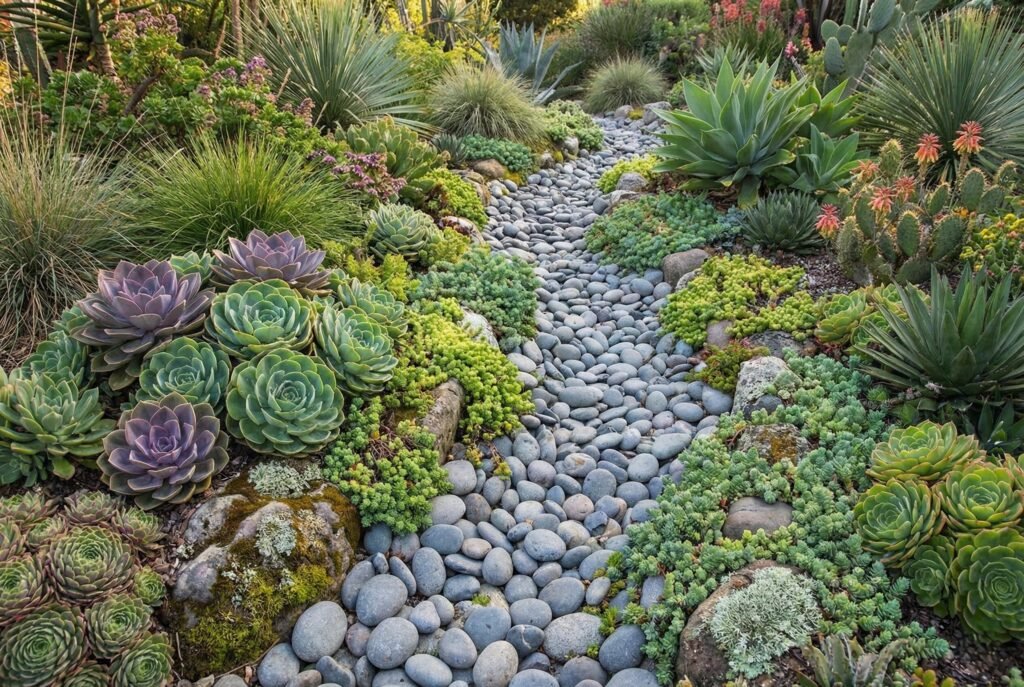
This design mimics a dry riverbed. It naturally guides the eye through the garden.
How to do it: Clear a winding path through your garden area. Lay down landscape fabric to stop weeds. Fill the path with medium-sized, smooth river stones. Plant clusters of low-growing succulents like Sedum or Sempervivum along the “banks” of your stone river. Add a few larger boulders at curves for a natural look.
2. The Boulder Centerpiece
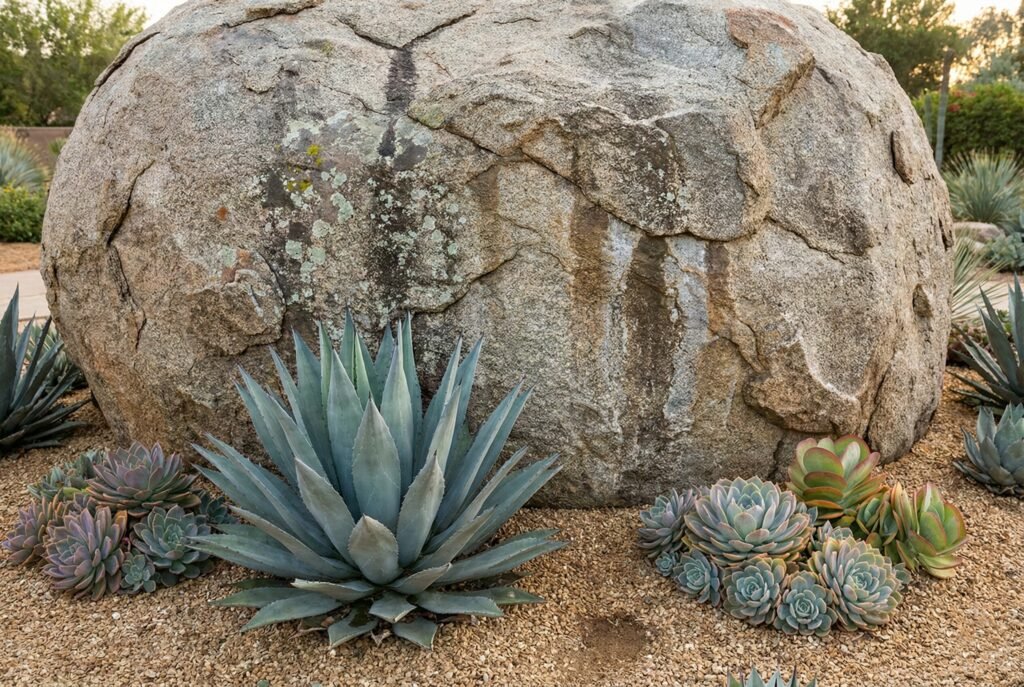
If you have one or two very large rocks, make them the stars of the show.
How to do it: Place your largest boulder in a prominent spot. This is your focal point. Plant larger succulents, like a medium-sized Agave or a tall Aloe, right next to the base of the boulder. Fill the surrounding area with smaller gravel and scattered medium stones. The big rock provides a backdrop that makes the plants pop.
3. The “Spilled Pot” Effect
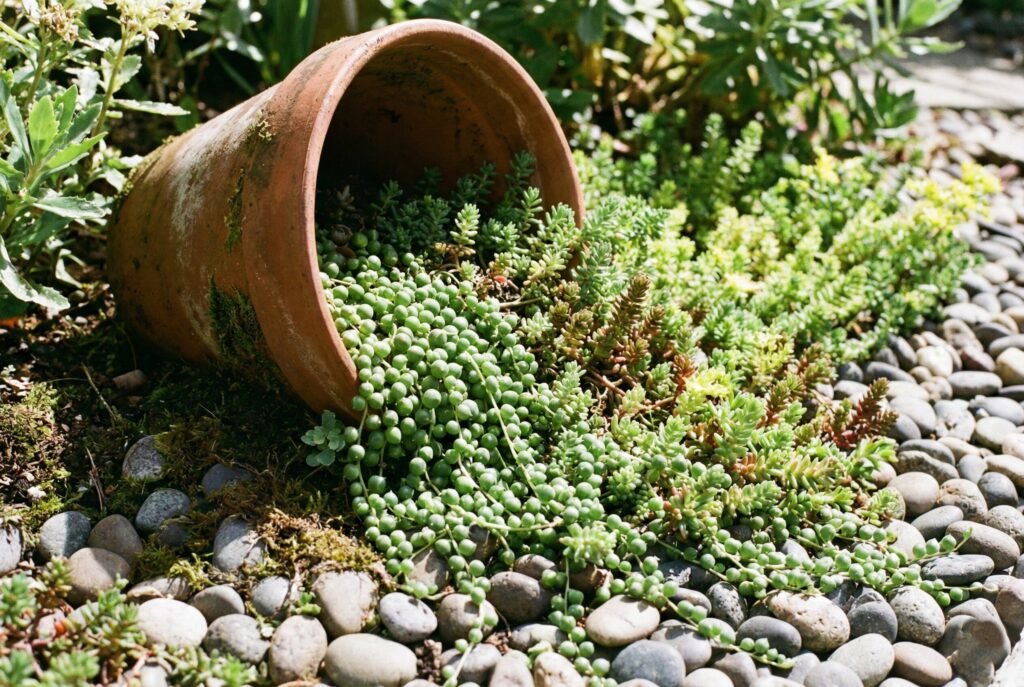
This is a whimsical and popular trend that looks like a pot has tipped over and spilled flowers onto the ground.
How to do it: Take a terracotta pot or an old metal bucket. Dig a shallow hole and bury the pot halfway on its side, with the opening facing downslope. Plant trailing succulents like “String of Pearls” (Senecio rowleyanus) or creeping Sedum inside the pot and flowing out of the mouth in a wave pattern. Border the “spill” with small pebbles to define the shape.
4. The Modern Minimalist Grid
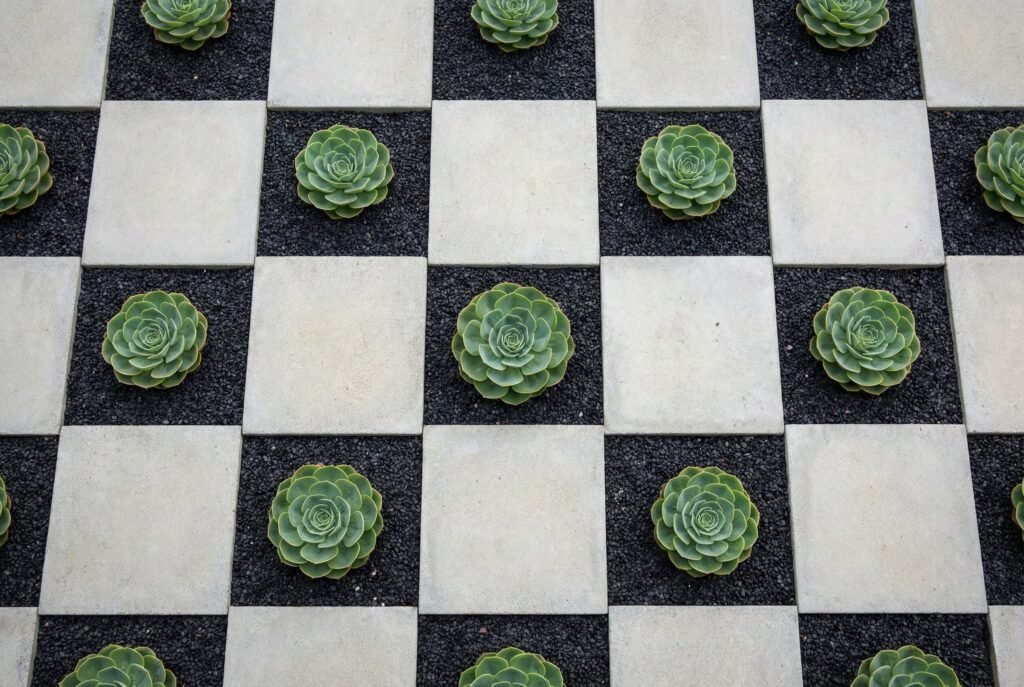
This style is clean, organized, and looks great with contemporary architecture.
How to do it: Use square or rectangular paving stones to create a grid pattern on the ground, leaving gaps between them. Fill these gaps with a sharp, contrasting gravel, like black basalt or white marble chips. Plant a single, perfect rosette succulent, such as a large Echeveria, in the center of each gravel square. The look is orderly and striking.
5. The Hens and Chicks Mosaic
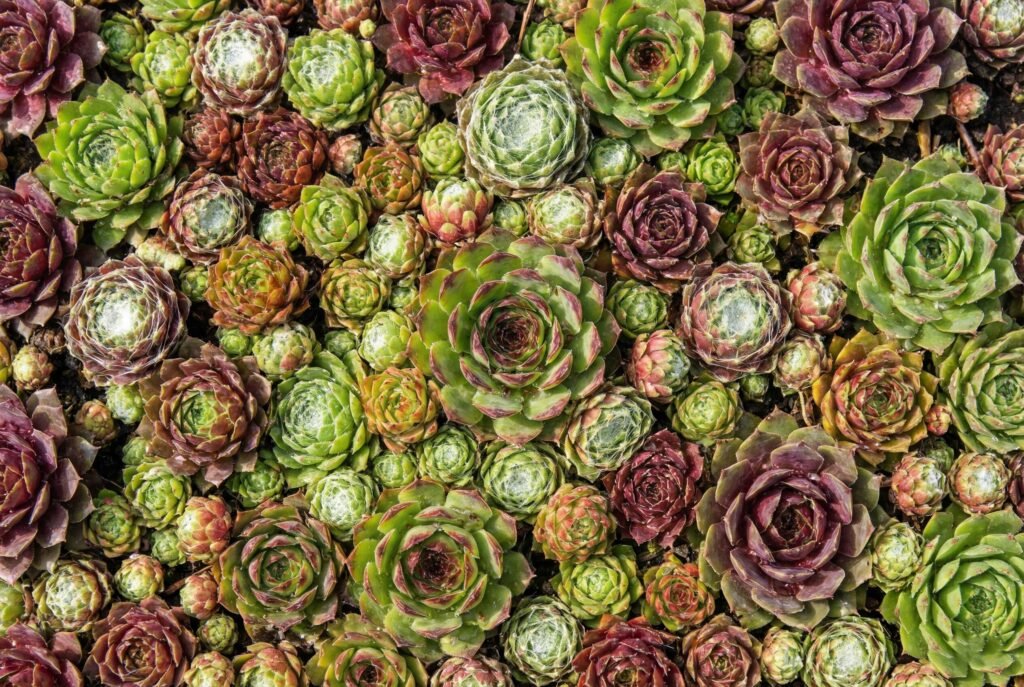
Sempervivum, known as Hens and Chicks, naturally form tight clusters that look like living mosaics.
How to do it: Select a small, defined area or a wide, shallow planter. Prepare the soil with extra grit. Plant several different varieties of Hens and Chicks tightly together. Mix colors—some are green with red tips, some are deep purple, some are fuzzy cobweb types. Over time, they will grow together to form a textured carpet that covers the soil completely.
6. The Zen Rockery
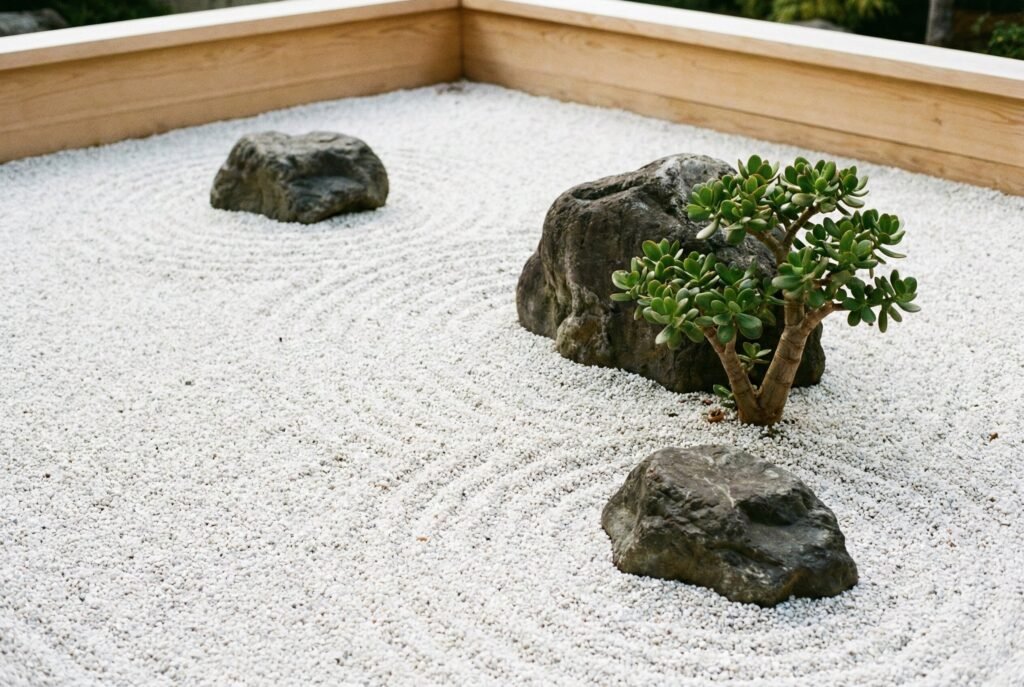
Create a calming space inspired by Japanese dry gardens.
How to do it: Use fine, light-colored gravel as your base. Place three or five interesting rocks in an asymmetrical arrangement. Plant only a few sculptural succulents, like a small jade plant (Crassula ovata) or a smooth agave, near the rocks. Keep the design sparse. You can even use a small rake to create patterns in the gravel around the stones.
7. The High-Contrast Lava Rock Garden
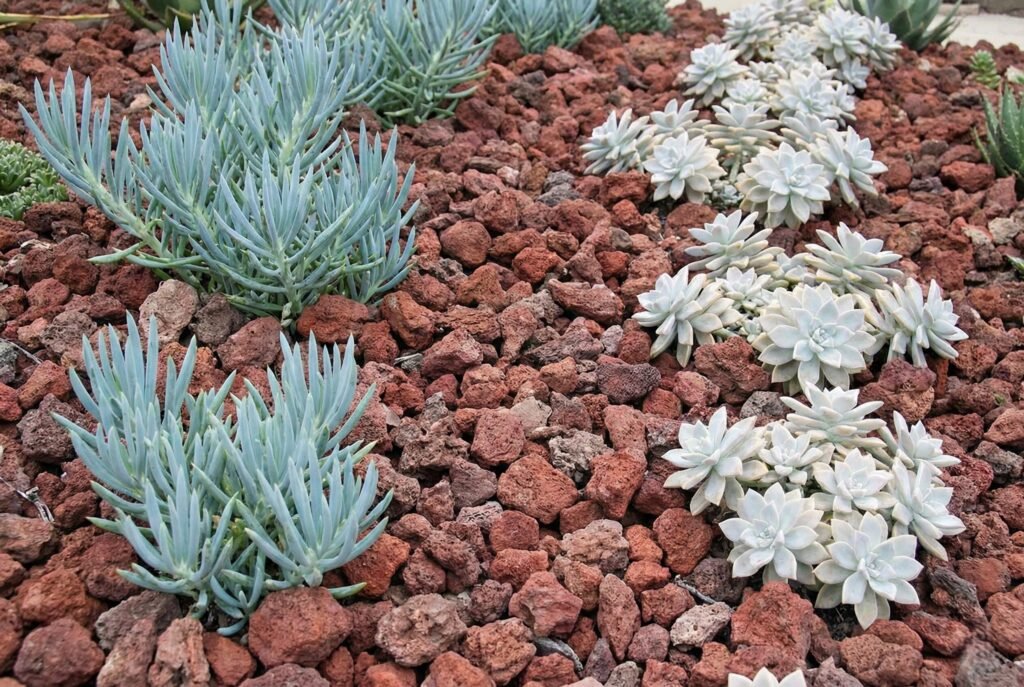
Use color to make a bold statement. Red or black lava rock provides a dramatic background.
How to do it: Cover your garden bed entirely with red lava rock pebbles. Plant succulents that have pale green, blue, or silvery foliage. Blue Senecio, pale ghost plants (Graptopetalum paraguayense), or powdery white Dudleya look incredible against the dark, rough texture of the lava rock.
8. The Vertical Rock Wall
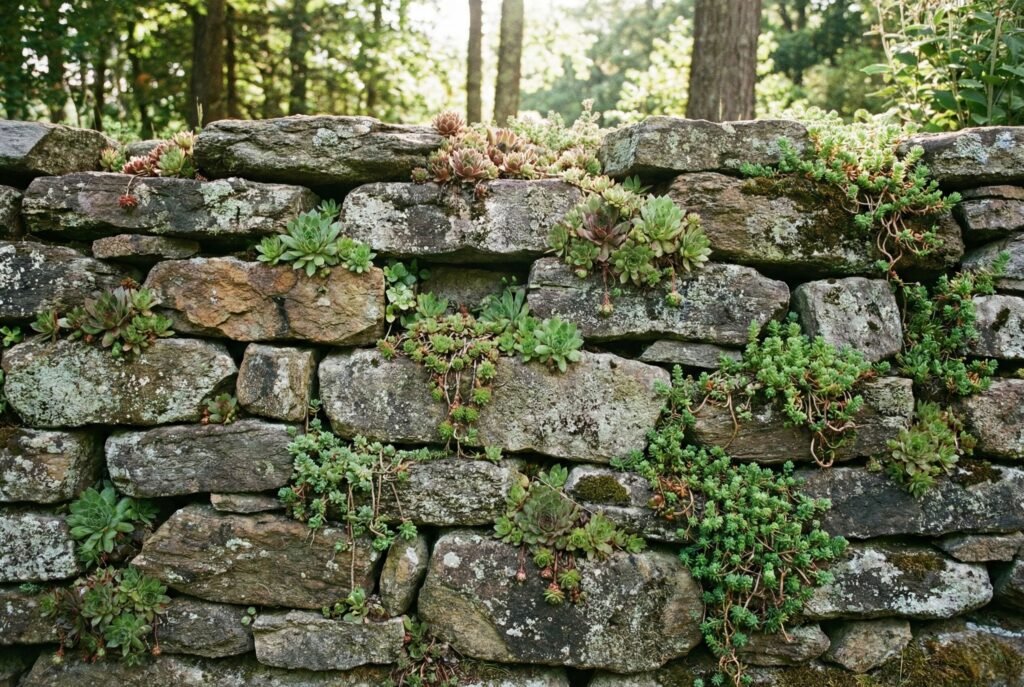
If you lack ground space, build upward using natural stone walls or gabion baskets.
How to do it: If you have an existing dry-stack stone wall, find the cracks and crevices between the stones. Pack a small amount of soil into these gaps. Gently tuck in small, hardy succulents like Sedum or small Sempervivum. They will root into the crevices and eventually cascade down the face of the wall, softening the hard stone look.
9. The Coastal Shell and Stone Garden
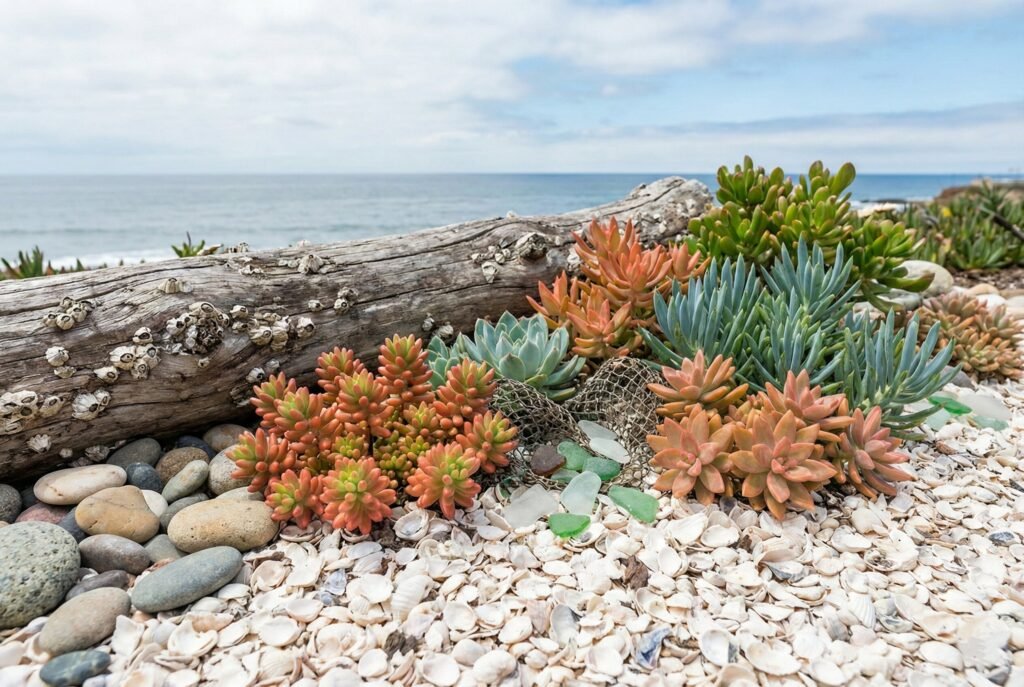
Bring a beach vibe to your yard, even if you are landlocked.
How to do it: Instead of standard gravel, use crushed shell as your top dressing. Mix in some smooth, light-colored river stones and perhaps a few pieces of driftwood. Plant succulents that have a coral-like appearance or colors, such as “Pork and Beans” Sedum (which turns red in the sun) or ruffles Echeveria. The light colors reflect heat, which many succulents appreciate.
10. The Rustic Log Planter
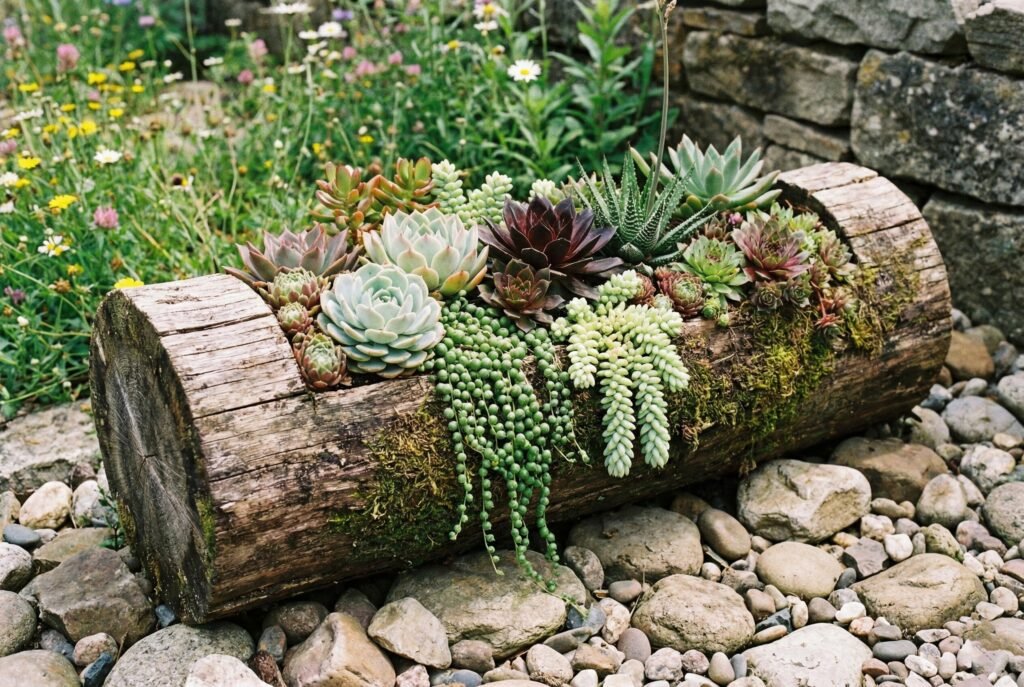
Combine wood and stone for a natural, rustic aesthetic.
How to do it: Find a hollowed-out log or a piece of driftwood with a natural depression. Drill drainage holes in the bottom. Fill the cavity with succulent soil. Plant a mix of upright and trailing succulents. Place the log in your garden and surround its base with medium-sized fieldstones to anchor it into the landscape.
11. The Monochromatic Green Garden
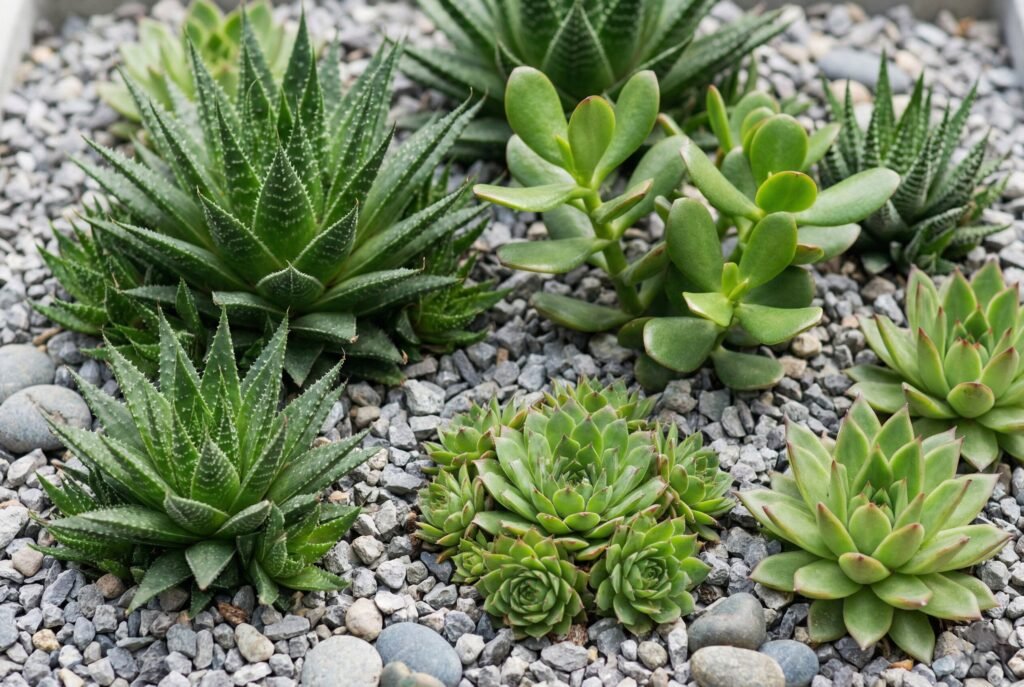
Focus on texture rather than color by using only green plants.
How to do it: Use grey or beige gravel to keep the background neutral. Select succulents that are purely green but have different shapes. Combine spiky Aloe, smooth round Jade plants, fuzzy Kalanchoe, and intricate green Sempervivum rosettes. The variation in leaf forms creates visual interest without relying on bright colors.
12. The Desert Oasis Mirage
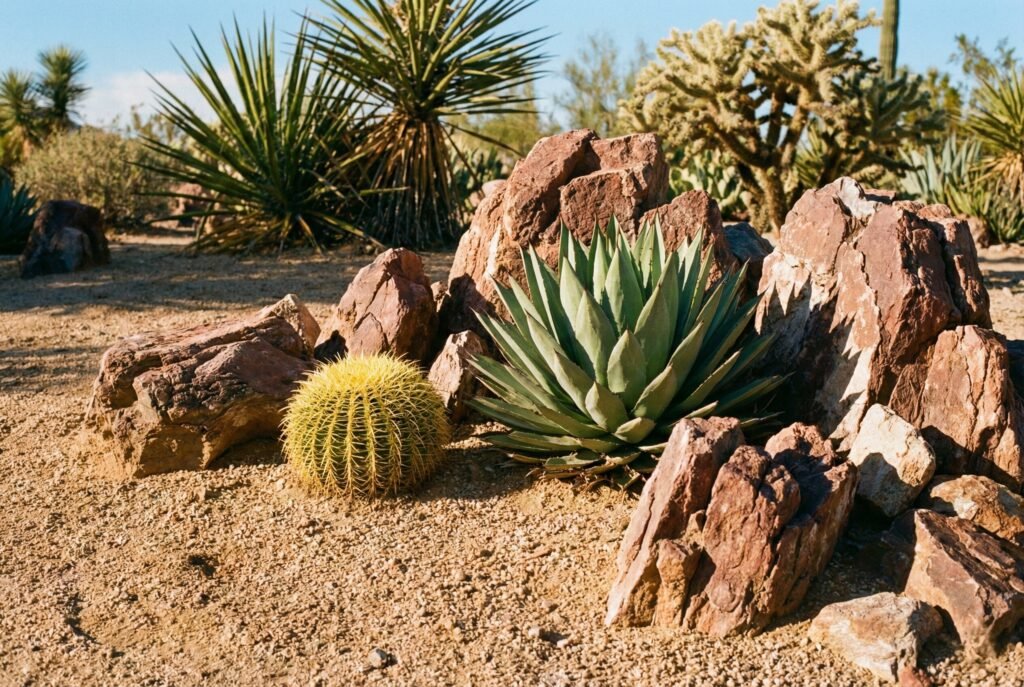
Create a miniature desert landscape.
How to do it: Use sand-colored gravel or decomposed granite. Incorporate a few spherical barrel cacti (ensure they are safe for pets/kids) alongside spineless succulents like Agave or Aloe. Add a few jagged, rusty-colored rocks to simulate desert mountains. Keep the planting sparse to mimic an arid environment.
13. The Geometric Paver Pathway
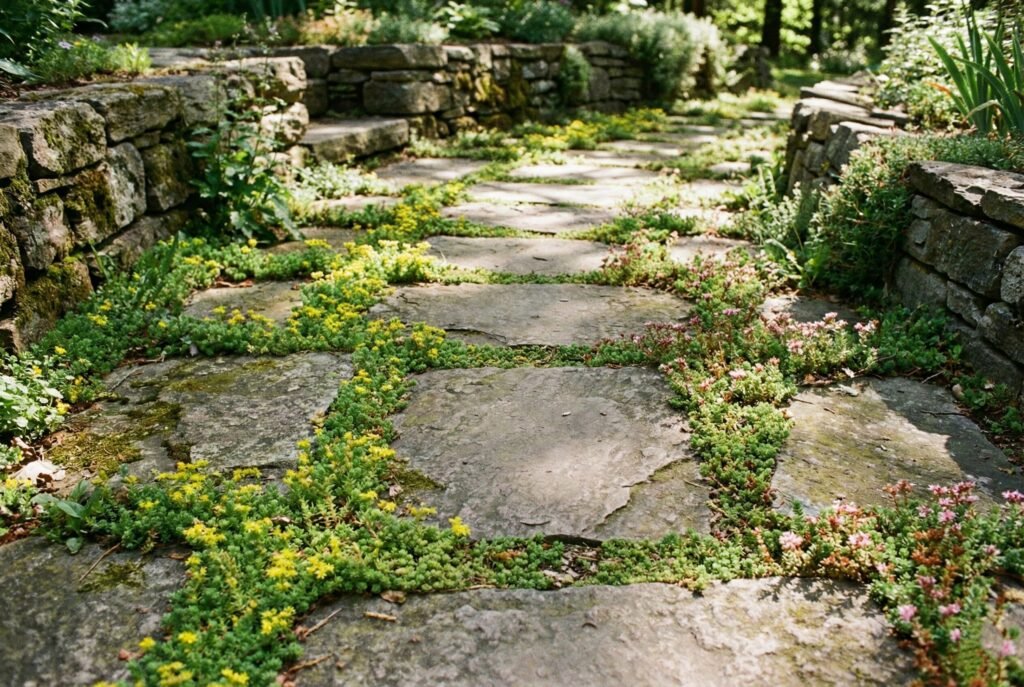
Similar to the grid idea, but used as a functional walkway.
How to do it: Lay down large, rectangular flagstones to create a pathway, leaving about two to three inches between each stone. Excavate the soil between the stones slightly and fill it with gritty soil. Plant low-growing, tough groundcover succulents like creeping thyme (not a succulent but works well) or durable Sedum varieties that can tolerate occasional foot traffic.
14. The Birdbath Repurpose
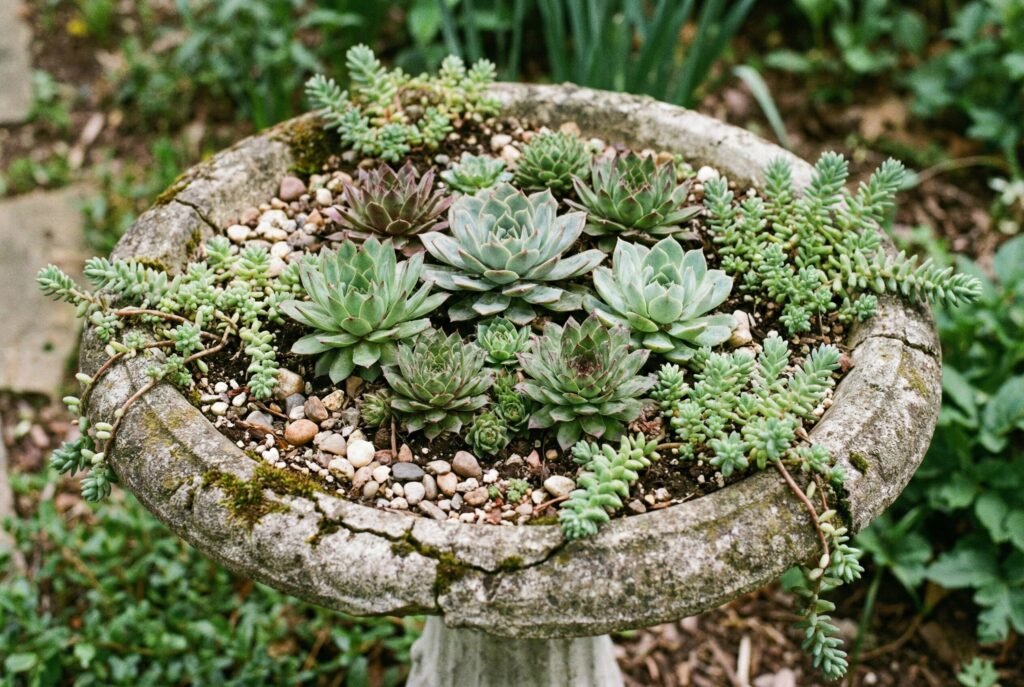
Give an old, cracked birdbath new life.
How to do it: If the birdbath bowl doesn’t hold water anymore, it’s perfect for succulents. Drill a drainage hole if one isn’t present. Fill the shallow bowl with succulent soil. Create a miniature rock landscape inside the bowl using small pebbles and tiny succulent plugs. Place the birdbath as a feature piece in a garden bed surrounded by larger rocks.
15. The Tiny Container Rockery
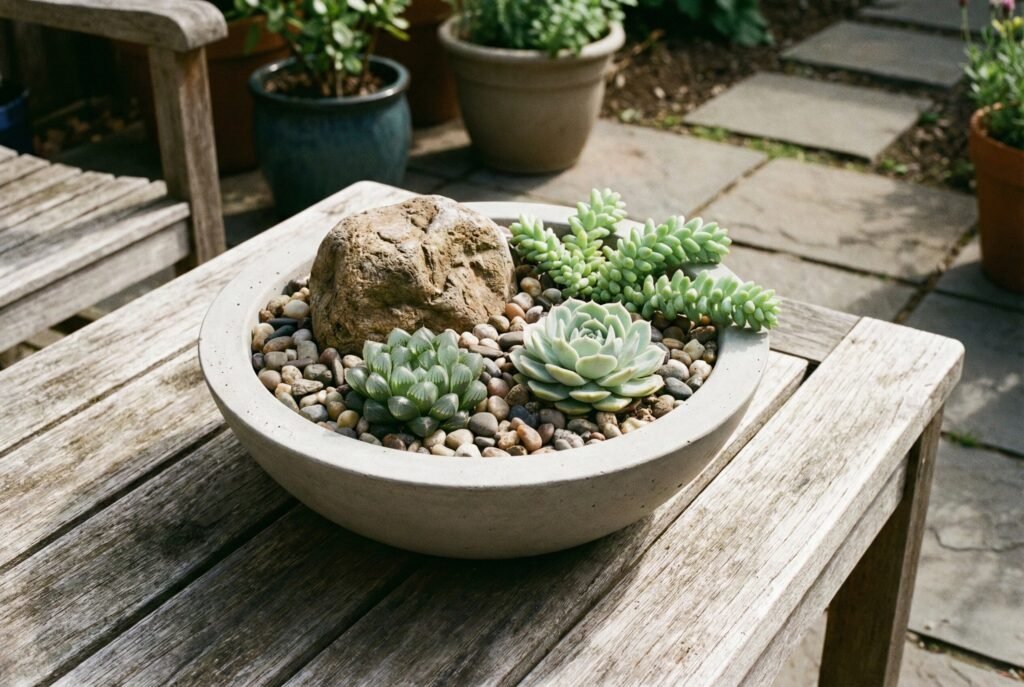
Ideal for balconies, patios, or indoor windowsills.
How to do it: Use a wide, shallow, bowl-shaped planter made of terracotta or concrete. Ensure it has drainage. Fill it with cactus mix. Place one main “boulder” (a fist-sized rock) in the pot. Arrange smaller stones around it. Plant three to five small succulents of varying heights around the rocks. Top dress exposed soil with fine aquarium gravel.
Bonus Idea: The Fairy Garden Nook
Add a touch of magic for children or the young at heart.
How to do it: Create a small rock garden in a quiet corner using mossy rocks and fine gravel. Plant small-scale succulents like tiny Sedum varieties that look like miniature trees or shrubs. Add miniature accessories like a small fairy house, a tiny bridge over a pebble “stream,” or small mushroom figurines to complete the scene.
Easy Maintenance for Your New Garden
Once your garden is set up, maintenance is minimal, but not zero.
- Watering: The biggest mistake is overwatering. The “soak and dry” method is best. Water the soil thoroughly until it is completely saturated, then do not water again until the soil is completely dry several inches down. In the summer, this might be every week or two. In the winter, outdoors, succulents may need no supplemental water at all if you get rain.
- Weeding: Weeds will still try to grow, especially between rocks. Pull them when they are small. The gravel mulch helps keep them down, but keep an eye out during the growing season.
- Cleaning: Over time, leaves and debris may blow onto your rock garden. Use a small hand rake or a leaf blower on a low setting to keep the gravel looking neat.
- Winter Care: If you live in an area with freezing winters, ensure you have planted hardy varieties like Sempervivum and Sedum. Tender succulents like Echeveria will need to be moved indoors or treated as annuals. Ensure the drainage is excellent; wet soil plus freezing temperatures is fatal to most succulents.
Conclusion
Creating a simple succulent rock garden is one of the most rewarding DIY projects you can undertake. It boosts your home’s curb appeal, saves precious water, and provides a stunning, textural display that changes with the seasons.
By following the basic preparation steps and choosing one of the ideas above, you can transform a troublesome patch of yard into a beautiful, low-maintenance sanctuary. Start small, have fun with your rock and plant choices, and enjoy your resilient new garden.