

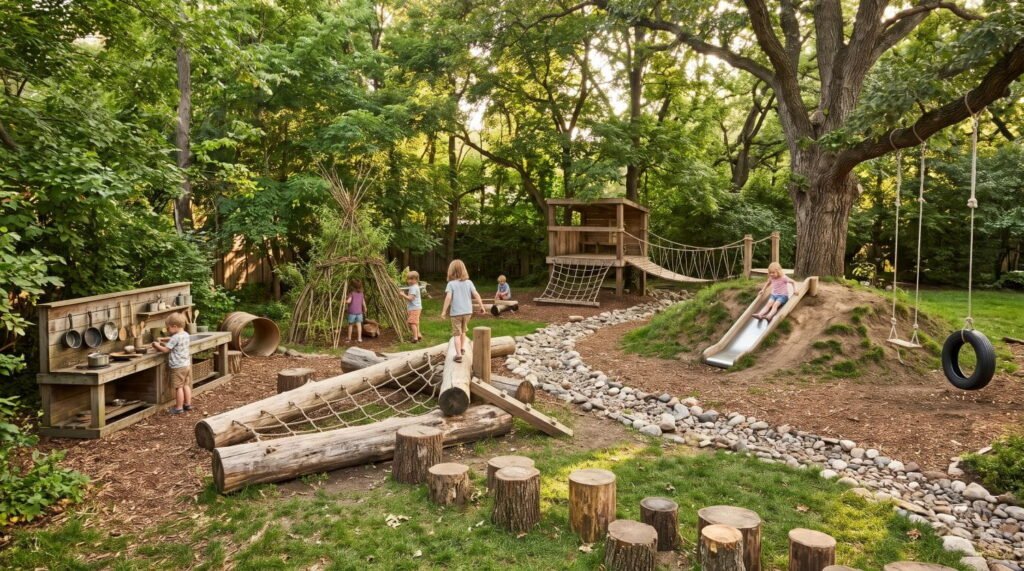
Creating a natural outdoor playground in your backyard is one of the best investments you can make for childhood development. Moving away from brightly colored plastic playsets, nature play spaces use organic materials like wood, stone, sand, and plants to create an environment that blends seamlessly with your landscape design.
These backyard adventure zones encourage open-ended play, boost gross motor skills, enhance sensory development, and build a lasting connection with the outdoors.
To help you design the ultimate nature play space, this guide is broken down into five dedicated playground zones. You can build all five for a complete backyard transformation or focus on one zone at a time. Here are 25 natural outdoor playground ideas to help you build a safe, engaging, and beautiful adventure zone.
Climbing and Balancing
Climbing and balancing are crucial for developing core strength, coordination, and body awareness. By using raw, natural materials, you force children to navigate uneven surfaces, which builds better balance than perfectly flat, manufactured playground equipment.
1. Partially Buried Log Balance Beams
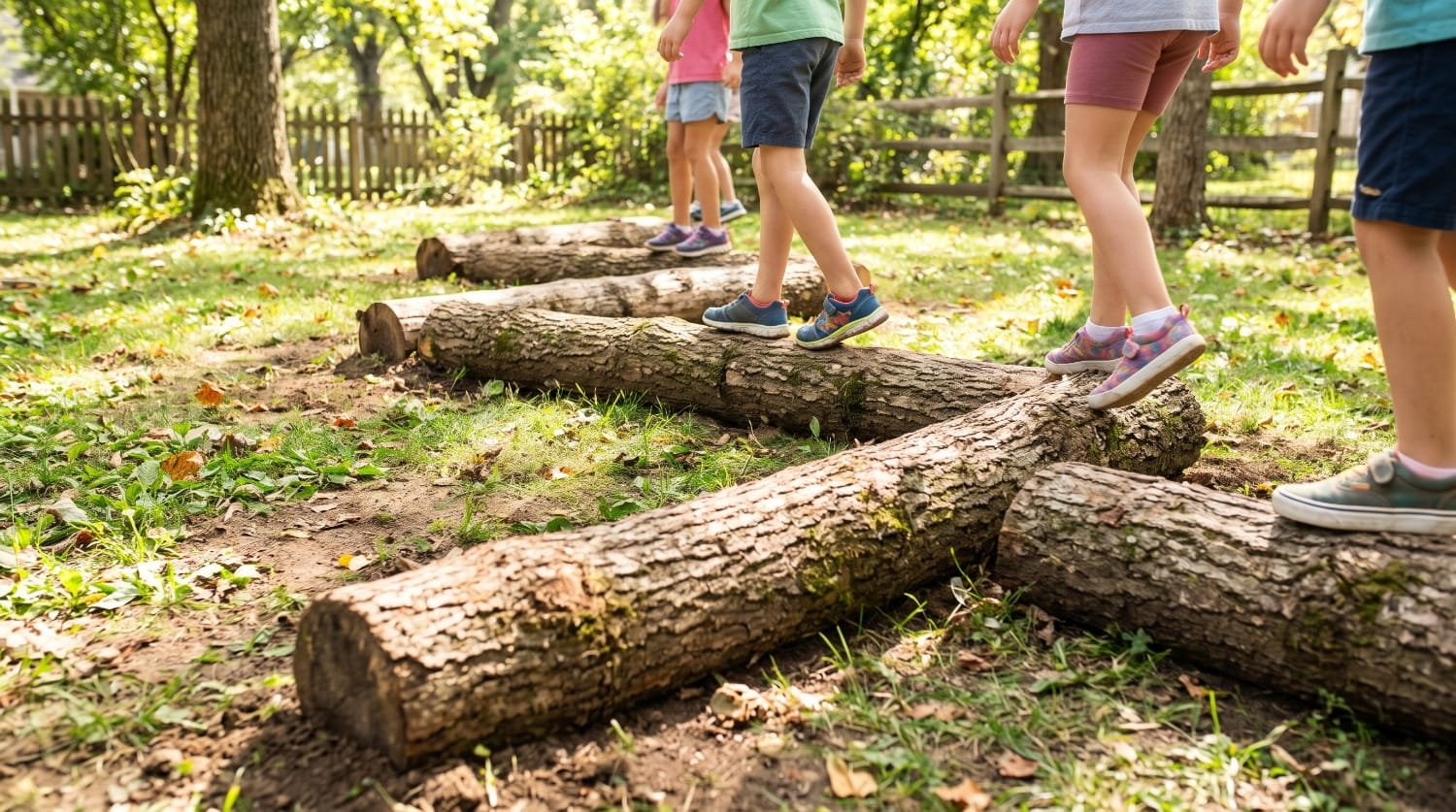
Thick, heavy logs make perfect balance beams. Source logs that are 6 to 18 inches thick to provide varying levels of difficulty. To ensure they do not roll or shift during play, bury them about one-third of the way into the dirt.
You can arrange them in a straight line, a zigzag pattern, or a large square. Leaving the bark on provides natural traction for shoes and bare feet.
2. Graduated Boulder Clusters for Scrambling
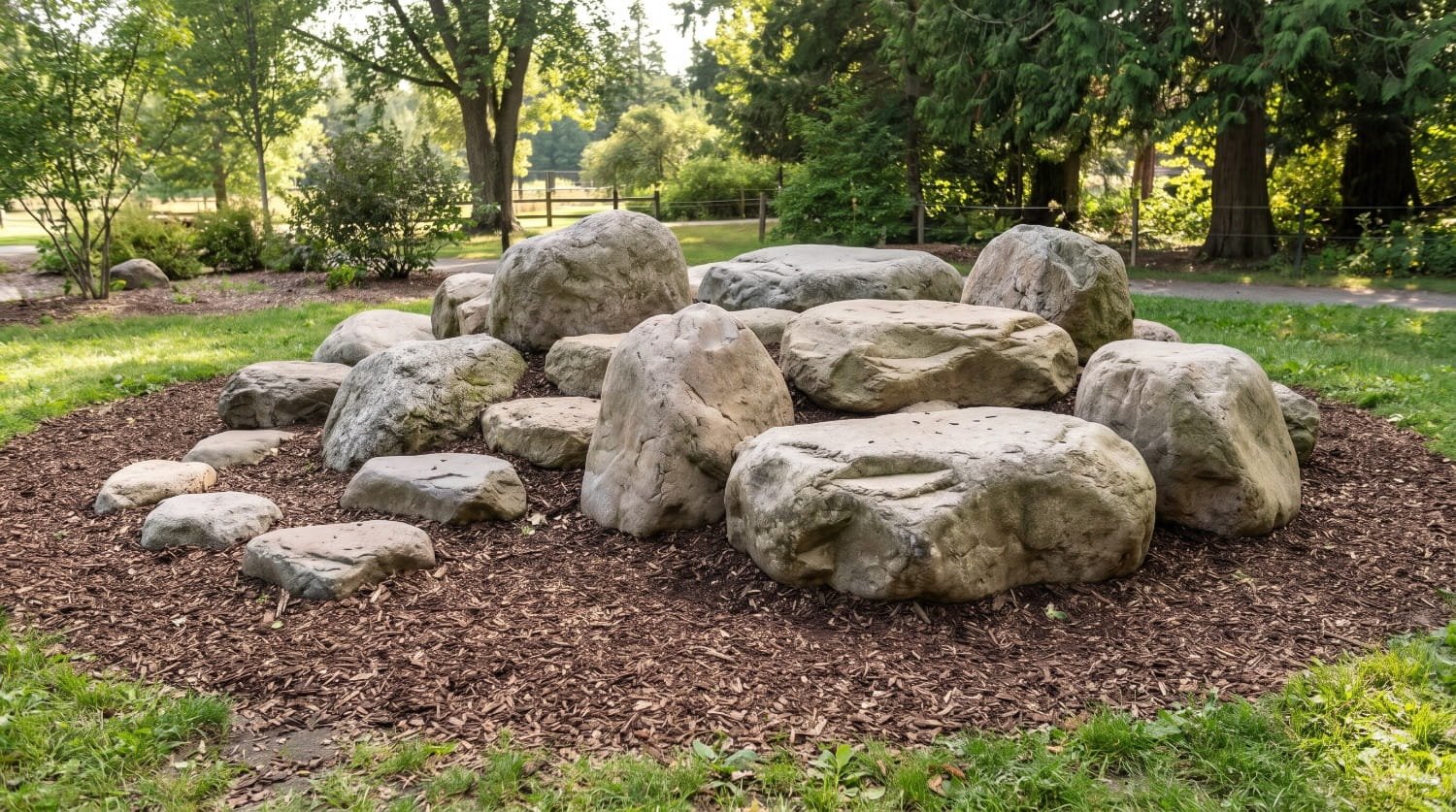
Children naturally want to climb rocks. Create a scrambling zone by grouping smooth boulders of varying sizes. Start with smaller, flat rocks at the edges and place the largest, tallest boulders in the center.
Ensure the boulders are heavy enough that they cannot be tipped or rolled, and bury the base of the largest rocks a few inches into the ground for maximum stability.
3. Staggered Tree Stump Stepping Stones

Tree stumps are versatile playground elements. Source hardwood stumps like oak or maple, as they resist rotting much longer than softwoods.
Cut them to different heights, ranging from a few inches to a foot and a half tall, and arrange them in a stepping-stone formation. Children will use these to play “the floor is lava,” practice jumping, and improve their spatial judgment.
4. Slanted Climbing Logs

Take advantage of natural elevation changes in your yard, or use a large anchor boulder to create a slanted climbing challenge. Secure a long, sturdy log at an angle, anchoring the base deeply into the ground and securing the top so it cannot slip.
This mimics the experience of climbing fallen trees in a forest, testing a child’s grip strength and foot placement.
5. Natural Wood Climbing Wall with Bark Grips
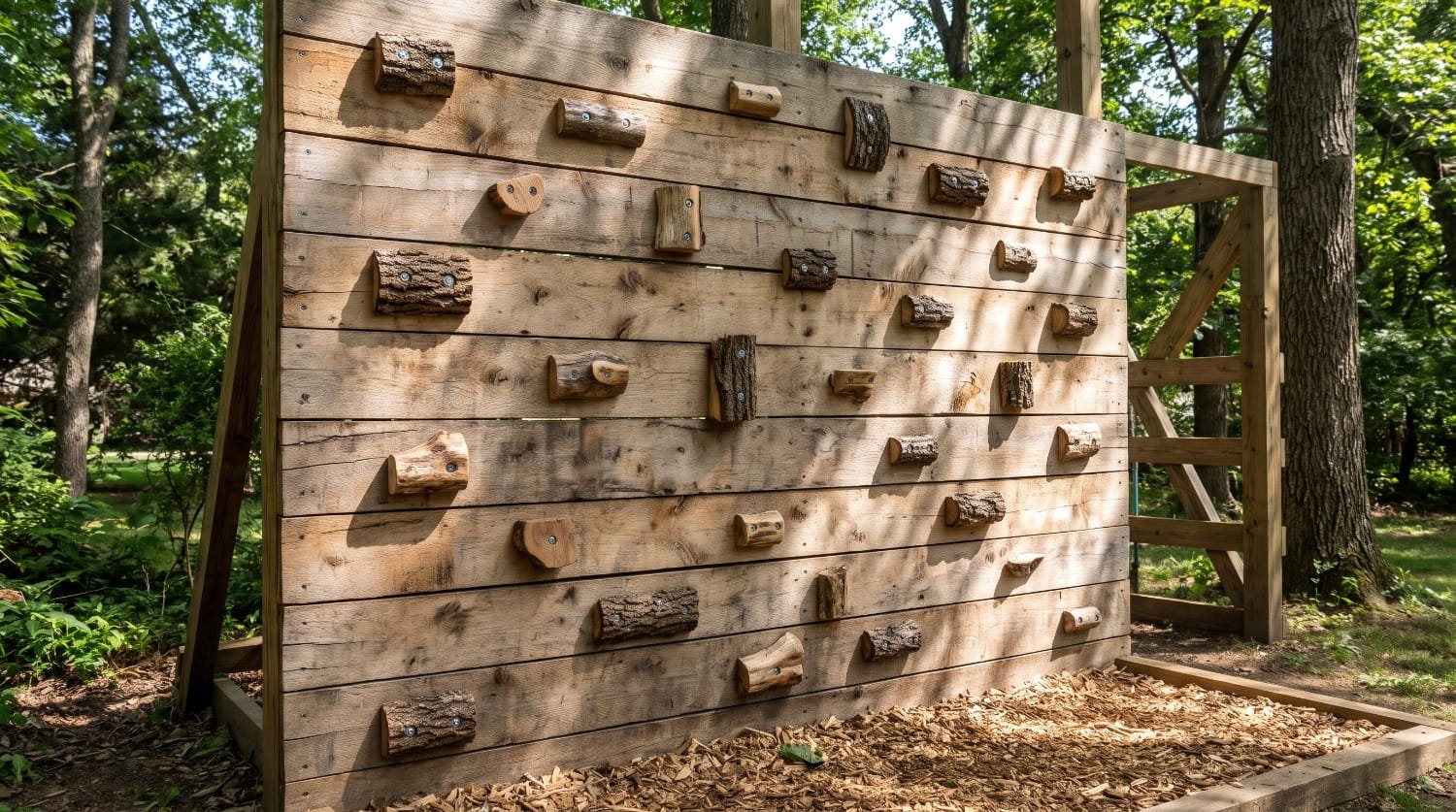
If you want vertical height, build a climbing wall using heavy, rough-sawn timber. Instead of buying neon plastic climbing holds, create natural handholds and footholds using thick pieces of textured bark, small wood blocks, or smooth river stones bolted securely to the wood. This maintains the organic aesthetic of the yard while providing a challenging vertical climb.
Digging and Loose-Parts Stations
Loose-parts play is the foundation of childhood creativity. When children have access to materials they can move, carry, combine, and redesign, they engage in deep imaginative play and early engineering.
6. Timber-Bordered Sand Pit with Buried Treasures
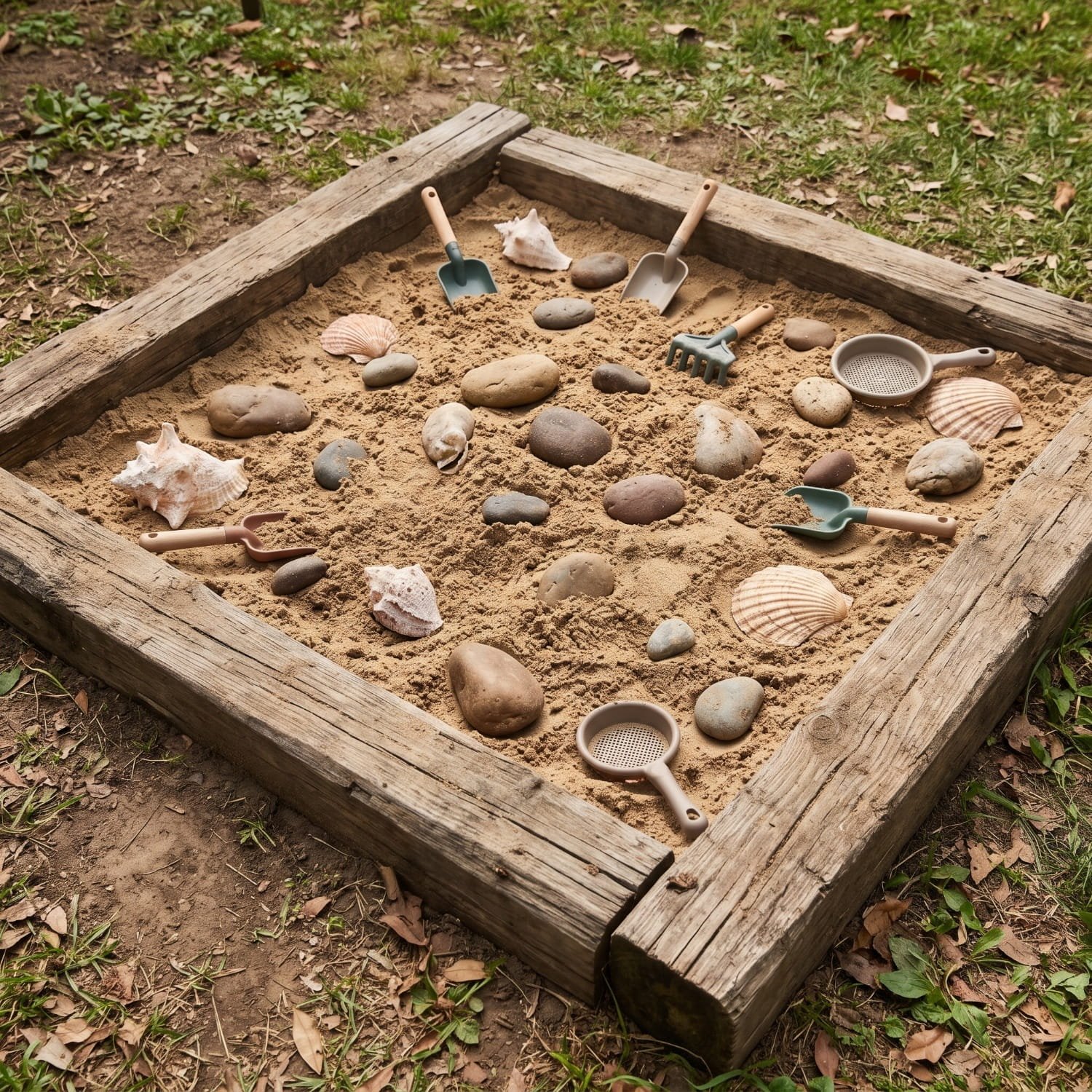
A dedicated sand pit is a must-have. Construct a 4×4-foot square bordered by thick landscaping timbers. Line the bottom with heavy-duty landscaping fabric to keep weeds out while allowing water to drain.
Fill it with clean, washed play sand. To make it an adventure, bury smooth river stones and large seashells throughout the sand for children to dig up, sort, and collect.
7. Bucket-and-Wagon Rock Hauling Zone

Children love heavy work, it helps regulate their nervous systems. Create a hauling zone filled with loose, smooth rocks of varying sizes (large enough to avoid being choking hazards).
Provide galvanized metal buckets, heavy-duty child-sized wheelbarrows, or wooden wagons. You can even attach a simple, safe rope and pulley system to a low tree branch so kids can hoist buckets of rocks into the air.
8. Rustic Mud Kitchen Setup
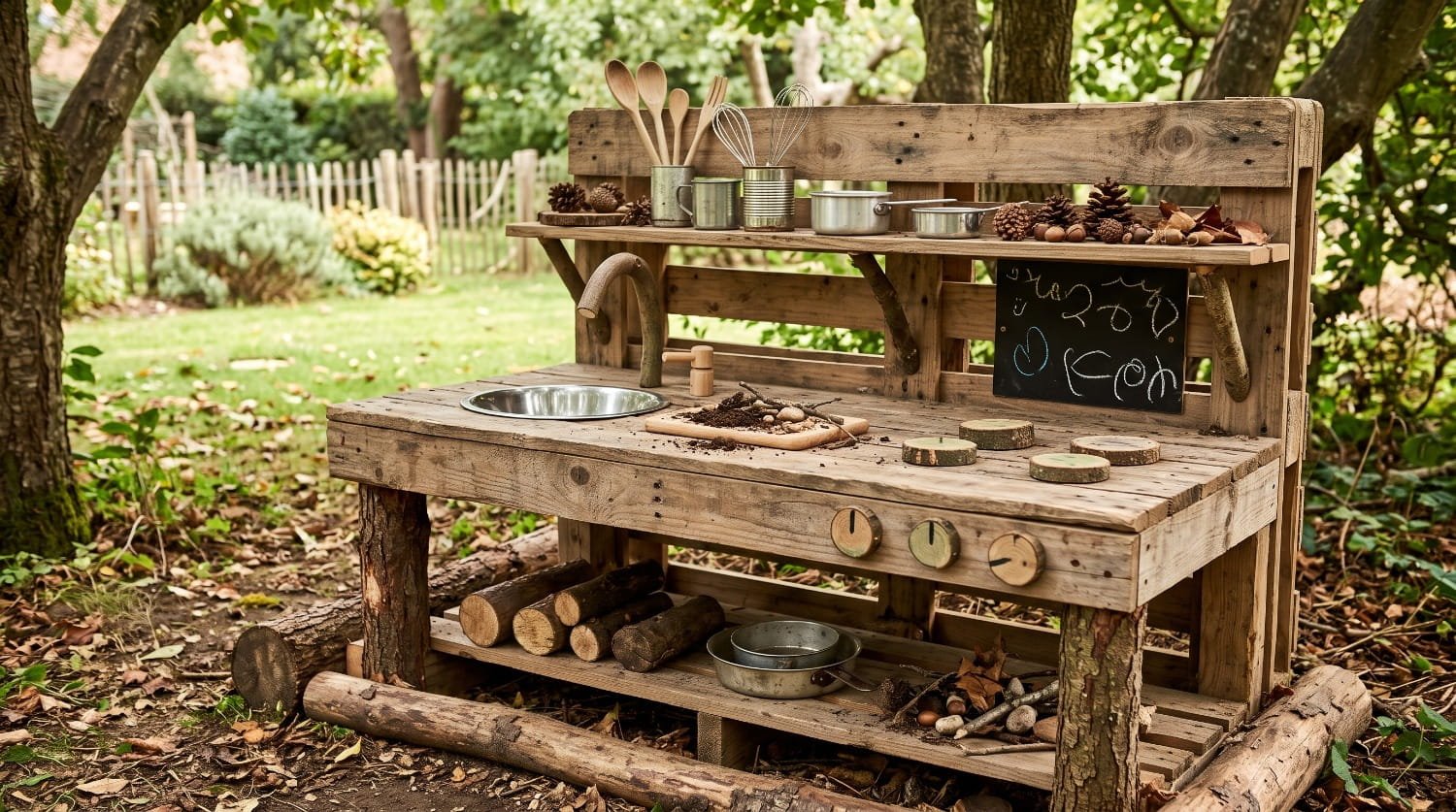
Mud kitchens combine messy sensory play with role-playing. Build a simple counter using upcycled untreated wood or wooden pallets. Drop an old stainless steel sink basin or large mixing bowl into a cutout in the wood.
Stock the kitchen with durable, real-world tools: wooden spoons, metal whisks, tin pans, and a water dispenser so kids can mix mud, leaves, and water into “soups” and “pies.”
9. Fallen Branch and Twig Building Station
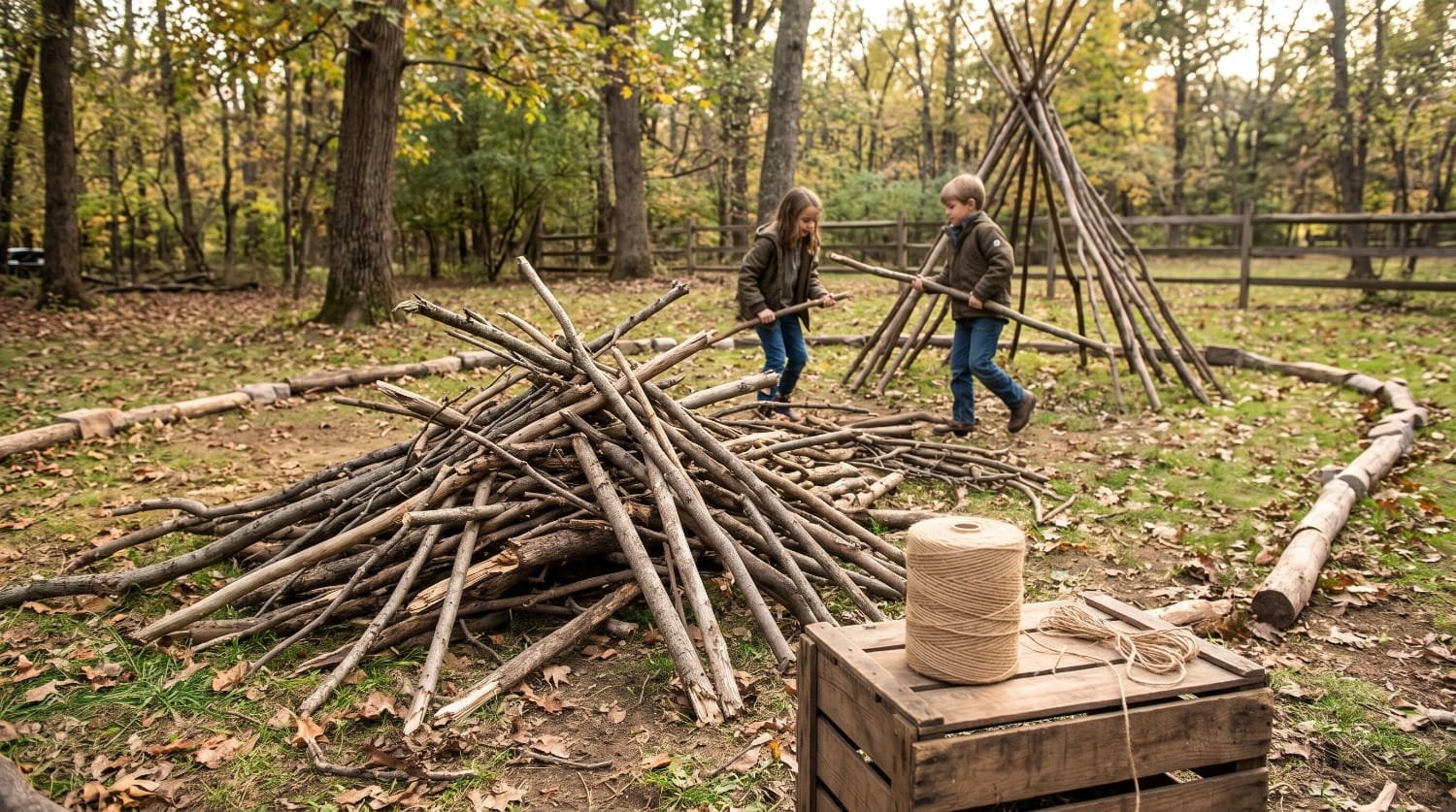
Leave a designated area of the yard wild, and supply it with a collection of long, sturdy sticks, fallen branches, and natural jute twine.
This becomes an open-ended building station where children can construct their own lean-tos, teepees, and mini-forts. As they figure out how to balance and tie the branches together, they learn valuable problem-solving skills.
10. Toy Excavator Gravel Pit
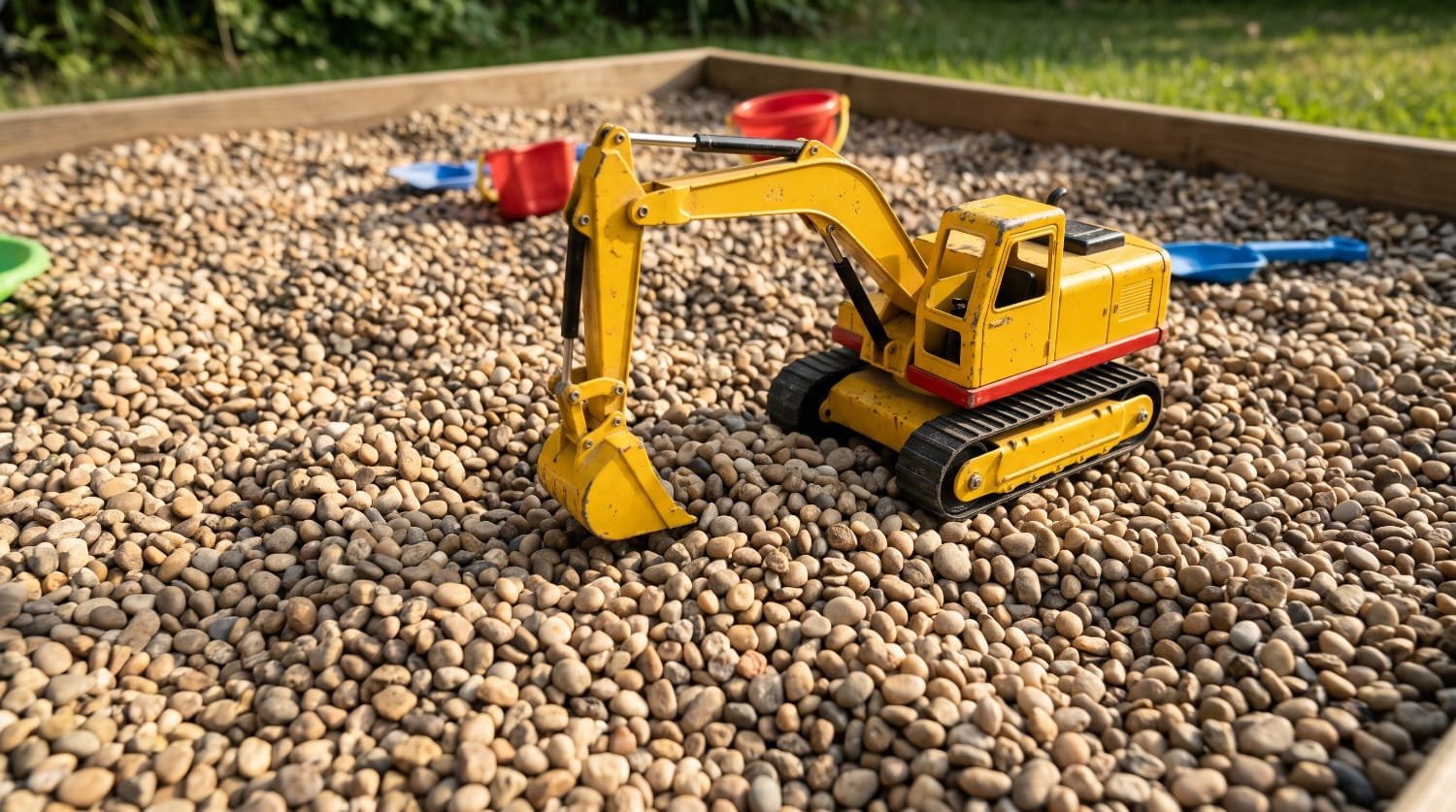
Sand is great, but gravel offers a completely different auditory and tactile experience. Create a secondary digging pit filled with smooth pea gravel. This is the perfect terrain for heavy-duty metal toy dump trucks, front loaders, and excavators.
The gravel does not stick to hands and clothes the way wet sand does, making it a great low-mess digging alternative.
Barefoot and Sensory Trails
Sensory trails are designed to stimulate the senses of touch, smell, and hearing. Walking barefoot on different natural textures promotes healthy foot development and grounds children in their environment.
11. Smooth River Stone Walkway
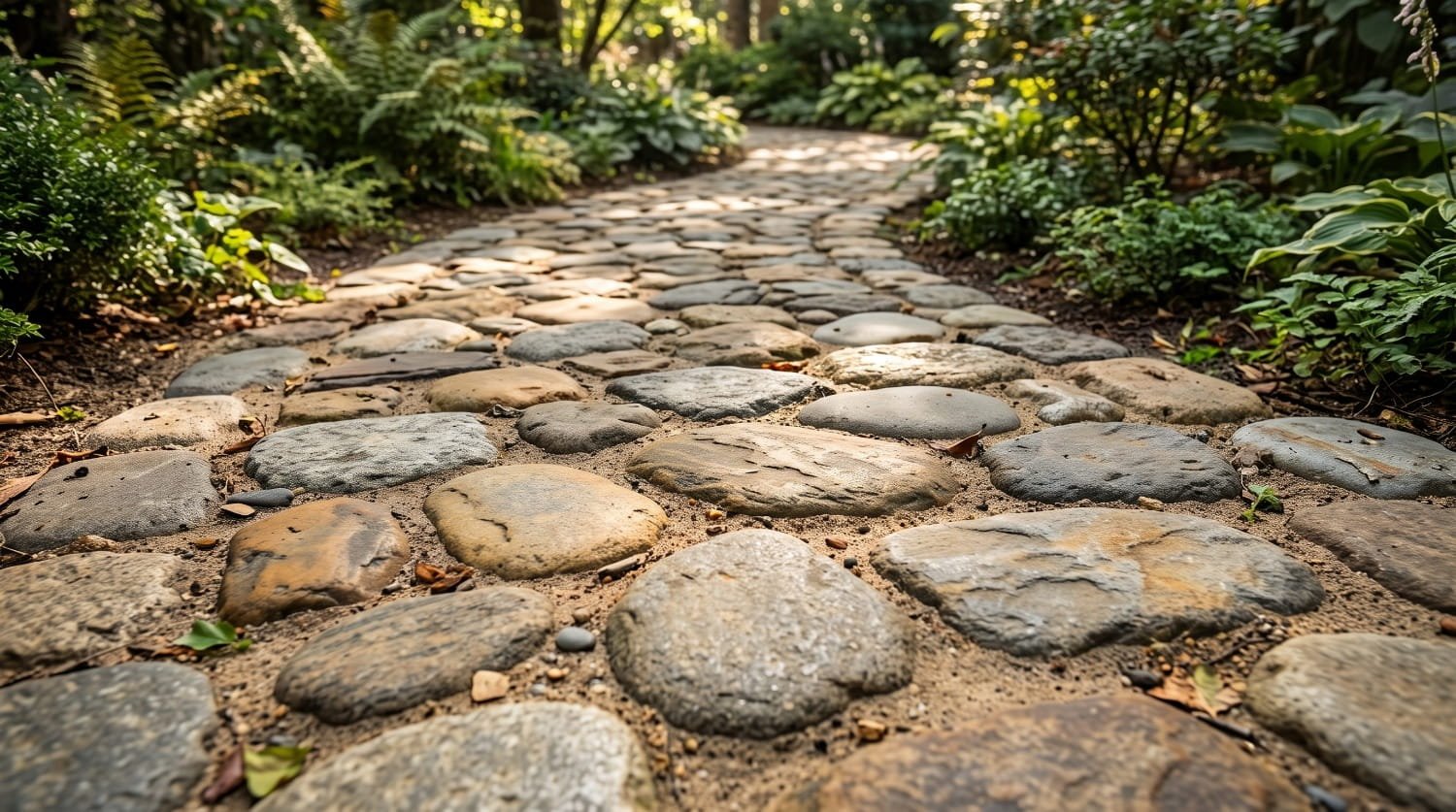
Design a winding garden path specifically meant for bare feet. Use large, flat, incredibly smooth river stones. You can set these tightly together in a bed of sand or soil. As the stones absorb the warmth of the summer sun, they provide a soothing, warm tactile experience for little feet walking across them.
12. Bark Chip and Pinecone Tactile Path
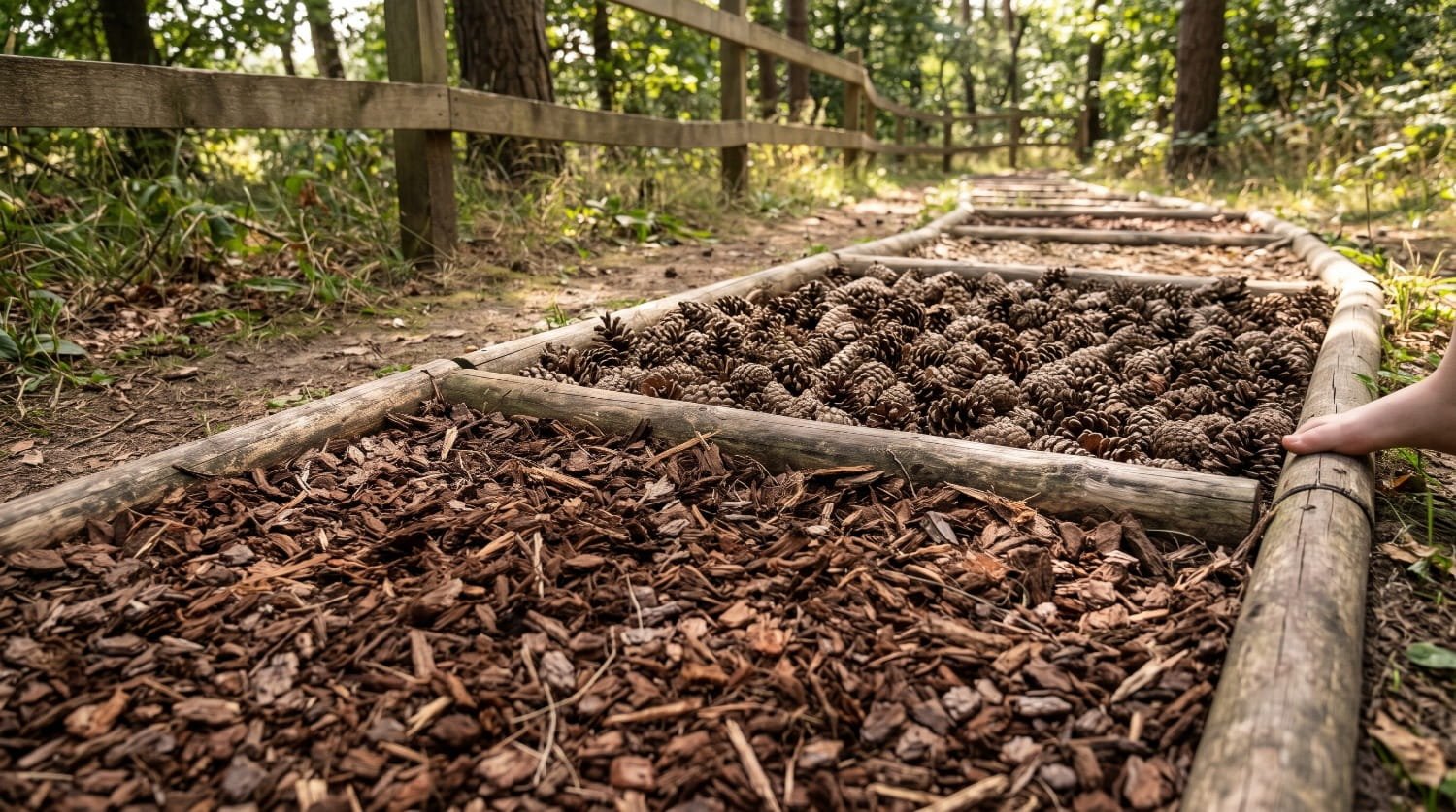
Extend your sensory trail by introducing contrasting textures. Create a section filled with soft, shredded cedar bark chips, which smell wonderful and feel spongy underfoot.
Follow this with a slightly more challenging section filled with dry pinecones. Navigating these different textures teaches children to step carefully and heightens their physical awareness.
13. Cool Sand and Water Misting Station

In the heat of the summer, a cooling station is highly popular. Dedicate a section of the barefoot trail to deep, fine sand, kept shaded by a nearby tree or canvas sail. Install a simple, low-flow water misting attachment nearby. The mist keeps the sand cool and damp, providing a refreshing sensory contrast to the warm river stones.
14. Fragrant Creeping Thyme and Rosemary Border
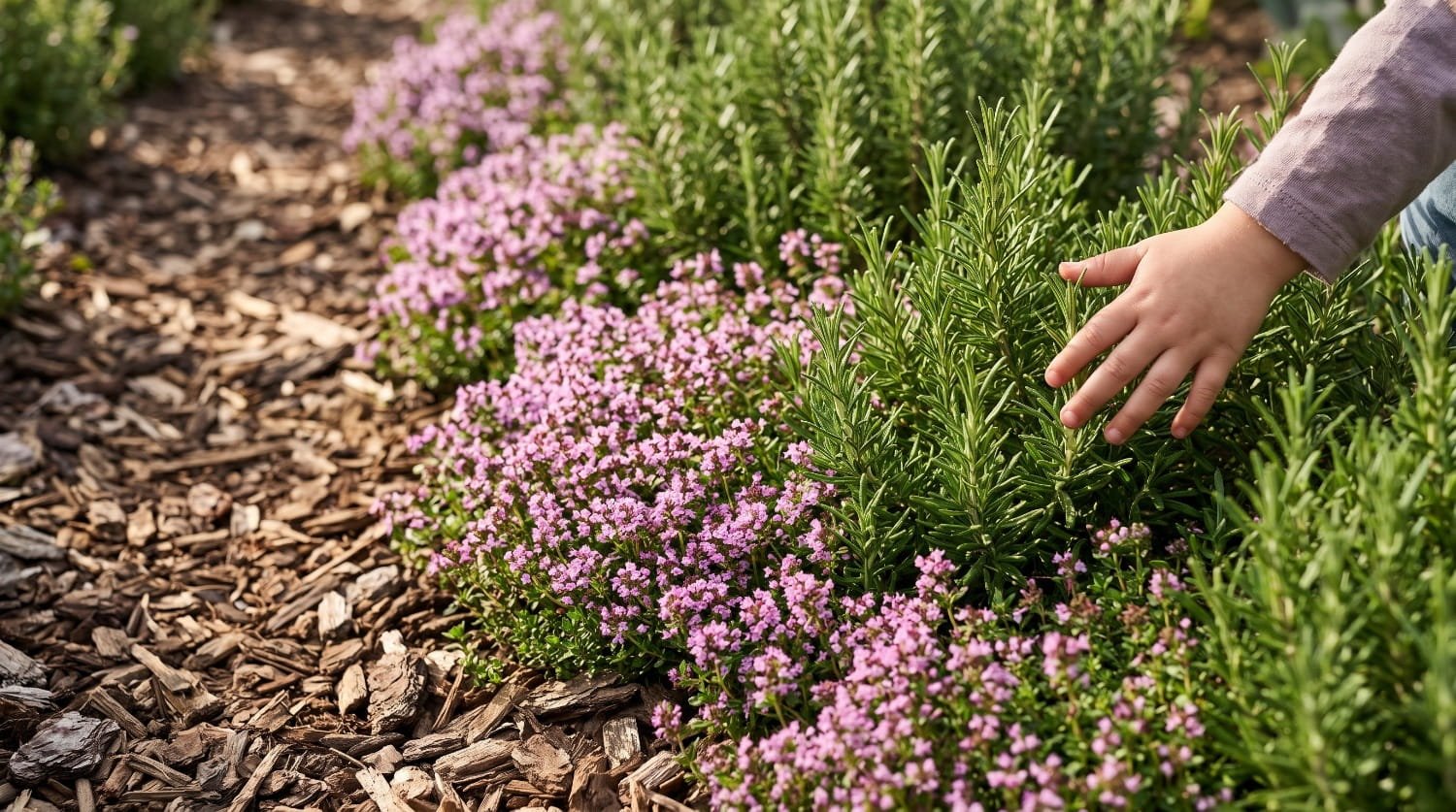
A sensory yard must engage the sense of smell. Line the edges of your barefoot trails and play zones with durable, fragrant herbs.
Creeping thyme is an excellent ground cover that can withstand being stepped on, releasing a sweet, earthy scent when crushed. Plant upright rosemary bushes nearby so children can run their hands through the leaves to release the strong, calming fragrance.
15. Suspended Bamboo Sound Garden

Bring auditory sensory play into the yard by building a natural sound garden. Suspend hollow pieces of bamboo, thick wooden dowels, and large seed pods from a wooden frame or a low tree branch.
Provide a few wooden mallets or sturdy sticks. When the wind blows, they act as natural wind chimes, and when kids strike them, they produce warm, hollow, percussive sounds.
Zone 4: Living Shelters and Tunnels
Every playground needs spaces for refuge. Children seek out small, enclosed spaces where they can hide, read, rest, or engage in quiet imaginative play. Living shelters integrate plant life directly into the play structure.
16. Woven Living Willow Dens
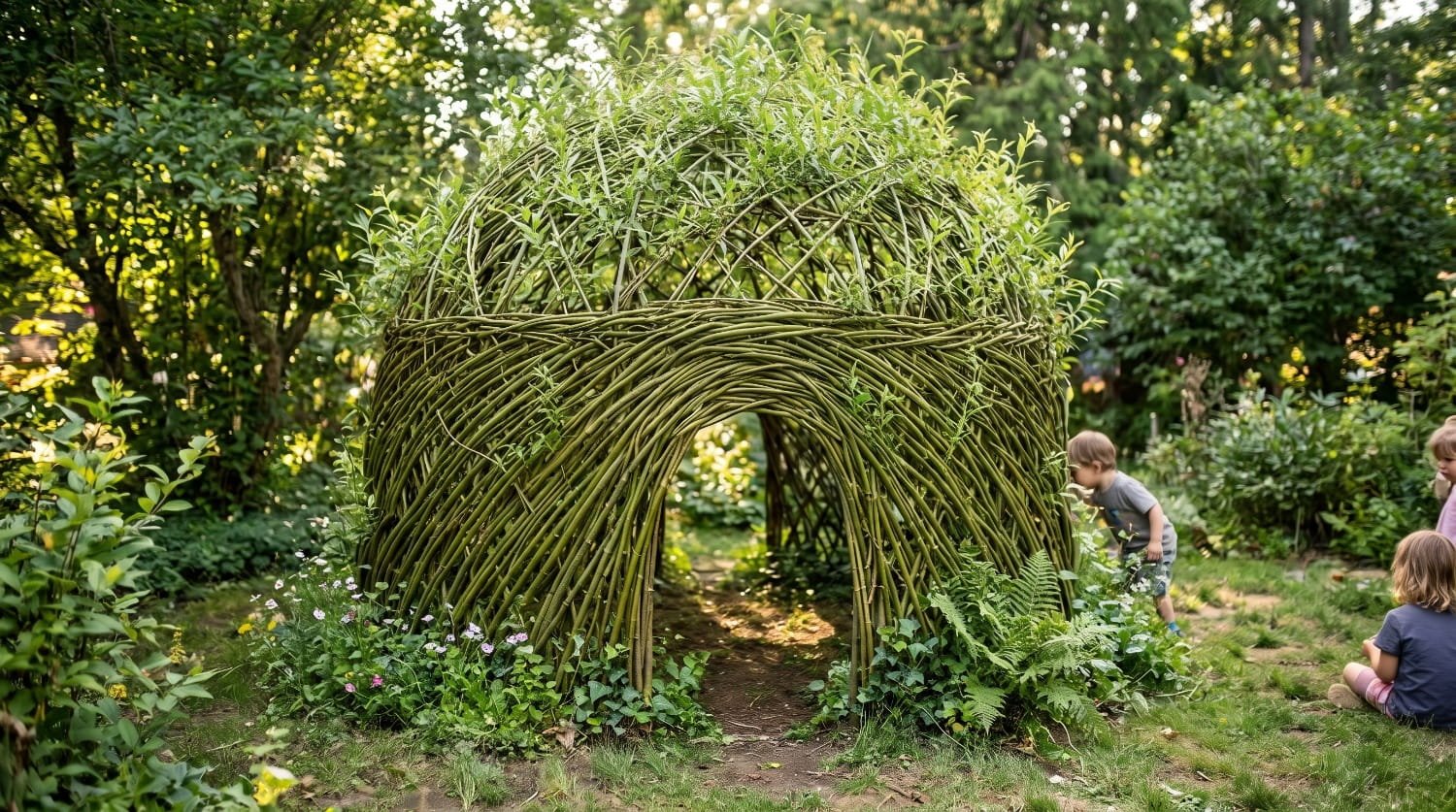
A living willow den is a magical addition to a backyard. By planting long, dormant willow rods in a circle and weaving their tops together, you create a natural dome.
As spring arrives, the willow roots into the ground and sprouts dense green leaves, forming a living, breathing playhouse that provides dense shade and a secret hideaway.
17. Hollow Logs Anchored for Crawling
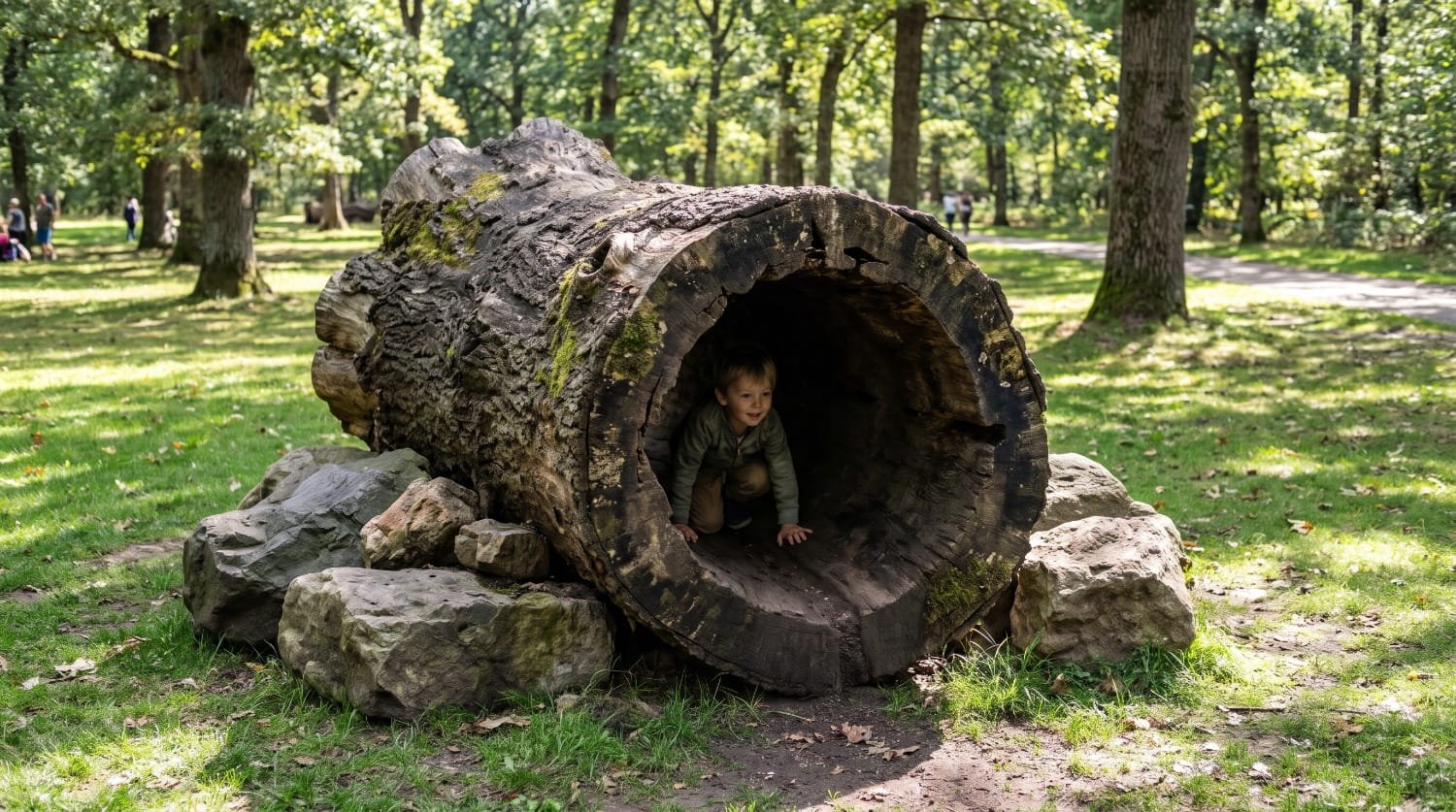
If you can source a large, hollowed-out tree trunk from a local arborist, it makes the ultimate natural tunnel. Ensure the inside is sanded free of sharp splinters.
Because a round log can roll, you must anchor it permanently. Wedge heavy, large boulders firmly on both sides of the log, sinking the boulders slightly into the earth to lock the tunnel safely in place.
18. Single-Rope Tree Climbs and Swings

Turn a mature, healthy tree into a vertical shelter and climbing zone. Throw a thick, weather-resistant manila rope over a high, sturdy branch (always consult an arborist if you are unsure about branch health).
Tie large, thick knots every two feet along the rope. Children can use the rope to scale the trunk, swing, or just hang out under the canopy of the leaves.
19. Bean Pole Teepee Hideaway
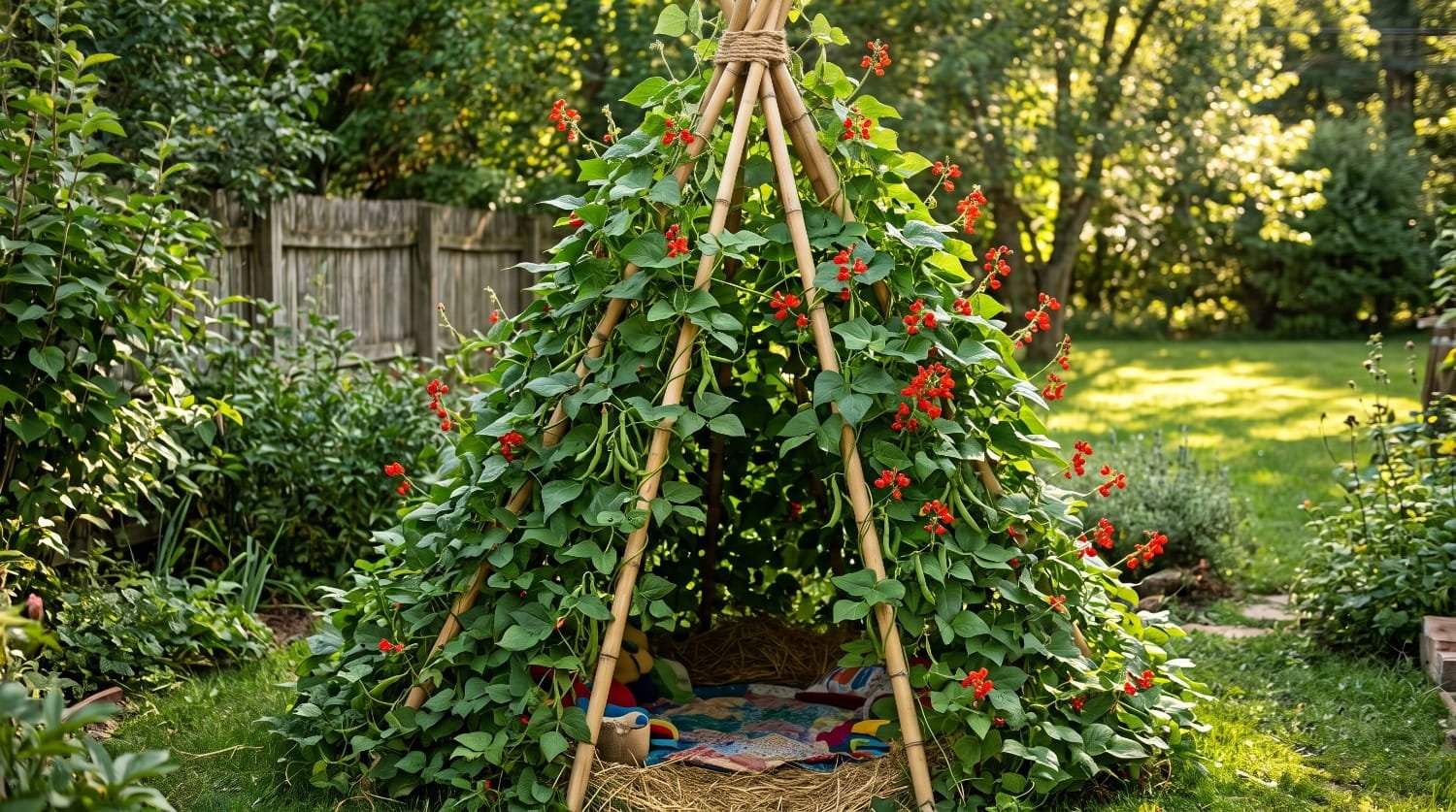
For a quick, seasonal living shelter, build a garden teepee. Lash five or six tall bamboo poles together at the top and spread the bases out in a circle.
Plant fast-growing climbing plants like scarlet runner beans, morning glories, or sweet peas at the base of each pole. Within weeks, the vines will cover the poles, creating a beautiful, shaded botanical tent.
20. Shrubbery Maze and Secret Hideout
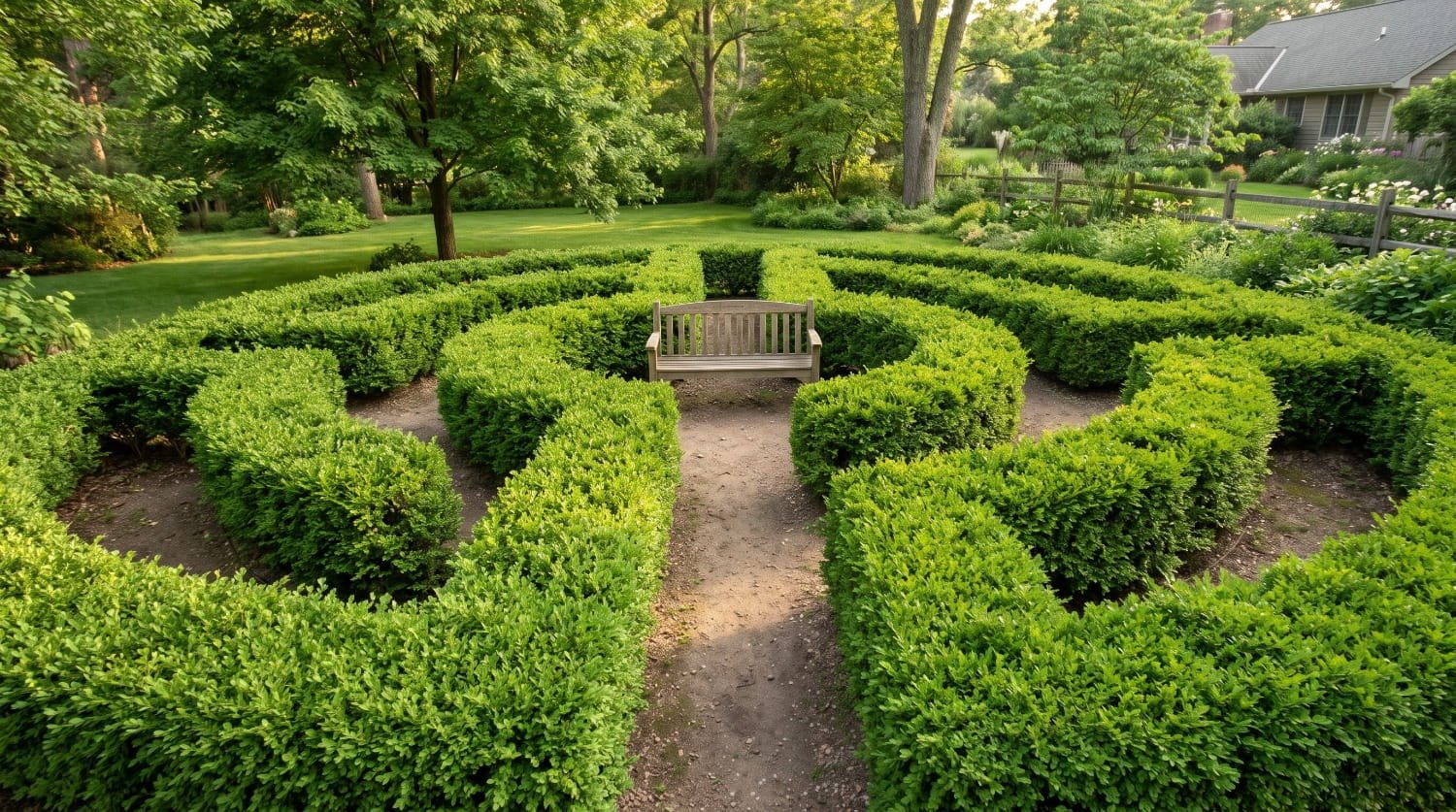
If you have the space, plant a miniature maze using hardy, low-maintenance shrubs like boxwood or native evergreens. The maze does not need to be tall, just waist-high for a child is enough to make them feel immersed.
Design the pathways to lead to a secret central clearing where you can place a small wooden bench or a circle of tree stumps.
Fall-Safe Ground Surfacing
The most critical element of any outdoor playground is safety. Beneath climbing structures, swings, and elevated balance beams, you must install appropriate fall-safe surfacing to prevent injuries. Natural materials can meet safety standards while keeping the yard looking organic.
21. Engineered Wood Fiber (Rated for 12-Foot Falls)

Standard landscape mulch is not safe for playgrounds because it compresses and becomes hard. Instead, use Engineered Wood Fiber (EWF).
EWF is specifically ground to ensure the wood fibers knit together, creating a bouncy, shock-absorbing surface that allows wheelchairs and strollers to roll over it. When installed at a depth of 12 inches, high-quality EWF is safety-rated to cushion falls from up to 12 feet.
22. Smooth Pea Gravel Play Base
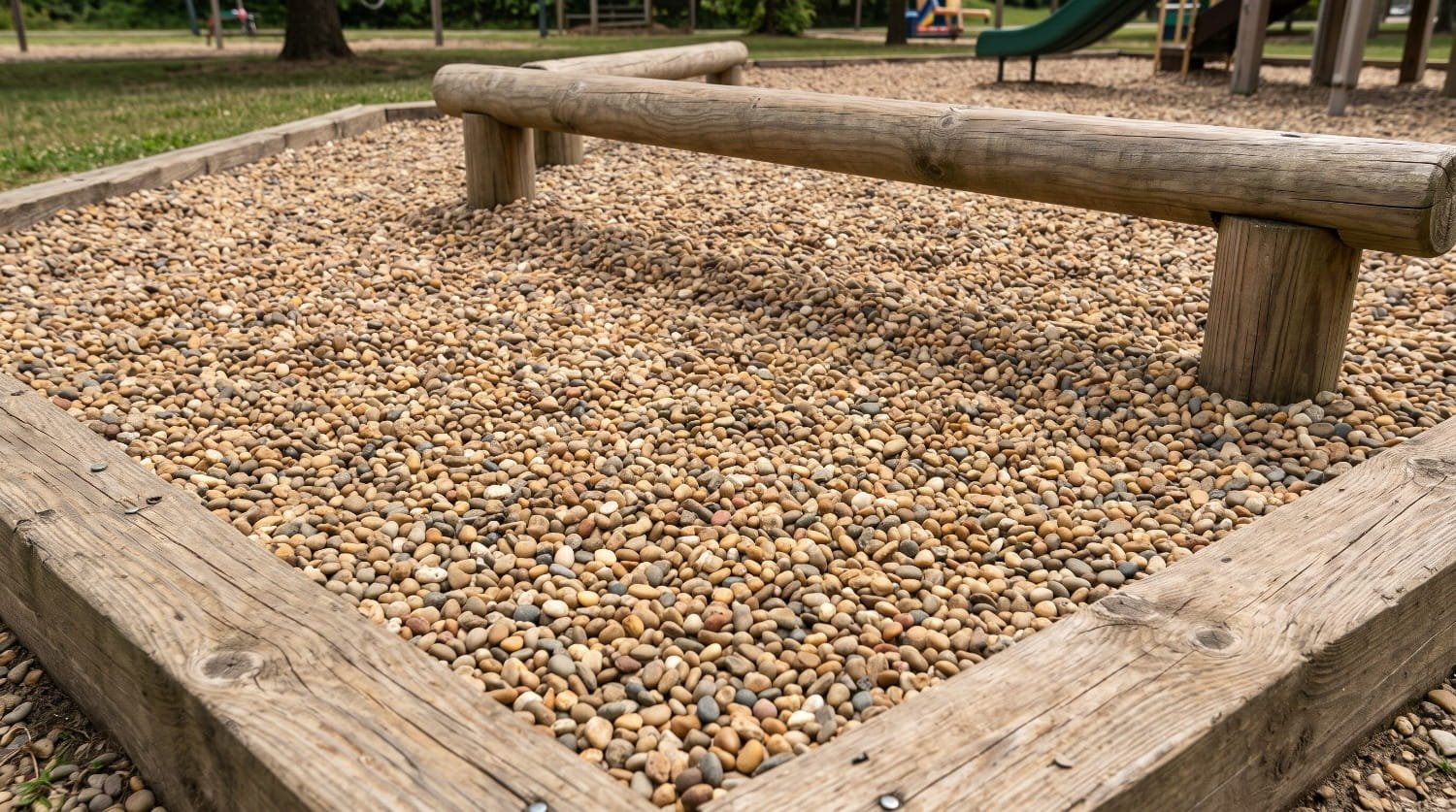
Pea gravel is an excellent, natural-looking surface that offers great shock absorption. It drains water instantly, meaning the play area is usable immediately after heavy rain.
For pea gravel to be an effective fall surface, it needs to be installed at a depth of 9 to 12 inches. You will need strong, elevated timber borders to contain the gravel and keep it from migrating into your lawn.
23. Deep Play Sand Over Drainage Gravel
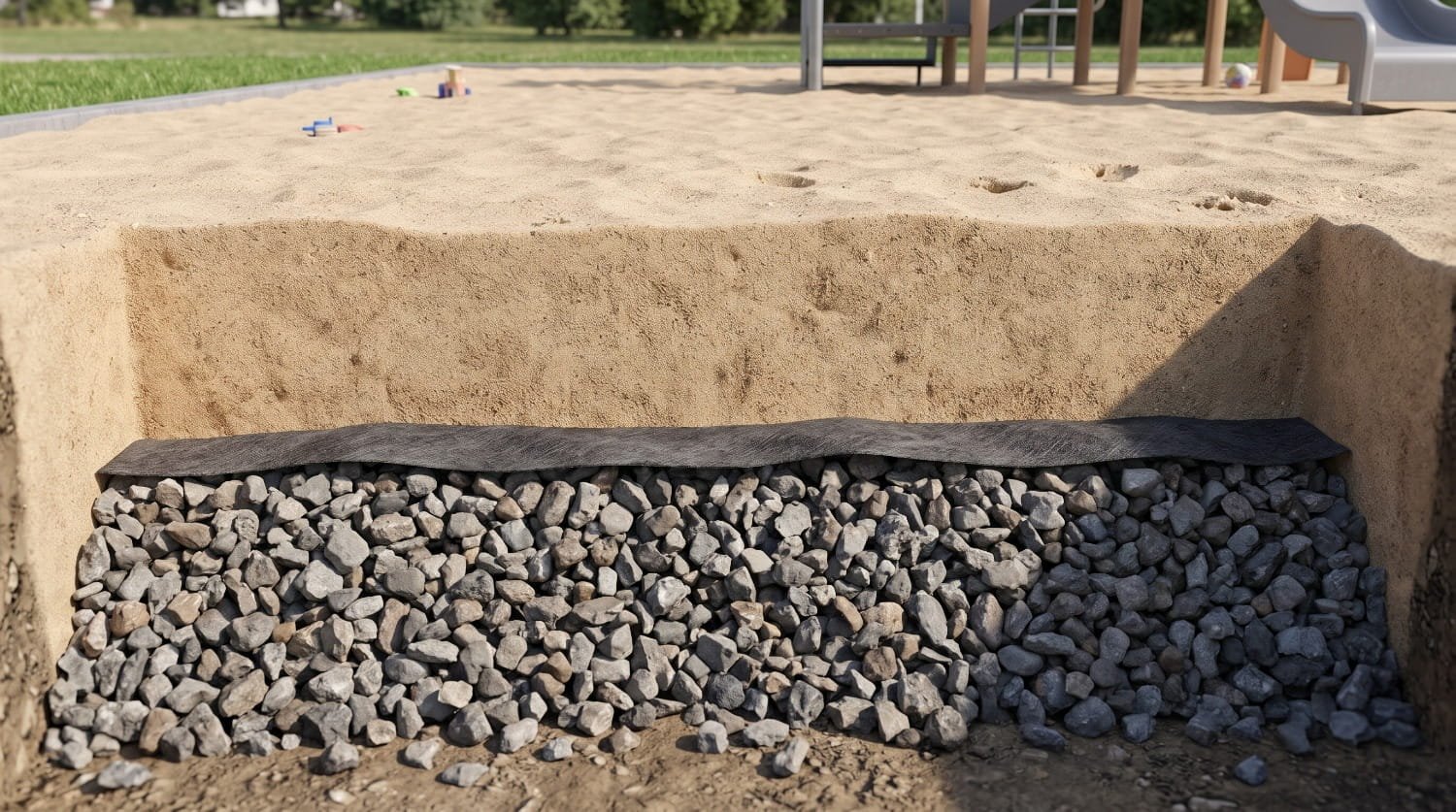
Sand is a classic playground surface that naturally cushions falls. However, an outdoor sand surface can quickly turn into a muddy puddle if not properly drained.
To use sand as a fall-safe ground cover beneath climbing boulders or logs, excavate the area and install a base layer of coarse drainage gravel. Cover the gravel with permeable landscaping fabric, then top it with at least 12 inches of washed play sand.
24. Thick Clover and Natural Grass Turf

For low-impact areas, such as barefoot sensory trails, mud kitchens, and ground-level loose-parts stations, you do not need deep wood fiber or gravel. Instead, cultivate a highly durable, natural turf.
A blend of traditional grass seed and micro-clover creates a dense, soft, and drought-resistant carpet that feels great on bare feet and handles heavy foot traffic beautifully.
25. Soft Moss and Creeping Ground Cover

If your yard has heavy shade where grass refuses to grow, lean into the woodland aesthetic by cultivating a moss garden. Moss is incredibly soft, requires no mowing, and provides natural cushioning for low-level play.
Combine moss with shade-loving creeping ground covers like sweet woodruff or creeping jenny to create a soft, magical, and natural floor for your child’s living shelters and quiet reading zones.
Building Your Backyard Adventure Zone
Transforming your yard into a natural outdoor playground is an ongoing process. You do not need to tackle all 25 ideas at once. Start by assessing your yard’s natural topography. If you have mature trees, begin with a living shelter or a single-rope swing. If you have a flat, sunny space, start by digging a timber-bordered sand pit and introducing a loose-parts station.
Remember to prioritize safety first. Whenever you install climbing and balancing elements, ensure you lay down the appropriate depth of fall-safe ground surfacing like engineered wood fiber or pea gravel.
Always inspect wooden logs for sharp splinters, ensure boulders are securely anchored into the earth, and actively supervise young children during play.
By bringing these natural elements into your backyard, you will create an adventure zone that nurtures creativity, builds physical strength, and fosters a lifelong love of the natural world.