

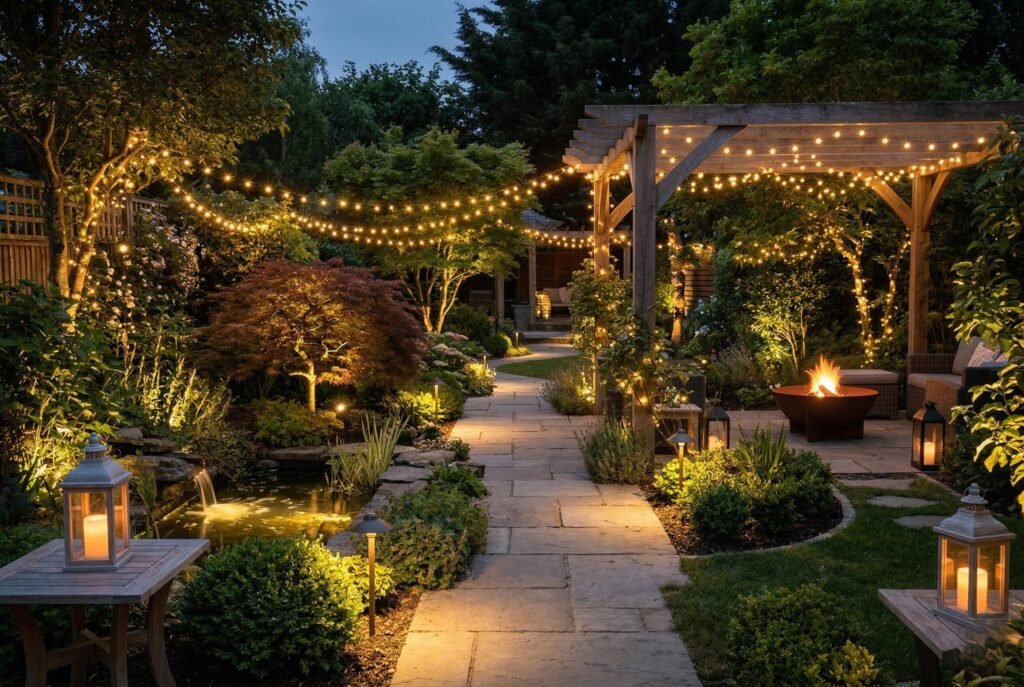
Your garden does not have to disappear when the sun goes down. With the right outdoor lighting, your backyard, patio, or front lawn can transform into a stunning nighttime retreat. Garden lighting is not just about being able to see in the dark; it is about creating ambiance, improving home security, and extending the time you can spend enjoying your outdoor living space.
Whether you have a sprawling backyard landscape, a compact urban balcony, or a simple garden path, adding illumination brings your landscape design to life. The best part is that you do not need to be a professional electrician to achieve a high-end look. Many modern outdoor lighting solutions are simple to install, energy-efficient, and incredibly stylish.
In this comprehensive guide, we will explore practical, beautiful, and easy-to-implement garden lighting ideas. We will also cover the basics of layering light, choosing the right power sources, and selecting the perfect bulbs to maximize your home’s curb appeal.
Why Garden Lighting Matters
Before diving into the ideas, it is helpful to understand why investing time and a little money into landscape lighting is worth it.
- Boosts Curb Appeal: Strategic lighting highlights your home’s best architectural features and your garden’s most beautiful plants, instantly increasing your property’s nighttime aesthetic.
- Enhances Safety: Illuminating walkways, steps, and uneven terrain prevents trips and falls, making your outdoor space safe for family and guests.
- Improves Home Security: A well-lit exterior deters potential intruders. Motion-sensor lights and wide floodlights eliminate dark corners where unwanted guests might hide.
- Expands Living Space: Lighting allows you to use your patio, deck, or outdoor kitchen long after sunset, perfect for evening dinners or late-night entertaining.
The Secret to Great Outdoor Lighting: Layering
Just like indoor lighting, the secret to a professional-looking garden is layering your light sources. You want to avoid using one massive, blinding floodlight. Instead, mix these three types of lighting:
- Ambient Lighting: This provides overall illumination for an area. Think of overhead string lights or large wall sconces that cast a wide, gentle glow.
- Task Lighting: This is focused light for specific activities. Examples include bright lights over an outdoor grill or strong path lights to guide footsteps.
- Accent Lighting: This adds drama and visual interest. Uplighting a beautiful tree, spotlighting a statue, or placing underwater lights in a fountain are all forms of accent lighting.
Now that you know the basics, let us look at some simple but stunning ideas to bring your garden to life at night.
15+ Beautiful Garden Lighting Ideas
1. Classic Overhead String Lights
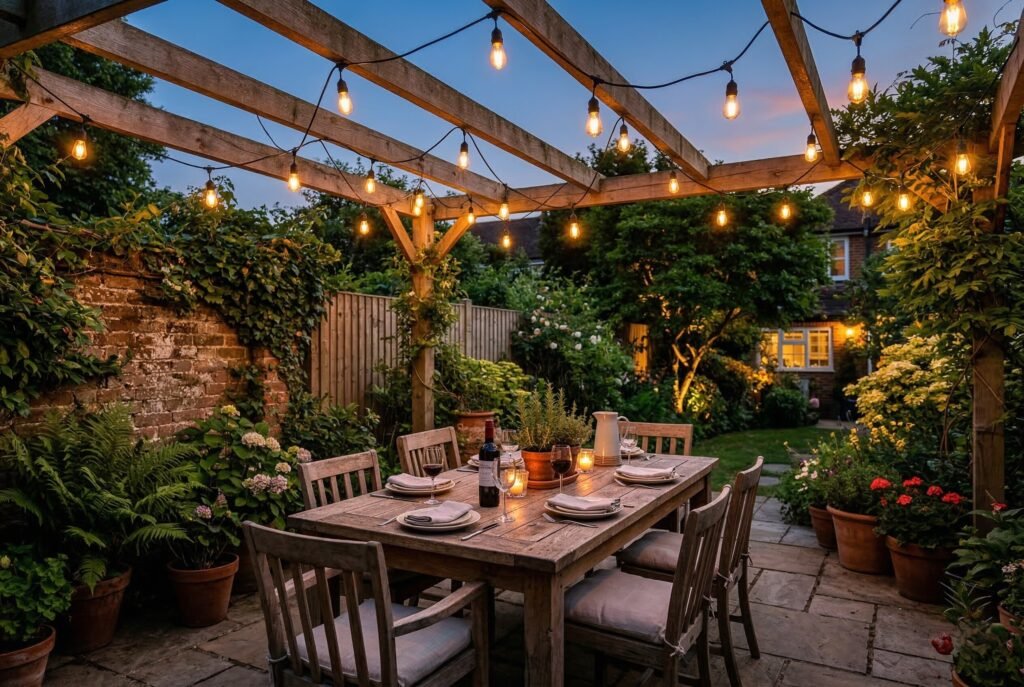
String lights, often called bistro or cafe lights, are the easiest way to add instant charm to any outdoor space. They provide excellent ambient lighting without being overly harsh. For a professional look, hang them in a zigzag or “X” pattern above your patio, deck, or outdoor dining area. Always choose heavy-duty, waterproof, and shatterproof LED string lights. LED bulbs use less electricity, last longer, and will not break if the wind knocks them down.
2. Solar-Powered Pathway Stake Lights
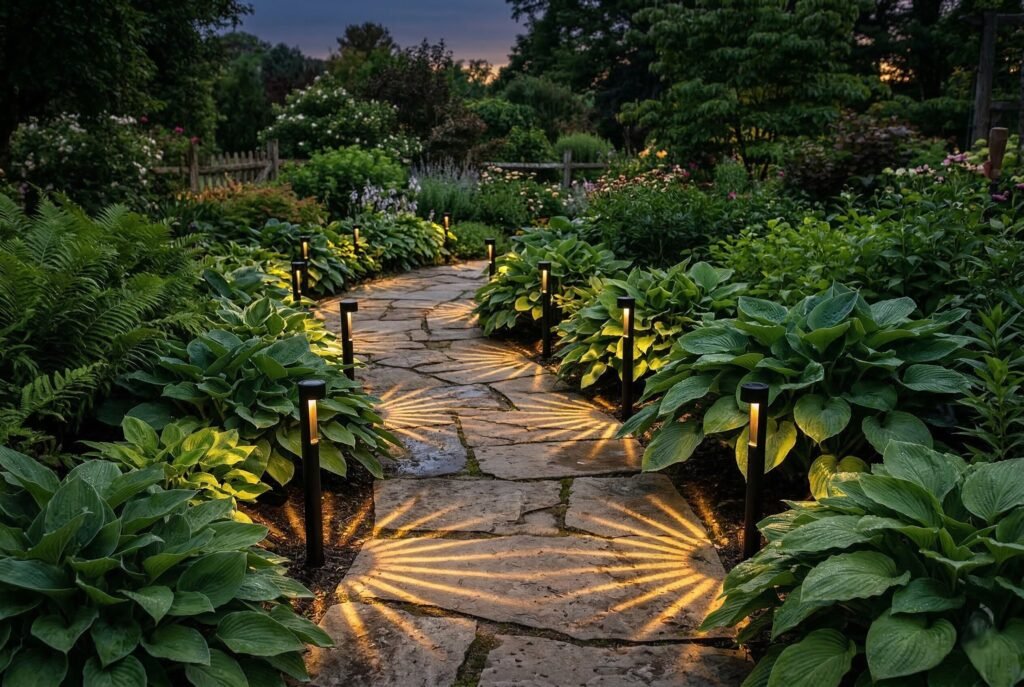
Pathway lighting is essential for safety, but it also adds a beautiful visual border to your landscaping. Solar stake lights are incredibly user-friendly because they require zero wiring. You simply push the stake into the ground where it gets plenty of daytime sunlight. Space them evenly along walkways, driveways, or around the perimeter of flowerbeds. To avoid an artificial runway look, alternate the lights on either side of the path rather than lining them up perfectly straight.
3. Dramatic Tree Uplighting
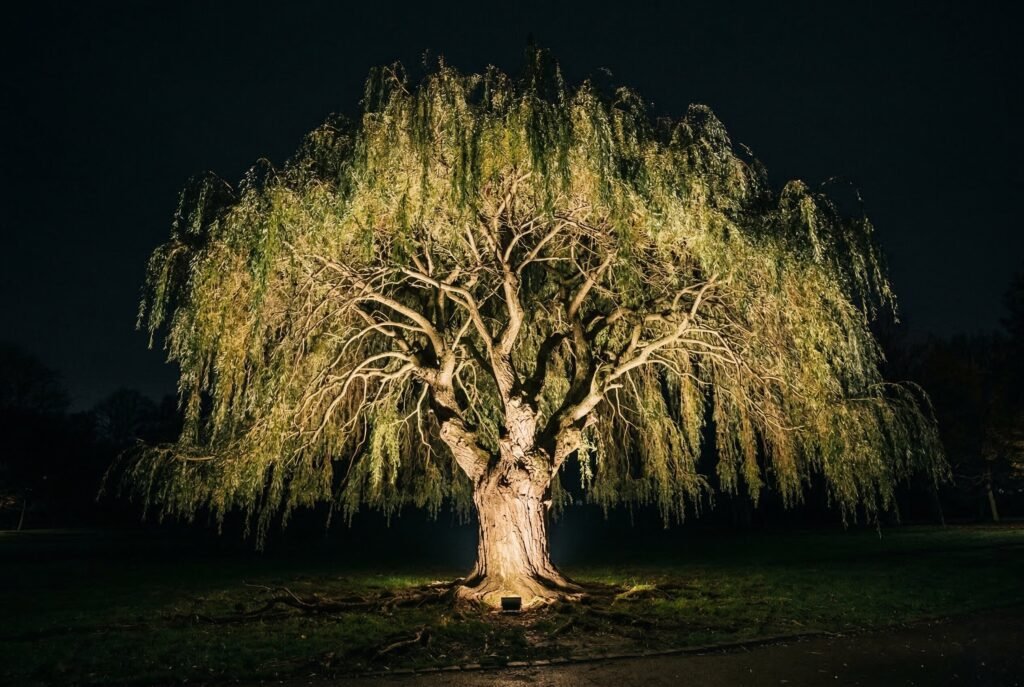
Uplighting is an accent lighting technique that adds instant drama to your yard. By placing a directional spotlight at the base of a large tree and aiming it upward, you highlight the trunk’s texture and the canopy’s structure. This technique works exceptionally well on trees with interesting bark, like birch trees, or those with expansive canopies, like maples and oaks. Use low-voltage LED spotlights with a warm white color temperature to keep the look natural.
4. Recessed Deck Step Lights
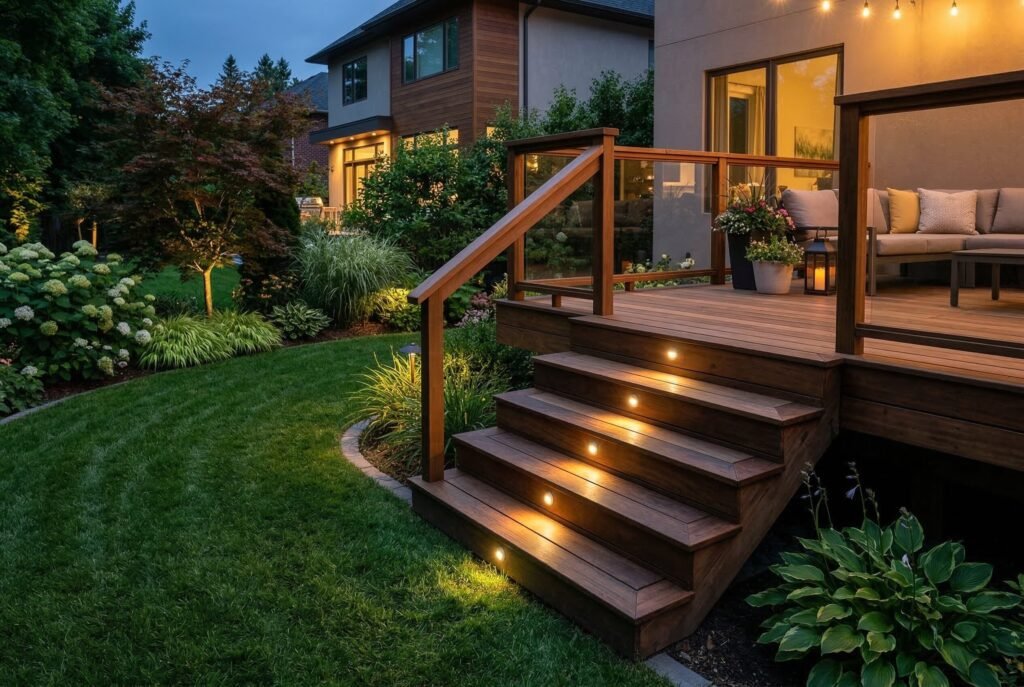
If you have a deck or uneven hardscaping with steps, recessed step lights are a must-have for safety and style. These small fixtures are installed directly into the vertical part of the step (the riser) and shine downward onto the flat part (the tread). This prevents a blinding glare while ensuring nobody trips in the dark. They offer a sleek, architectural, and high-end look that seamlessly integrates into your existing woodwork or masonry.
5. Fairy Lights Wrapped Around Tree Trunks
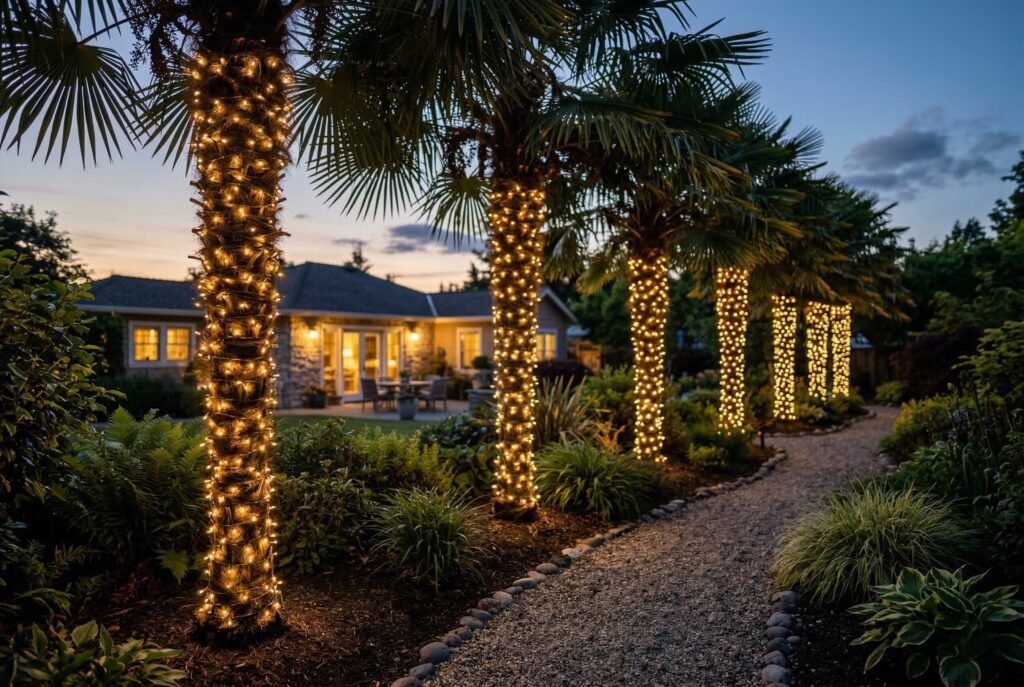
For a magical, whimsical atmosphere, try wrapping fairy lights tightly around the trunks of your trees or the pillars of a pergola. Unlike larger string lights, fairy lights use tiny LED nodes on a thin copper or silver wire, making the wire almost invisible during the day. At night, it looks like the tree itself is glowing. Opt for solar-powered or battery-operated outdoor fairy lights with a built-in timer so you do not have to turn them on and off manually.
6. Glowing LED Water Features
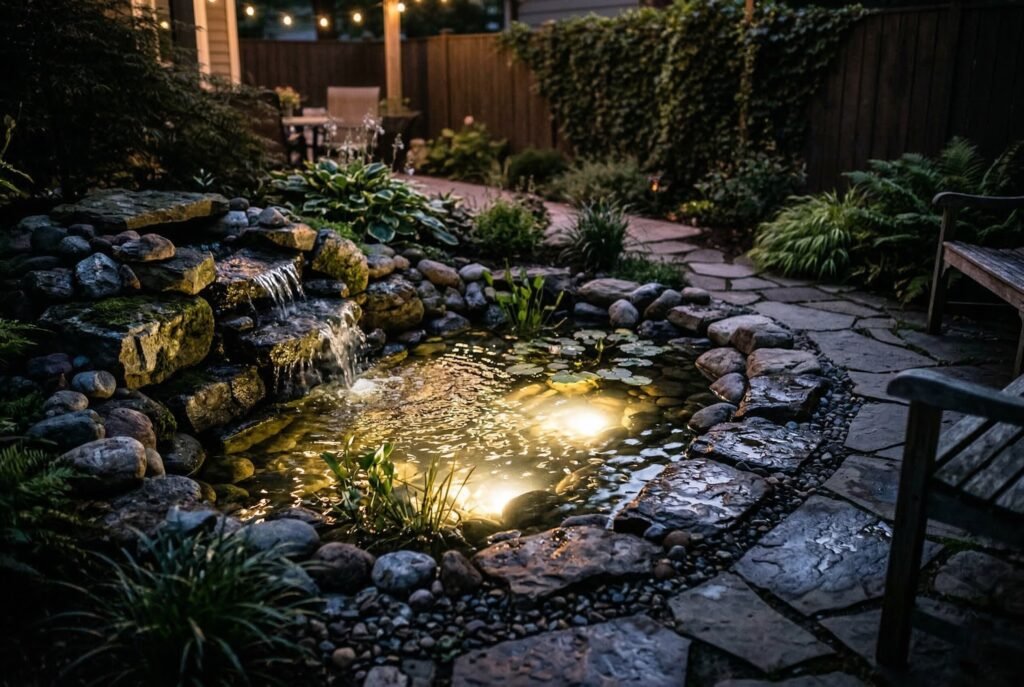
If you have a pond, a fountain, or even a small birdbath, adding waterproof lighting creates a stunning focal point. Submersible LED lights can be placed at the bottom of a pond to illuminate fish and aquatic plants, or hidden where water cascades to catch the movement of the splashes. The moving water refracts the light, casting beautiful, dancing shadows on nearby walls and plants.
7. Modern Exterior Wall Sconces
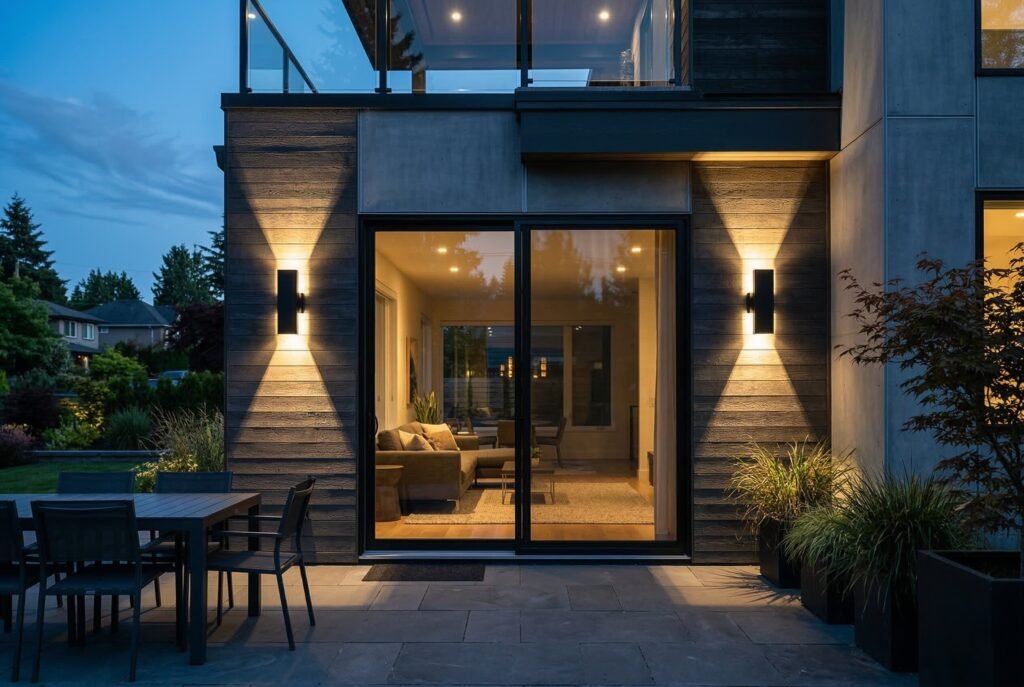
Wall sconces are functional fixtures that attach to the exterior walls of your home, garage, or garden shed. Replacing outdated, builder-grade fixtures with modern “up-down” sconces can completely change the look of your outdoor space. These fixtures emit light from both the top and bottom, washing the wall in a soft glow while minimizing light pollution in the night sky. They are perfect for illuminating the boundaries of your patio or flanking exterior doorways.
8. Hidden Under-Bench LED Strips
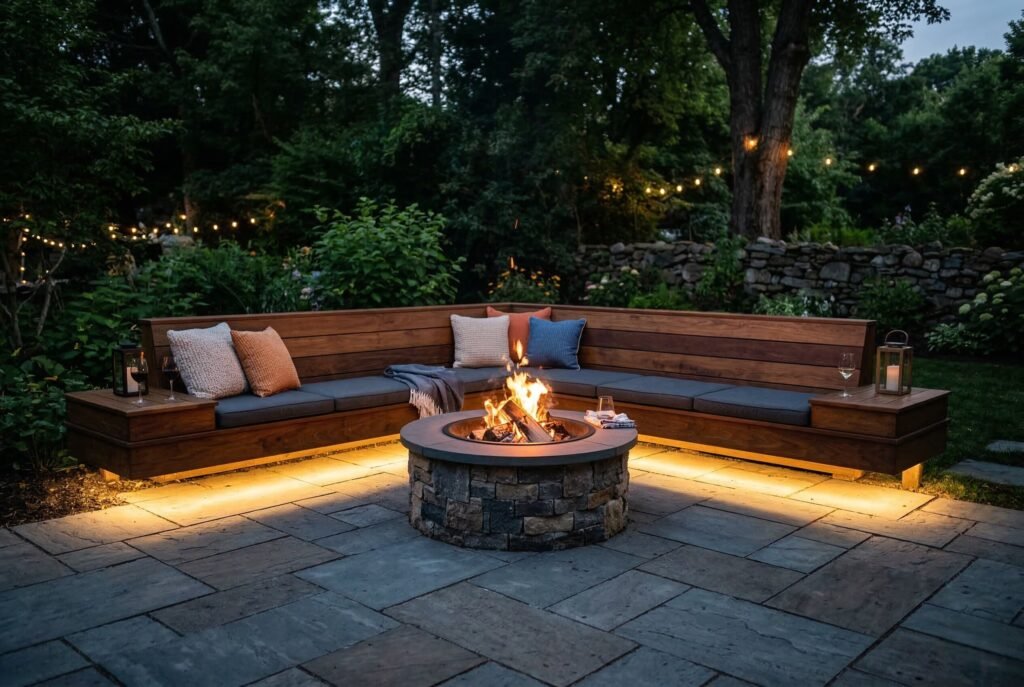
Outdoor-rated LED strip lights are highly versatile and perfect for adding hidden accent lighting. Apply a waterproof strip light underneath the lip of built-in seating, under the railing of your deck, or along the underside of a hardscape retaining wall. Because you cannot see the light source itself—only the glow it produces—this technique creates a highly modern, floating effect that looks very expensive but is actually quite budget-friendly.
9. Rustic Hanging Mason Jar Lanterns
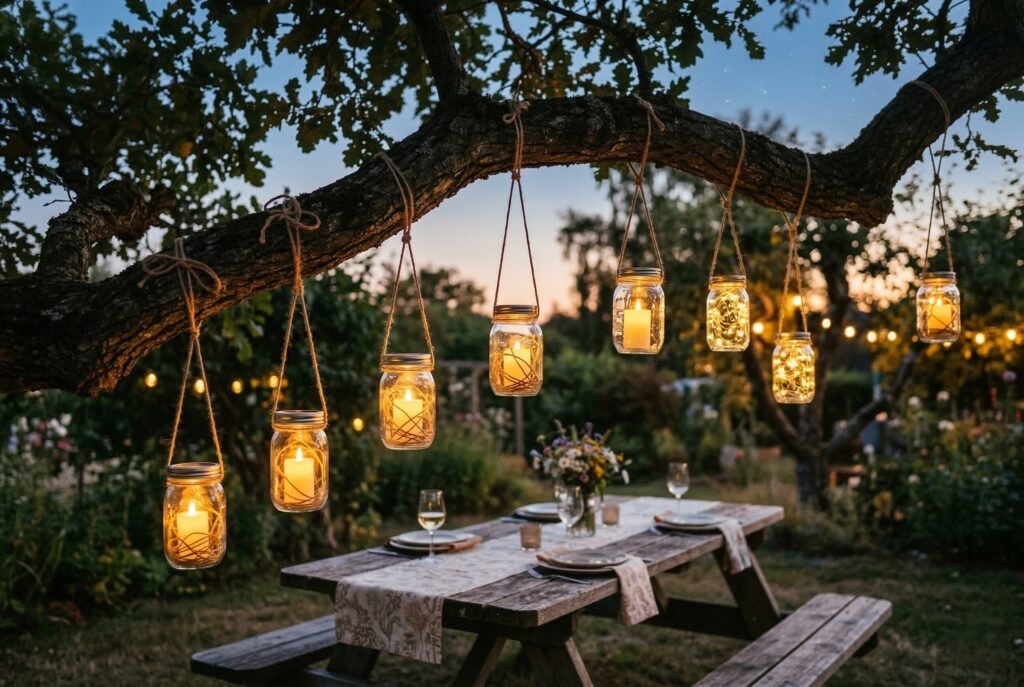
For a cozy, farmhouse, or rustic garden aesthetic, DIY mason jar lanterns are an excellent choice. You can fill glass jars with battery-operated LED tea lights, chunky faux candles, or a handful of solar-powered string lights. Hang them from tree branches, shepherds’ hooks in your flowerbeds, or along your fence line. They sway gently in the breeze and provide a soft, intimate task light perfect for quiet evenings.
10. Sculptural Silhouette Lighting (Backlighting)

Silhouetting, or backlighting, is an advanced landscape lighting trick that is surprisingly easy to do. You place a spotlight directly behind an interesting object—like a distinctive statue, a large planter, or a plant with a unique shape (like a Japanese maple or agave). You point the light away from the object and toward an adjacent wall or fence. This washes the background in light, causing the object in front to appear as a striking, dark silhouette.
11. Moonlighting from Above
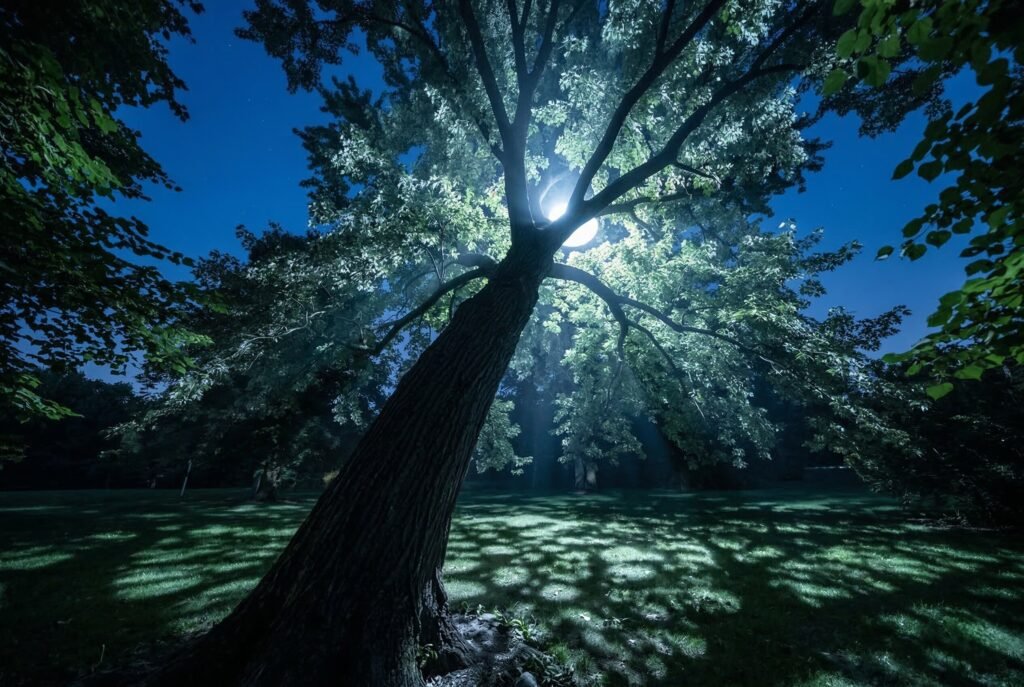
Moonlighting aims to replicate the natural, romantic look of a full moon shining down through the trees. To achieve this, a low-voltage light fixture is mounted high up in a large tree, angled downward toward the lawn or patio. As the light filters through the leaves and branches, it casts beautiful, dappled shadows on the ground. Use a slightly cooler color temperature bulb (around 3000K to 4000K) to mimic the silvery tone of real moonlight.
12. Fire Pits as a Central Light Source
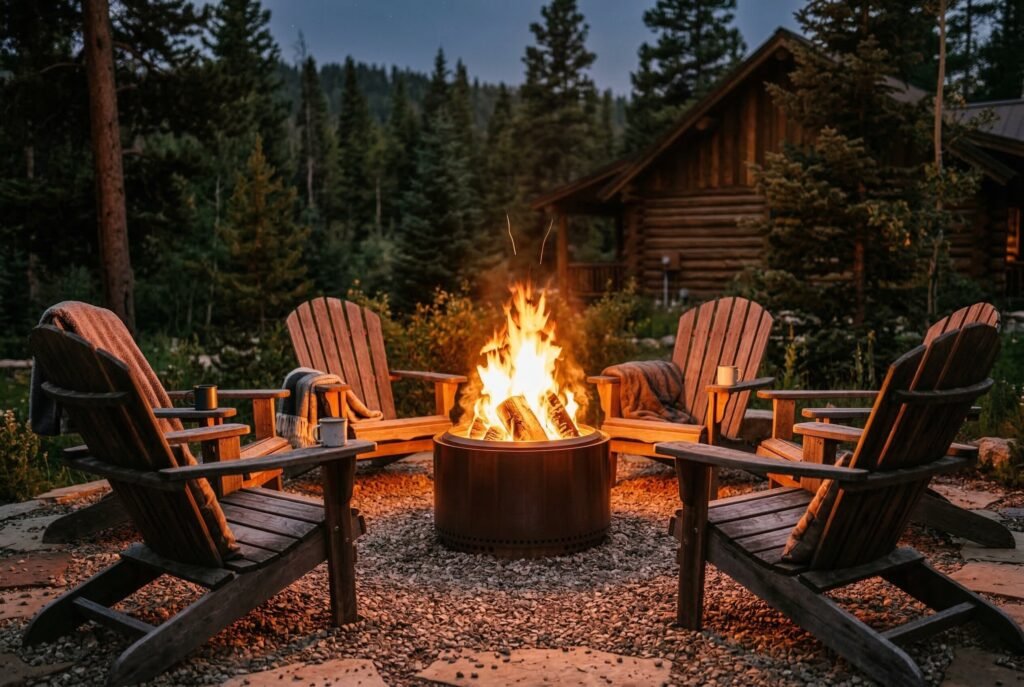
Sometimes the best garden light is a natural flame. A fire pit, whether it is a traditional wood-burning bowl, a smokeless model, or a clean propane fire table, acts as a brilliant anchor for your nighttime garden. It provides intense warmth, task lighting for roasting marshmallows, and an undeniably cozy ambiance. Arrange your seating around the fire pit and use minimal, dim accent lighting in the surrounding area to let the fire be the star of the show.
13. Glow-in-the-Dark Planters
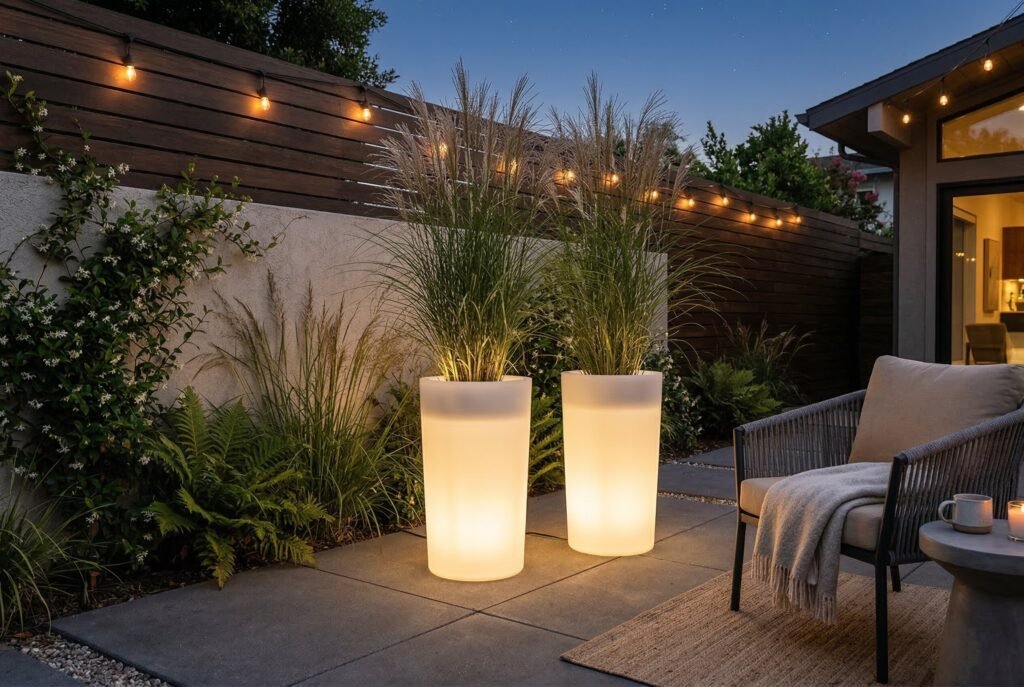
Illuminated planters serve a dual purpose: they hold your beautiful container gardens and act as freestanding light fixtures. These modern planters are typically made from durable, weather-resistant translucent plastic and house an LED module inside. You can plug them in or choose rechargeable battery options. Many of them come with remote controls, allowing you to change the color of the glow from a warm white to vibrant blues, greens, or reds depending on the occasion.
14. An Elegant Pergola Chandelier
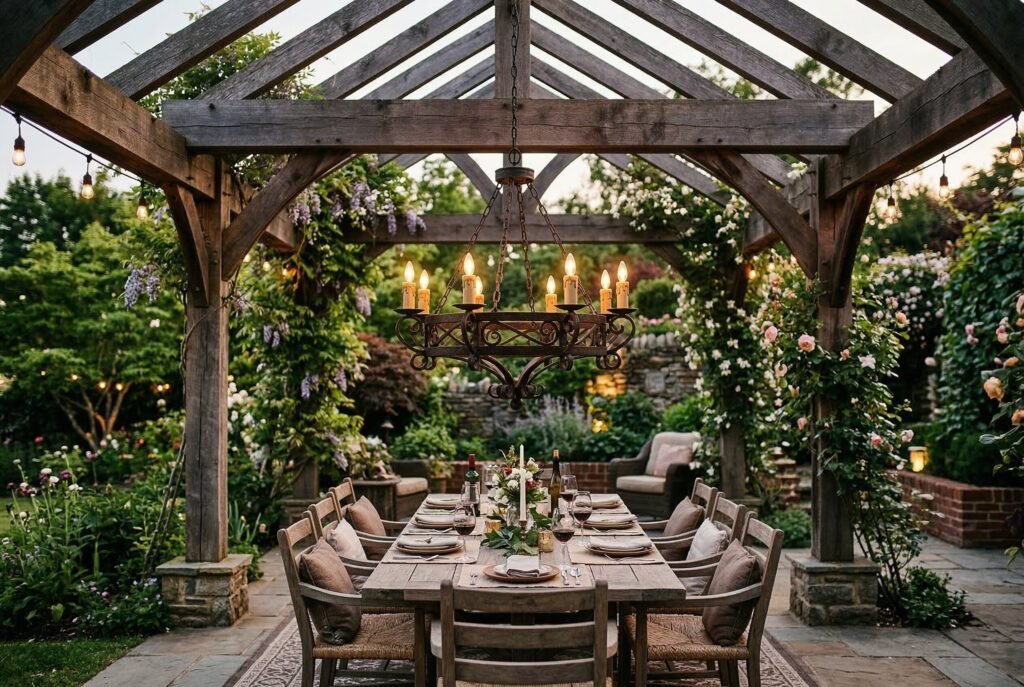
If you have a covered outdoor structure like a gazebo, pergola, or covered patio, treat it like an indoor room by installing an outdoor chandelier. This provides excellent overhead ambient and task lighting for dining or playing games. Make sure the chandelier you purchase is specifically damp-rated or wet-rated for outdoor use, meaning its wiring is sealed to prevent moisture damage from humidity and rain.
15. Stylish Motion-Sensor Security Lights
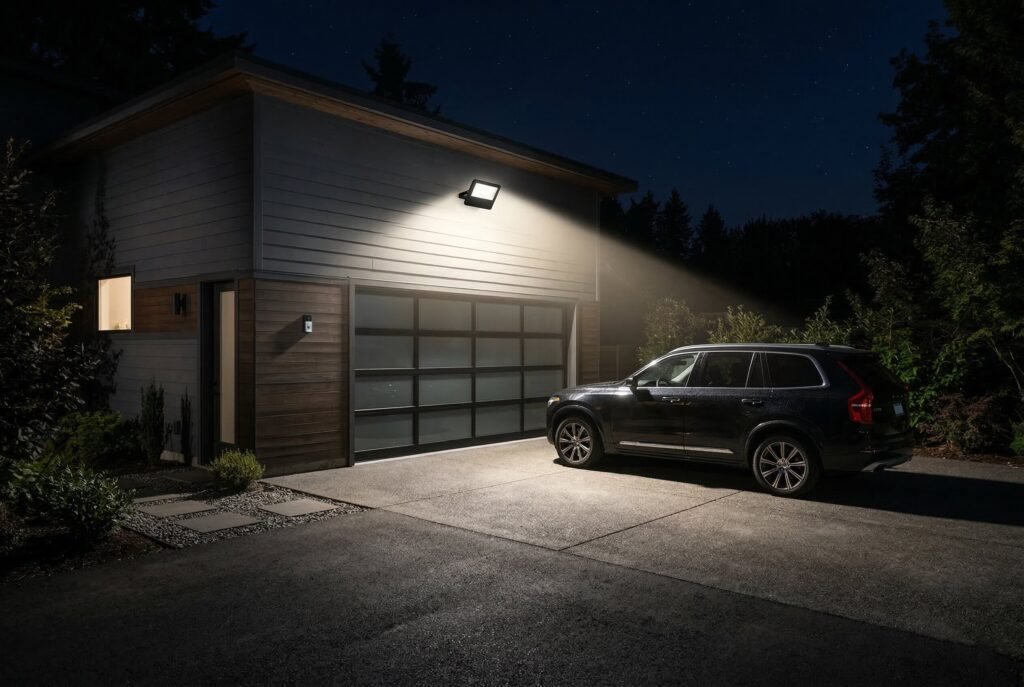
Security lighting does not have to be ugly. While old-school floodlights look like industrial stadium lights, modern motion-sensor lights come in sleek, decorative designs that match contemporary, farmhouse, or traditional home exteriors. Place these strategically over garages, side doors, and dark alleys. They remain off to save energy and reduce light pollution, instantly flooding the area with bright light only when movement is detected.
Choosing the Right Power Source
Once you have your ideas, you need to decide how to power them. Here is a simple breakdown of your options:
Solar Power
Solar lighting is the easiest to install because it requires zero wiring or electrical knowledge. They have a small solar panel that charges a battery during the day and turns the light on at dusk.
- Best for: Pathways, accent stakes, and areas of your yard that receive at least 6 to 8 hours of direct sunlight.
- Keep in mind: They are generally dimmer than hardwired lights and may not last all night, especially on cloudy winter days.
Low-Voltage Landscape Lighting (Hardwired)
This is the gold standard for professional garden lighting. It involves plugging a transformer into a standard outdoor outlet, which reduces the electrical voltage to a safe 12 volts. You then run a specialized outdoor wire just under the mulch or soil to connect your light fixtures.
- Best for: Uplighting trees, step lighting, wall sconces, and permanent installations where you want reliable, bright light every single night.
- Keep in mind: It requires some planning, digging shallow trenches for the wire, and an upfront investment, but it is highly durable.
Battery Operated
Battery-powered lights run on standard AA/AAA batteries or rechargeable lithium-ion packs.
- Best for: Temporary setups, patio table centerpieces, fairy lights, and areas where neither solar nor wiring is possible (like a deeply shaded patio corner).
- Keep in mind: You will need to remember to charge or replace the batteries regularly.
Understanding Brightness and Color
When buying outdoor lights, specifically LED bulbs, pay attention to the packaging for two crucial terms: Lumens and Kelvins.
Lumens (Brightness): Lumens measure how bright a light is.
- Path lights and accent lights only need about 50 to 100 lumens.
- Step lights need around 10 to 50 lumens (just enough to see, but not enough to blind you).
- Security floodlights might require 700 to 1300+ lumens to light up a wide area.
Kelvins (Color Temperature):
Kelvins (K) measure the color of the light. This makes a massive difference in how your garden feels.
- Warm White (2500K – 3000K): This is the ideal range for garden lighting. It mimics the warm, inviting glow of a fire or sunset and looks beautiful against brick, wood, and plant life.
- Cool White / Daylight (4000K – 5000K): This light has a bluish tint. It can look very harsh, artificial, and sterile outdoors. Save cool white lights exclusively for security floodlights where maximum visibility is the only goal.
Maintenance Tips for Long-Lasting Garden Lights
To keep your outdoor lighting looking spectacular year after year, a little simple maintenance goes a long way.
- Wipe down solar panels: Every few months, take a damp cloth and wipe the dust, dirt, and pollen off your solar panels. A dirty panel cannot charge the battery efficiently.
- Trim overgrown plants: As your garden grows, bushes and ground cover can swallow up your path lights and spotlights. Regularly trim foliage back so your lights can actually be seen.
- Check for exposed wires: After heavy rains or winter thaws, check your low-voltage wiring to ensure it hasn’t become exposed. If it has, simply bury it back under an inch of soil or mulch.
Conclusion
Upgrading your garden lighting is one of the most rewarding home improvement projects you can undertake. It fundamentally shifts how you experience your home, turning a dark, unusable yard into a warm, welcoming outdoor oasis.
Start small. You do not need to install all 15 ideas at once. Begin by hanging some heavy-duty string lights over your seating area, or stake a few solar lights along your front walkway. Once you see the magic of a well-lit landscape, you can slowly begin layering in uplighting, hidden deck lights, and whimsical lanterns.
By choosing the right fixtures, prioritizing warm color temperatures, and thoughtfully layering your light sources, you will create a stunning nighttime garden you will never want to leave.