

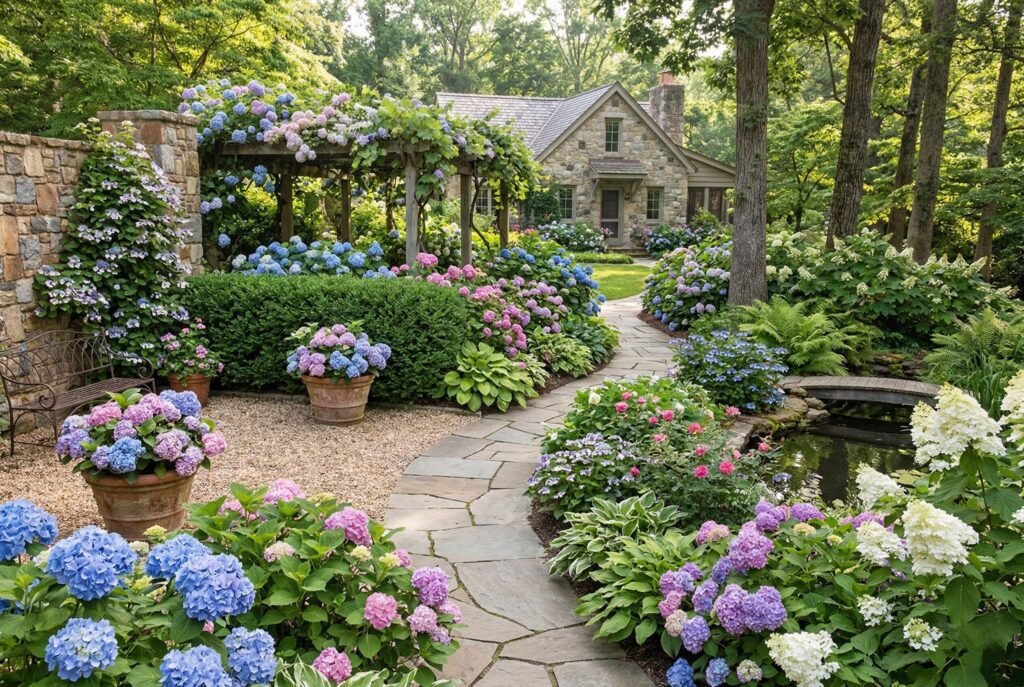
Hydrangeas are one of the most beloved shrubs in American gardens, and it is easy to see why. With their massive, showy blooms, lush green foliage, and incredible versatility, they can transform any dull outdoor space into a lush, colorful retreat. Whether you are looking to boost your home’s curb appeal, create a natural privacy screen, or build a quiet backyard oasis, hydrangeas are the perfect landscaping tool.
In this comprehensive guide, we will explore beautifully creative hydrangea landscaping ideas. We will also dive into the different types of hydrangeas, companion planting, and how to use them effectively in your yard. Get ready to gather plenty of inspiration to make your garden the envy of the neighborhood.
Understanding the Main Types of Hydrangeas
Before you start planting, it is highly beneficial to know which type of hydrangea you are working with. Choosing the right plant for your specific climate (USDA Hardiness Zones) and sun exposure is the secret to a thriving landscape.
Bigleaf Hydrangeas (Hydrangea macrophylla)
These are the classic hydrangeas most people picture. They are famous for their large, globe-shaped flower heads (mopheads) or delicate, flat clusters (lacecaps). Bigleaf hydrangeas are unique because their bloom color changes based on your soil pH. Acidic soil produces blue flowers, while alkaline soil creates pink flowers. They thrive in morning sun and afternoon shade.
Panicle Hydrangeas (Hydrangea paniculata)
If you have a yard with full sun, panicle hydrangeas are your best friend. They feature cone-shaped flower heads that usually open white or pale green and fade to beautiful shades of pink or red in the late summer and fall. Varieties like ‘Limelight’ and ‘Bobo’ are extremely cold-hardy and reliable bloomers.
Smooth Hydrangeas (Hydrangea arborescens)
Native to the United States, smooth hydrangeas are famous for their massive, snowball-like white blooms. The ‘Annabelle’ variety is the most popular. They are very adaptable, tolerate a range of climates, and bloom on new wood, meaning you can prune them close to the ground in late winter and still get flowers.
Oakleaf Hydrangeas (Hydrangea quercifolia)
Named for their distinct, oak-like leaves, these are another US native. Oakleaf hydrangeas offer multiple seasons of interest. They have white, cone-shaped flowers in the summer, spectacular burgundy and crimson foliage in the fall, and peeling bark that looks great in the winter. They prefer partial shade and well-draining soil.
Climbing Hydrangeas (Hydrangea anomala subsp. petiolaris)
Unlike the shrub varieties, climbing hydrangeas are vigorous vines that can scale massive brick walls, large trees, or sturdy pergolas. They produce white, lacecap-style flowers and lush green foliage, thriving in partial to full shade.
Now that you know your options, let us dive into the best landscaping ideas for your home.
Idea 1: The Welcoming Front Porch Container Garden
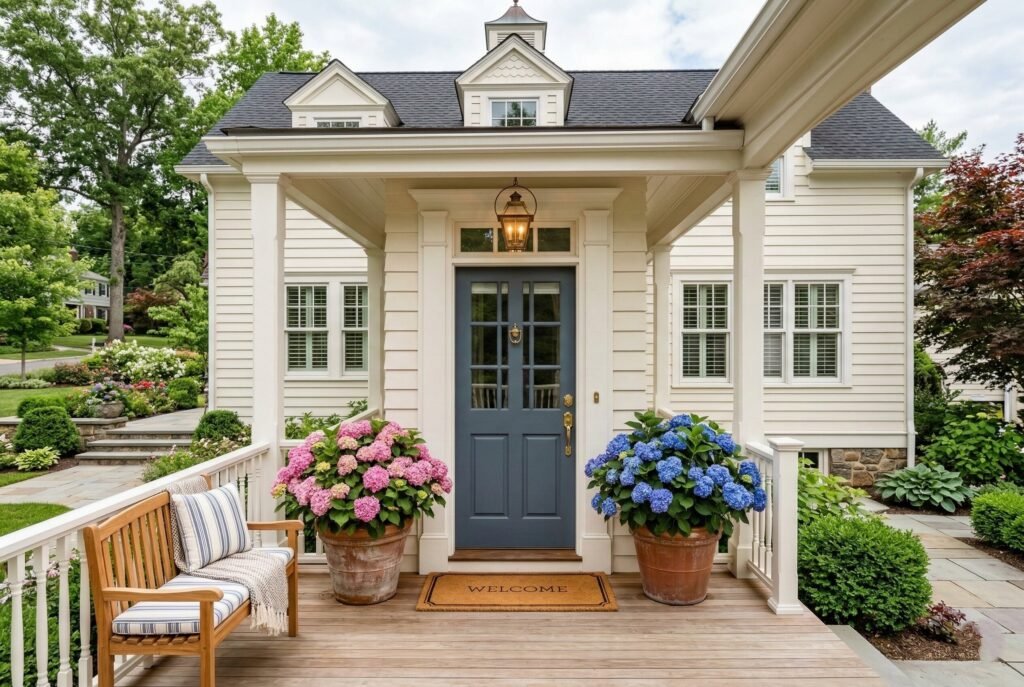
You do not need a massive yard to enjoy hydrangeas. Planting dwarf varieties in large containers is a brilliant way to frame your front door and instantly boost curb appeal. Container gardening gives you ultimate control over the soil pH, meaning you can easily manipulate the soil to get bright blue or vibrant pink blooms.
How to achieve this look: Choose a dwarf variety like the ‘Let’s Dance’ series or ‘Bobo’ panicle hydrangeas, as they will not outgrow their pots. Ensure your planters have large drainage holes, as hydrangeas love moisture but hate sitting in soggy soil. Use a high-quality, well-draining potting mix. Because containers dry out faster than the ground, you will need to water these daily during the hot summer months.
Idea 2: The Magnificent Panicle Hydrangea Privacy Hedge
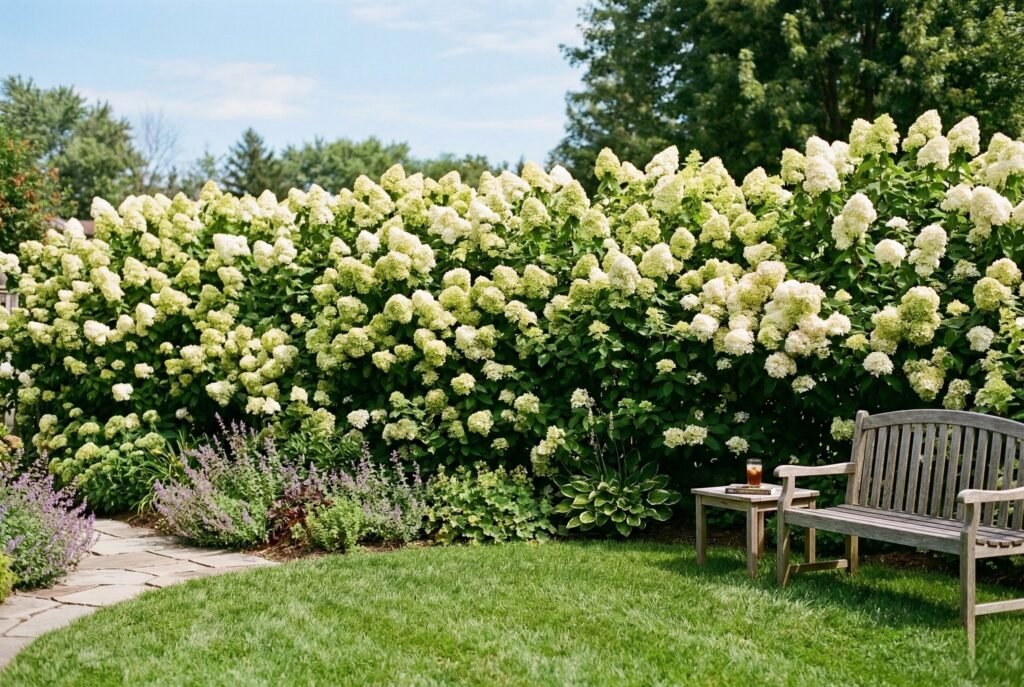
Fence panels can feel harsh and unwelcoming. If you want to create a natural boundary line or a privacy screen between you and your neighbors, a row of tall panicle hydrangeas is an excellent choice. Panicle hydrangeas grow fast, upright, and dense, making them perfect for living walls.
How to achieve this look: Select tall-growing varieties like ‘Limelight’, ‘Vanilla Strawberry’, or ‘Pinky Winky’. Plant them about five to six feet apart to allow for proper air circulation while still allowing them to grow together into a solid hedge. These varieties love full sun, so choose a spot that gets at least six hours of direct sunlight a day. This setup provides a massive wall of white and pink blooms from mid-summer straight through to the first frost.
Idea 3: Classic Foundation Planting with Boxwoods
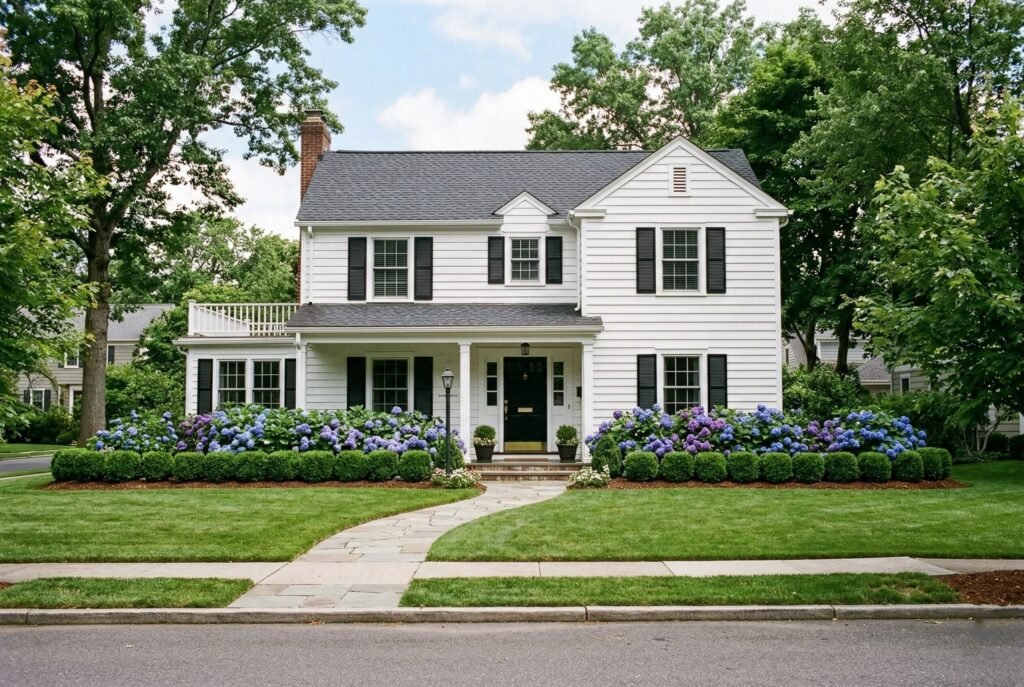
One of the most timeless and sophisticated landscaping ideas is pairing hydrangeas with evergreen shrubs. The structured, formal look of clipped boxwoods provides the perfect contrast to the loose, romantic, and colorful blooms of the hydrangeas. Furthermore, the evergreens hide the bare stems of the hydrangeas during the winter months when the flowers have dropped their leaves.
How to achieve this look: Plant a row of winter-hardy boxwoods or small holly shrubs along the front of your garden bed. Behind them, plant bigleaf hydrangeas or smooth hydrangeas. Make sure you leave enough space between the evergreens and the hydrangeas so they do not compete for water and root space. This layered look ensures your front yard looks structured and alive all year round, even in January.
Idea 4: The Serene Woodland Garden Edge
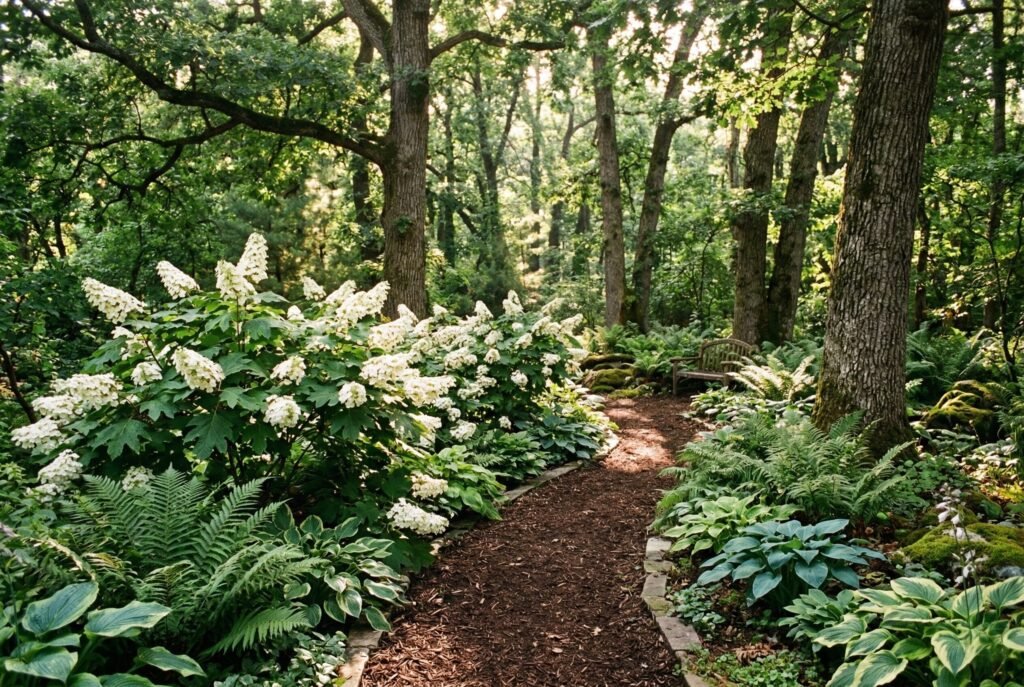
If you have a yard with large, mature trees that cast a lot of shade, you might struggle to find shrubs that bloom well. Oakleaf hydrangeas are the ultimate solution. Because they naturally grow in the understory of forests, they are perfectly adapted to dappled sunlight and shade.
How to achieve this look: Plant Oakleaf hydrangeas along the edge of a wooded area or beneath large shade trees. To complete the woodland aesthetic, surround the base of the hydrangeas with shade-loving companion plants like hostas, ferns, coral bells (Heuchera), and bleeding hearts. Add a thick layer of natural cedar or pine bark mulch to retain moisture and mimic the forest floor.
Idea 5: A Dramatic Driveway Border
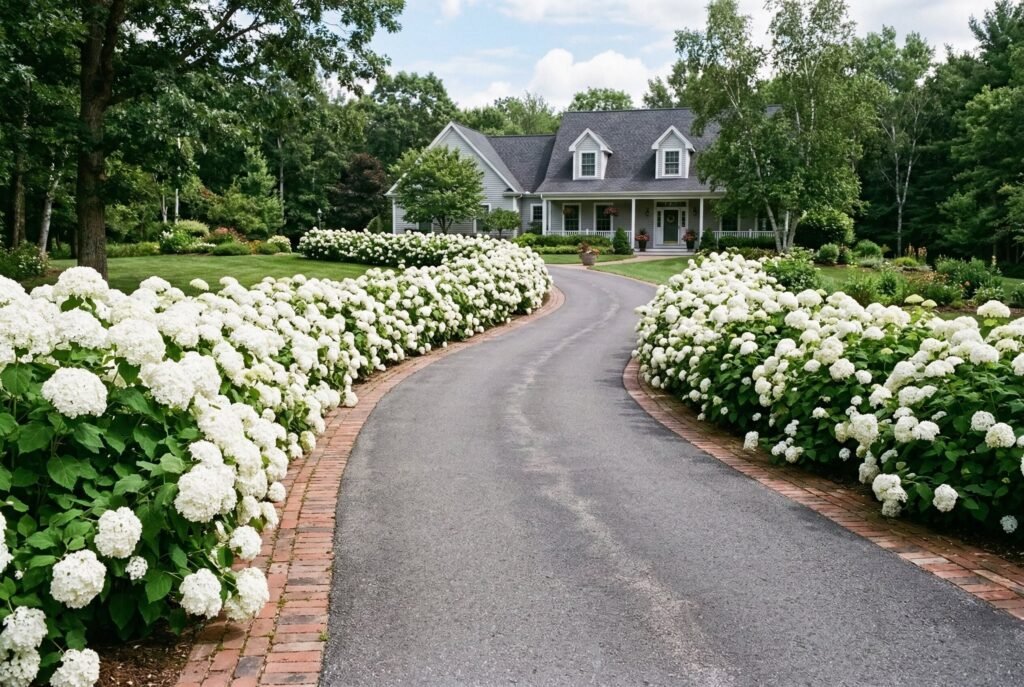
A long driveway can sometimes look like a barren strip of concrete or asphalt. Softening the edges with a long, continuous border of hydrangeas creates a breathtaking entrance to your property. Smooth hydrangeas are fantastic for this because their massive white blooms look incredibly dramatic when planted in large groups.
How to achieve this look: Use smooth hydrangeas like ‘Incrediball’ or ‘Annabelle’. These varieties have very strong stems that can hold up their massive flower heads even after a heavy summer rain. Plant them in a straight line along the driveway, spacing them about four feet apart. Because driveways radiate heat in the summer, ensure you water this border deeply during dry spells.
Idea 6: Romantic Climbing Hydrangea on a Pergola
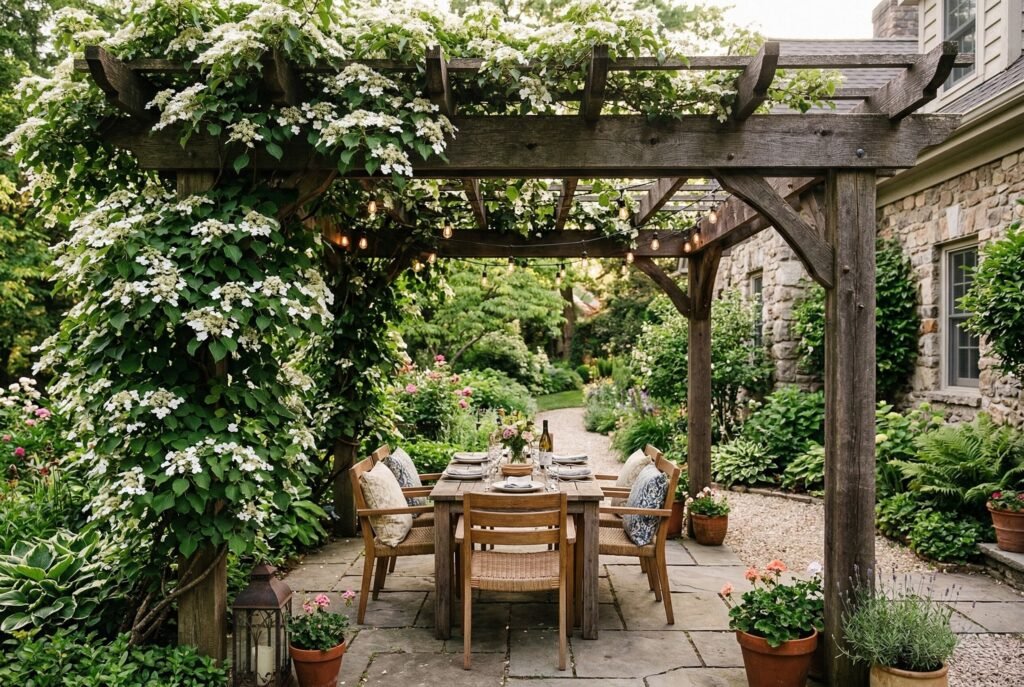
When we think of landscaping, we often only think about the ground. But vertical landscaping is a powerful way to add character to your yard. Climbing hydrangeas are robust vines that use aerial rootlets to cling to surfaces. They can turn a plain wooden pergola, a bare brick chimney, or an old stone wall into a living piece of art.
How to achieve this look: Plant a climbing hydrangea (Hydrangea anomala) at the base of your structure. Be patient; climbing hydrangeas are known to be slow growers for the first two to three years as they establish their root systems. Once established, they grow vigorously. Do not plant them against vinyl siding or painted wood, as their clinging roots can cause damage. Stick to brick, stone, or heavy, unpainted wooden structures.
Idea 7: The Mailbox Garden Accent
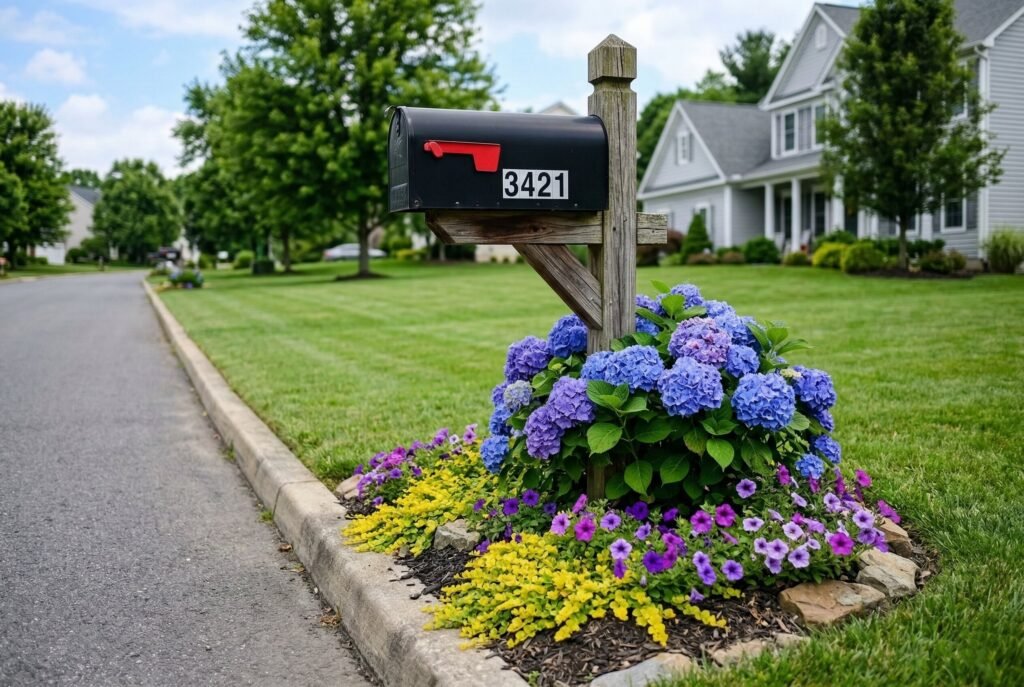
Your mailbox is often the first thing people see when they pull up to your house, yet it is usually the most neglected area of the yard. Turning the base of your mailbox into a mini-garden creates instant charm and makes your home feel incredibly inviting.
How to achieve this look: The space around a mailbox is usually small, so you must use a dwarf or compact hydrangea variety. The ‘Cityline’ series is perfect for this. Dig a small circular bed around the mailbox post, amend the soil with compost, and plant your hydrangea. Surround it with low-growing annuals or groundcovers like creeping thyme or sweet alyssum to suppress weeds and add a secondary pop of color.
Idea 8: The Lush Mixed Perennial Border
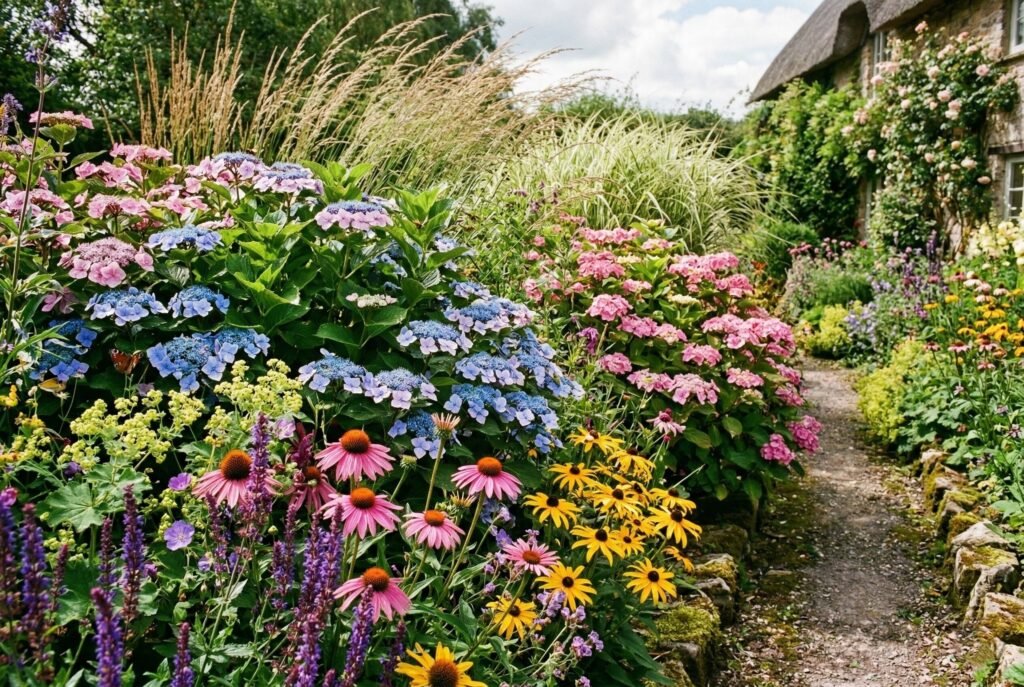
You do not have to plant hydrangeas in isolation. In fact, they look absolutely stunning when mixed into a deep garden border filled with perennials. Hydrangeas provide a solid, bushy anchor of color, while taller and shorter perennials provide texture and movement.
How to achieve this look: Place your hydrangeas in the middle or back of the garden bed, depending on their mature height. In front of them, plant sun-loving or partial-shade perennials that bloom at different times of the year. Great companion plants include Coneflowers (Echinacea), Salvia, Daylilies, and ornamental grasses like Fountain Grass. This ensures that your garden bed has constant color from early spring all the way to late fall, with the hydrangeas serving as the summer centerpiece.
Idea 9: A Glowing White Moon Garden
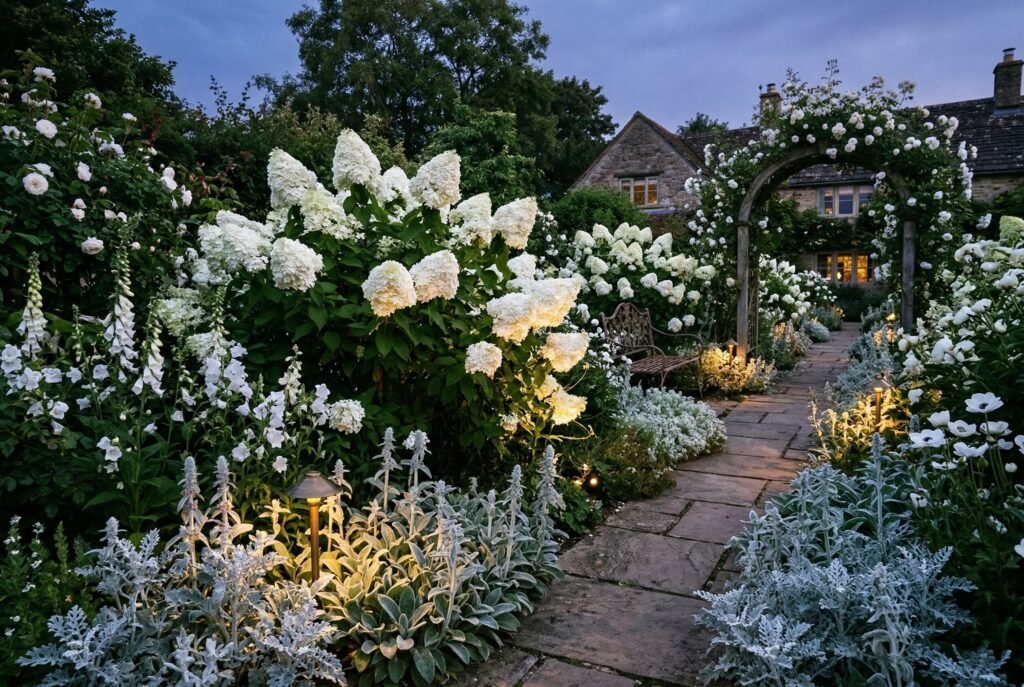
A moon garden is a landscaping concept designed to be enjoyed in the evening. It utilizes plants with white flowers and silver foliage that reflect the moonlight, making the garden appear to glow after the sun goes down. Hydrangeas are the perfect anchor shrubs for this magical concept.
How to achieve this look: Use white-blooming hydrangeas exclusively. ‘Incrediball’ (smooth hydrangea) or ‘White Dome’ are excellent choices. Plant them around an outdoor patio or fire pit where you spend time in the evenings. Pair them with other white-flowering plants like white roses, white bleeding hearts, and sweet alyssum. Add silver-foliage companions like Dusty Miller, Lamb’s Ear, or Russian Sage. Add subtle, low-voltage landscape lighting to enhance the glowing effect.
Idea 10: Erosion Control on a Sloped Yard
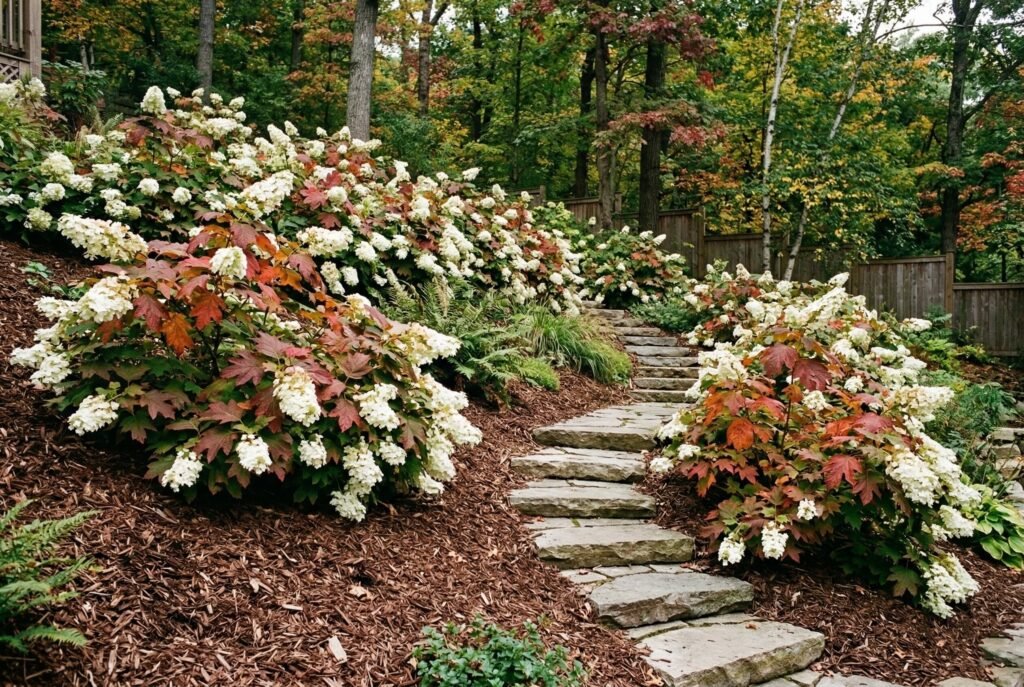
If you have a steep slope or a hill in your yard, you know how frustrating it is to mow and how prone it is to soil erosion during heavy rains. Planting hydrangeas on a slope is a beautiful, practical solution to stabilize the soil and eliminate the need for dangerous mowing.
How to achieve this look: Oakleaf hydrangeas are the best choice for slopes. They have deep, extensive root systems that grip the soil tightly. Furthermore, they tend to spread and sucker over time, creating a dense thicket that locks the hillside in place. Dig flat terraces into the slope for each plant so water pools around the roots rather than running straight down the hill. Cover the bare dirt between the plants with a heavy layer of shredded bark mulch to stop rain from washing the soil away before the roots take hold.
Idea 11: The Poolside Resort Oasis
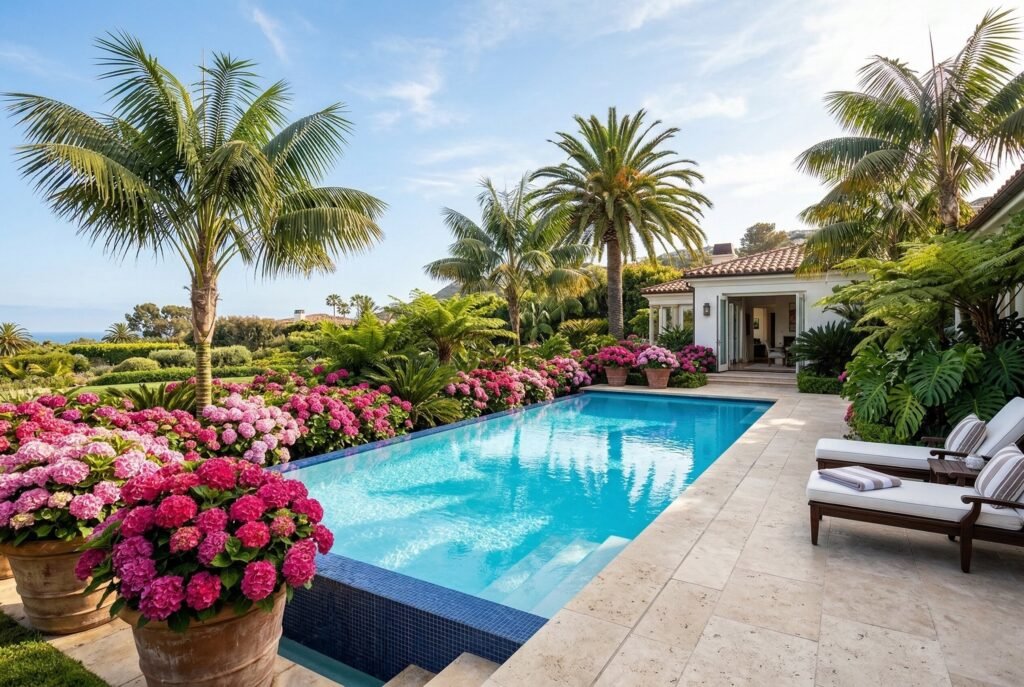
Hydrangeas can bring a lush, resort-like feel to a swimming pool area. Their large, green leaves and massive flowers evoke a feeling of abundance and luxury. However, planting around a pool requires some strategic thinking to protect the plants from pool chemicals and intense heat.
How to achieve this look: Choose heat-tolerant bigleaf hydrangeas or smooth hydrangeas. It is absolutely crucial that you do not plant them in the “splash zone” where chlorinated or saltwater from the pool will constantly hit their leaves and roots, as this will burn and kill the plants. Keep them set back a few feet from the pool edge, or keep them in large, raised decorative planters. Make sure they get afternoon shade, as the reflection of the sun off the pool water can scorch their leaves in the middle of summer.
Idea 12: Around a Backyard Water Feature or Pond
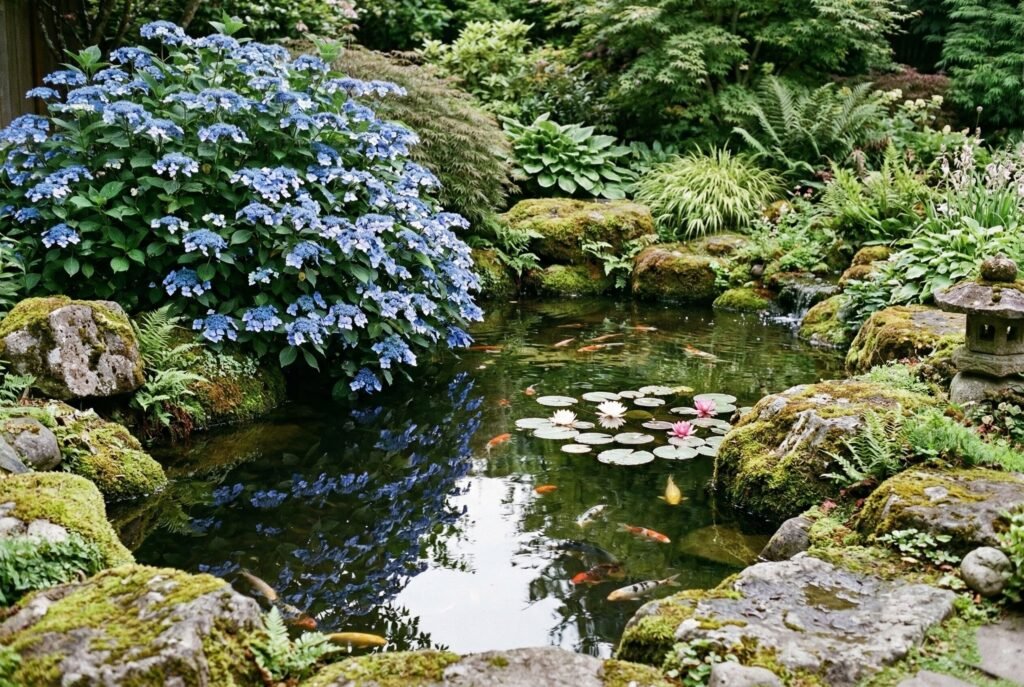
Hydrangeas genuinely love water (the name “hydrangea” actually comes from the Greek words for “water vessel”). While they do not like sitting in swampy, waterlogged mud, they thrive in the humid microclimate created by a backyard pond, waterfall, or stream.
How to achieve this look: Lacecap hydrangeas look particularly beautiful and natural around water features. Their delicate, flat blooms do not look heavy or overwhelming. Plant them just outside the rock border of your pond where the soil is rich and moist but still drains well. The reflection of the blooms in the water creates a stunning, mirror-like visual effect that doubles the color in your yard.
Idea 13: The Cottage-Style Cutting Garden
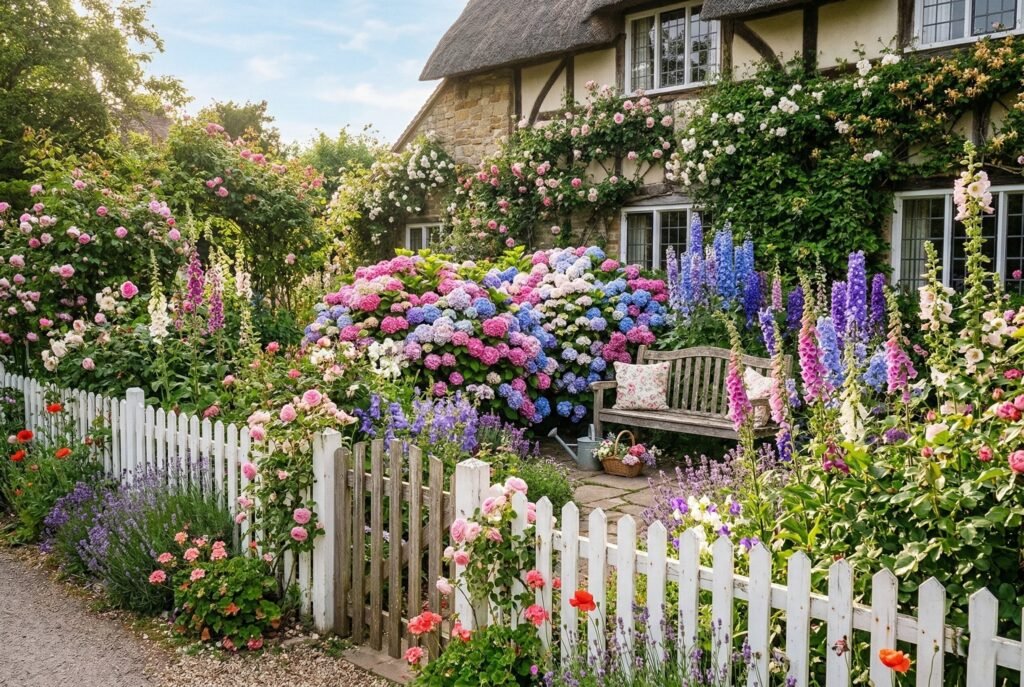
If you love bringing fresh flowers inside your home to arrange in vases, you need a dedicated cutting garden. Hydrangeas make incredibly long-lasting cut flowers, and if you dry them, they can last for years in indoor arrangements.
How to achieve this look: Create a garden bed specifically meant for harvesting. Mix different types of hydrangeas, some panicle varieties for white and green tones, and bigleaf varieties for blues, pinks, and purples. Space them properly so you can easily walk between them with pruning shears. To get the best cut flowers, harvest them in the early morning when the plant is fully hydrated, and cut the stems at an angle.
Idea 14: The Color-Changing Pathway Walk
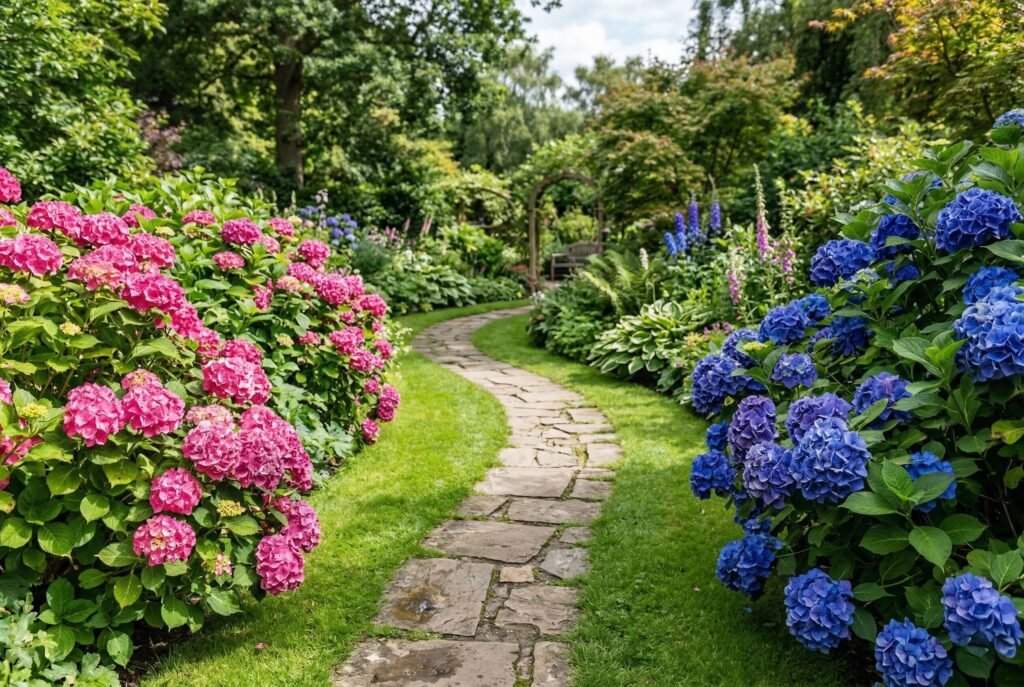
Because bigleaf hydrangeas change color based on soil pH, you can create a truly unique landscaping feature by intentionally altering the soil on either side of a garden pathway. This creates a whimsical, magical walkway where one side bursts with blue flowers and the other glows with pink.
How to achieve this look: Plant identical bigleaf hydrangeas (like ‘Endless Summer’) on both sides of a walkway. To turn one side blue, you must lower the soil pH to make it highly acidic (around 5.2 to 5.5). You do this by applying soil acidifier or aluminum sulfate to the soil around those plants. To turn the other side pink, you must raise the pH to make it alkaline (around 6.0 to 6.2). You do this by adding garden lime to the soil. Apply these amendments in the early spring and water them in well. Test the soil yearly to maintain the distinct colors!
Essential Care Tips for Landscaping with Hydrangeas
To keep your new landscaping ideas looking fresh and vibrant year after year, follow these basic care rules:
- Mind the Sun: Most hydrangeas (except panicle varieties) prefer morning sun and afternoon shade. The hot, late-afternoon sun will cause their leaves to droop and scorch.
- Water Deeply: Hydrangeas have shallow root systems and require consistent moisture. Water them deeply at the base of the plant once or twice a week, rather than giving them a shallow sprinkle every day. Avoid overhead watering to prevent fungal diseases on the leaves.
- Use Mulch: A 2-to-3-inch layer of organic mulch (like shredded hardwood or pine needles) is mandatory. It regulates soil temperature, keeps weeds at bay, and locks moisture into the soil.
- Prune Correctly: Pruning is where most homeowners make mistakes. If you have Bigleaf or Oakleaf hydrangeas, they bloom on “old wood” (last year’s growth). Only prune them immediately after they finish blooming in the summer. If you have Panicle or Smooth hydrangeas, they bloom on “new wood” (current year’s growth). You can prune them aggressively in late winter or early spring before new growth begins.
Conclusion
Hydrangeas are much more than just a simple garden shrub; they are a highly versatile landscaping powerhouse. From formal boxwood borders and grand driveway entrances to quiet woodland retreats and vibrant front porch containers, there is a hydrangea variety and a landscaping style to fit every single home. By understanding the specific needs of the different varieties, whether it is managing soil pH for perfect blue blooms or utilizing oakleaf hydrangeas for sloped erosion control, you can create an outdoor space that provides breathtaking beauty year after year.