

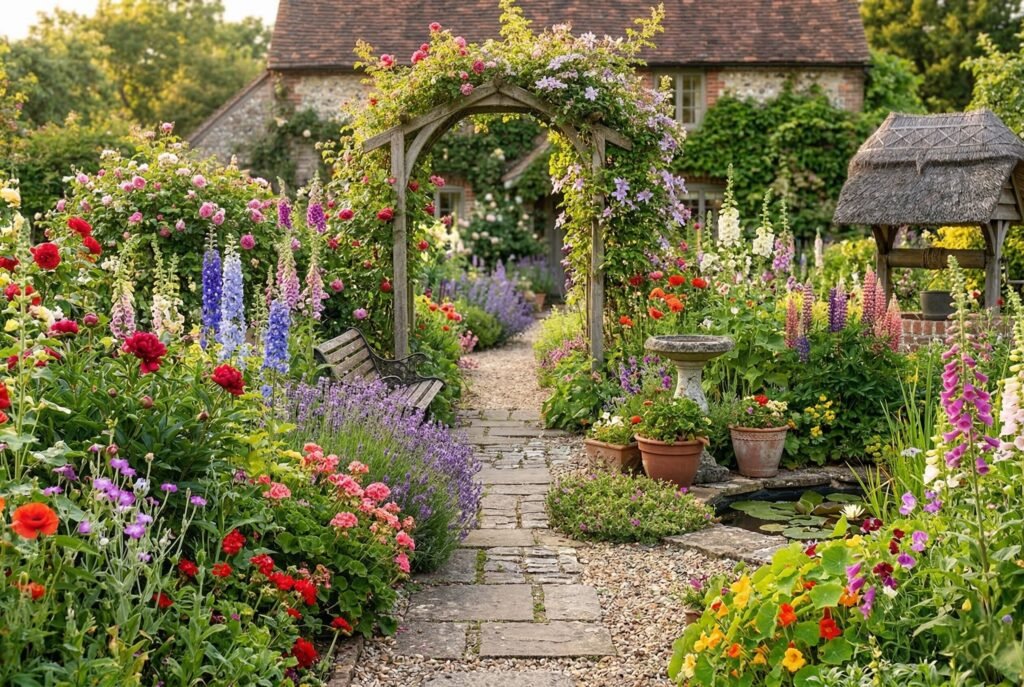
Creating a cottage garden is about embracing beauty, abundance, and a touch of wildness. Unlike formal landscapes with rigid lines and perfectly manicured hedges, a cottage garden bursts with color, texture, and life. It is an informal, romantic style that mixes blooming flowers, fragrant herbs, and even edible vegetables into one charming outdoor space.
Whether you have a massive backyard or a tiny front porch patch, the cottage style is completely adaptable. It relies on a few core principles: dense planting, natural materials, a mix of old and new, and an inviting atmosphere. By focusing on these elements, you can transform any dull yard into a magical retreat that feels like a scene from a classic storybook.
Below, we will explore the core concepts of this gardening style and dive into over 14 inspiring cottage garden ideas. We have included everything from structural elements like fences and pathways to specific plant choices and decorative accents to help you design the perfect outdoor sanctuary.
Core Principles of a Cottage Garden
Before jumping into the specific ideas, it helps to understand what makes a cottage garden work. Keep these three principles in mind as you plan your space:
- Informal Layout: Avoid straight lines and symmetrical planting. Choose gentle curves, overlapping plants, and a slightly overgrown look.
- Dense Planting: In a true cottage garden, bare soil is rarely seen. Plants are placed close together. This not only looks lush but also naturally suppresses weeds and retains soil moisture.
- Practicality Meets Beauty: Historically, cottage gardens were created by working-class people who needed to grow their own food and medicine. Mixing vegetables, culinary herbs, and medicinal plants right alongside beautiful flowers is a hallmark of this style.
Now, let us look at the specific ideas you can implement to bring this aesthetic to life.
1. Install a Classic White Picket Fence
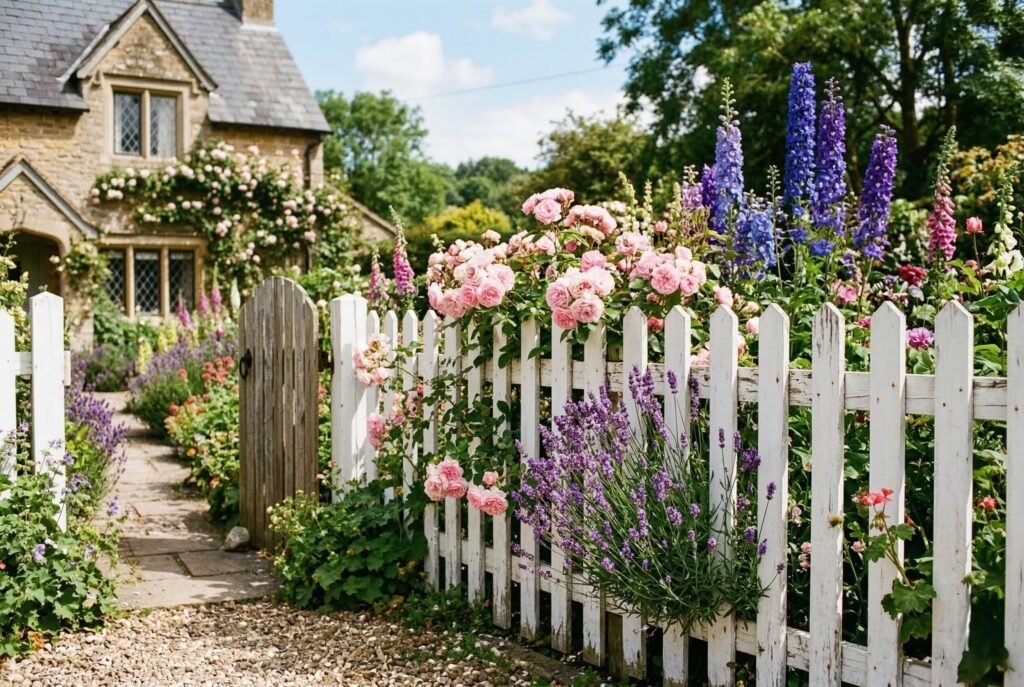
Nothing says “cottage garden” quite like a traditional white picket fence. This simple structure acts as the perfect frame for your wild, colorful plants. The clean, bright lines of the white wood create a beautiful visual contrast against the dark green foliage and bright blooms.
A picket fence also serves a practical purpose. It provides a sturdy support system for tall, top-heavy plants to lean against. You can plant rambling roses or sweet peas at the base and let them weave their way through the wooden slats. If white feels too bright for your home’s exterior, natural weathered wood or a soft pastel paint color works just as beautifully.
2. Design Winding Stone Pathways
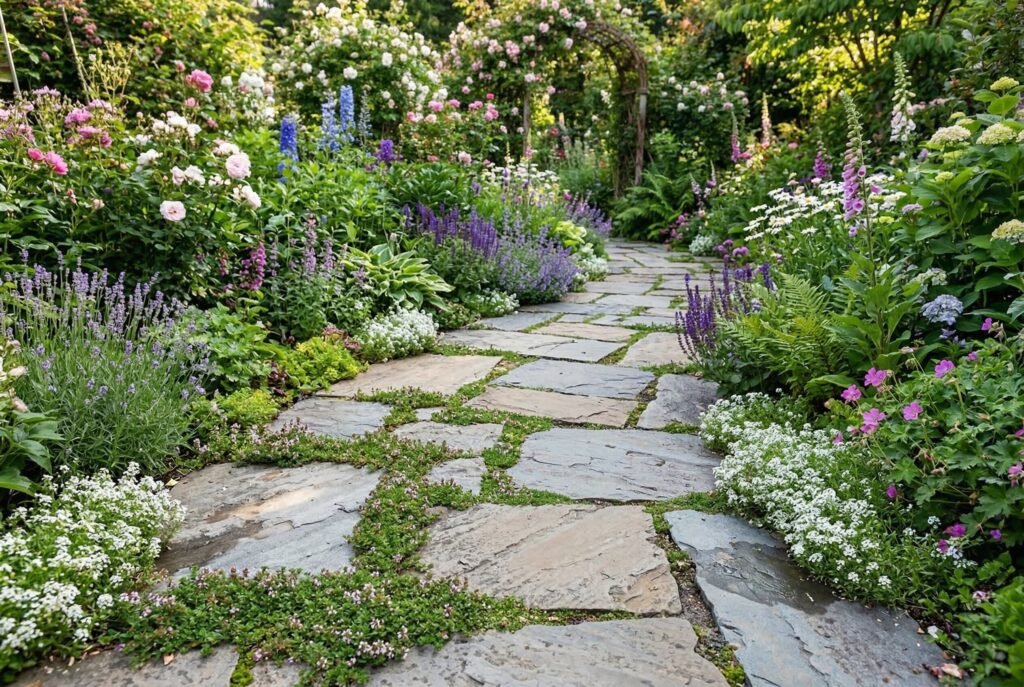
Formal gardens use straight, paved concrete walkways. Cottage gardens favor winding, organic paths made from natural materials. The goal is to encourage visitors to slow down, wander, and take in the sights and smells of the yard.
Great materials for these pathways include irregular flagstone, reclaimed red brick, cobblestones, or even crushed gravel. To make the path feel integrated into the landscape, allow low-growing plants to spill over the edges. Plant creeping thyme, chamomile, or moss in the cracks between the stones. When stepped on, these plants release a beautiful fragrance, adding another layer of sensory experience to your outdoor space.
3. Grow Climbing Roses on an Arbor or Trellis
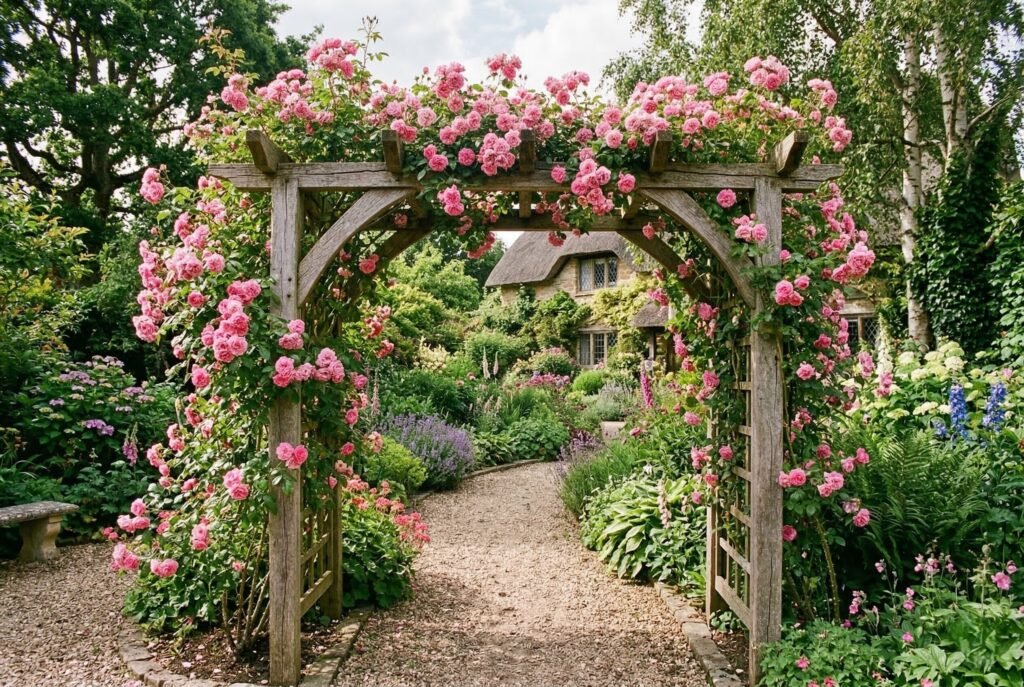
Vertical interest is vital in a cottage landscape. Because ground space is often densely packed, growing upwards draws the eye and makes the garden feel larger. Wooden arbors, metal trellises, or simple obelisks are excellent tools for this.
Climbing roses are the ultimate choice for these structures. Varieties like the ‘New Dawn’ or ‘Zephirine Drouhin’ offer massive, fragrant blooms that drape romantically over archways. If roses require too much maintenance for your schedule, consider other climbing plants like clematis, honeysuckle, or wisteria. Placing an arbor at the entrance of your garden or over a seating area creates a stunning, immersive focal point.
4. Plant a Mix of Perennials and Annuals
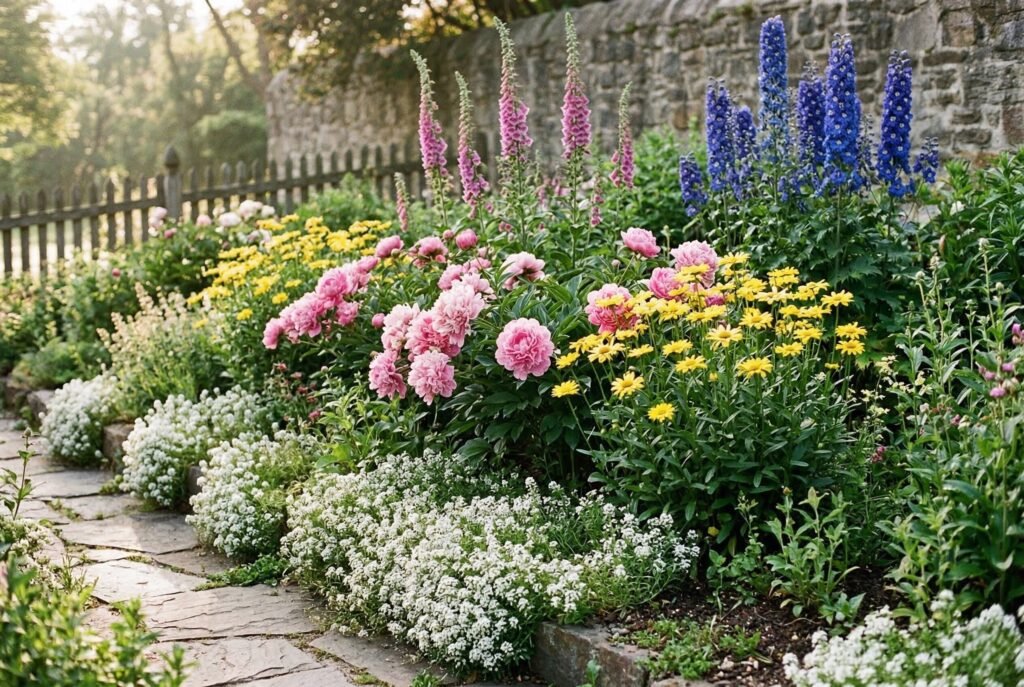
The secret to a cottage garden that blooms all season long is mixing perennials (plants that come back every year) with annuals (plants that complete their life cycle in one season).
- Tall Background Plants: Hollyhocks, foxgloves, and delphiniums provide dramatic height at the back of your borders.
- Mid-Ground Bloomers: Peonies, coneflowers, phlox, and black-eyed Susans fill out the center of your beds with reliable color.
- Front Border Fillers: Sweet alyssum, pansies, and trailing lobelia soften the hard edges of pathways.
By combining these, your garden will constantly evolve. While you wait for your perennial peonies to bloom in late spring, your early annuals will provide immediate color.
5. Incorporate Vintage and Repurposed Decor
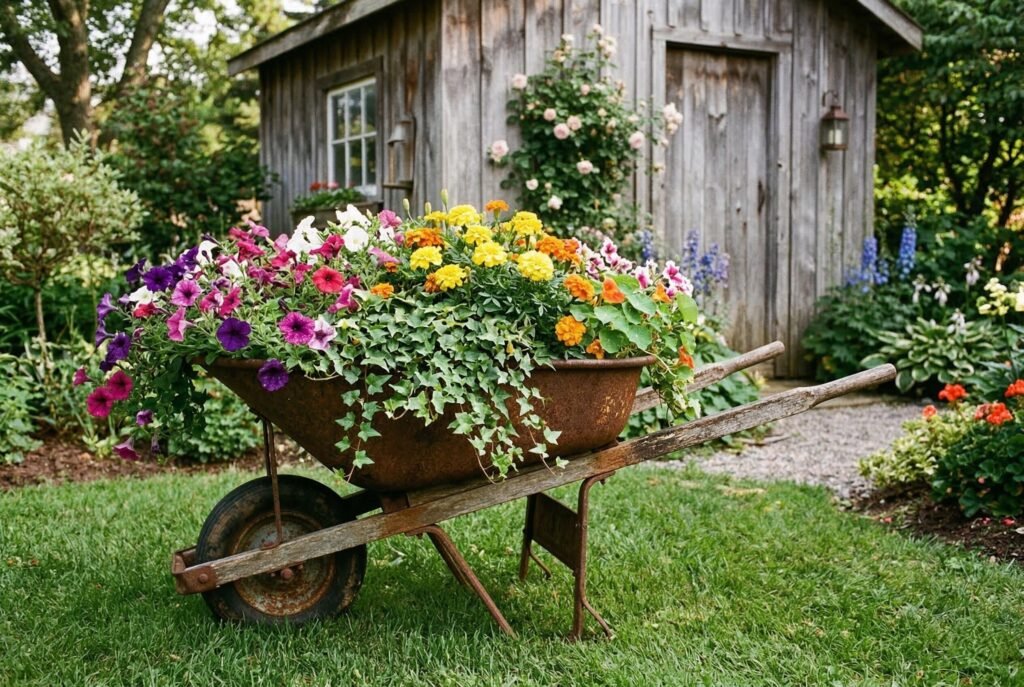
Cottage gardens have a sense of history. Brand new, modern, shiny garden decor often looks out of place. Instead, look for vintage, weathered, or repurposed items to add character and personality to your space.
An old galvanized metal bucket, a rusted wheelbarrow, or an antique watering can can easily be turned into a unique planter by drilling a few drainage holes in the bottom. Weathered wooden ladders can be used as tiered shelving for small potted plants. An old wooden wagon wheel leaning against a fence or a vintage cast-iron gate used as a trellis adds instant rustic charm and serves as a great conversation starter.
6. Embrace Edible Landscaping
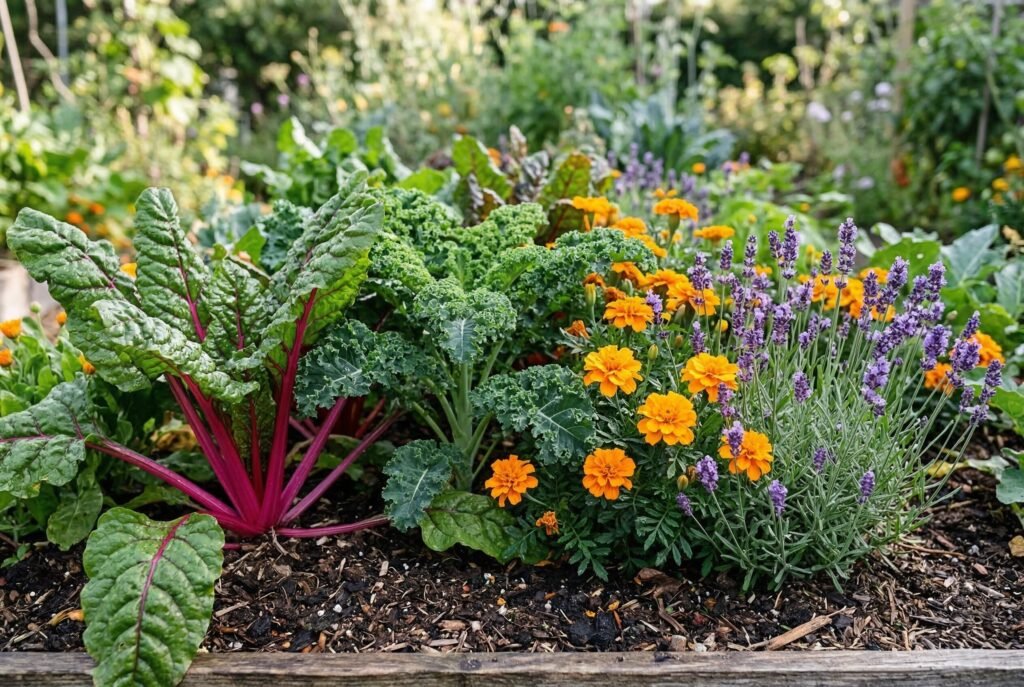
Remember the practical roots of the cottage garden. You do not need a separate, fenced-off area just for vegetables. Mixing edibles directly into your flower beds, a practice known as edible landscaping or foodscaping, is both beautiful and functional.
Tuck a few tomato plants behind your marigolds. Let pole beans climb up a decorative trellis alongside morning glories. Plant leafy greens like rainbow Swiss chard, ruffled lettuce, or deep purple kale near the front of your borders; their textured leaves look just as ornamental as ferns. Planting herbs and vegetables alongside certain flowers also encourages companion planting. For example, the scent of marigolds naturally deters many pests from eating your vegetable crops.
7. Create Cozy Seating Nooks
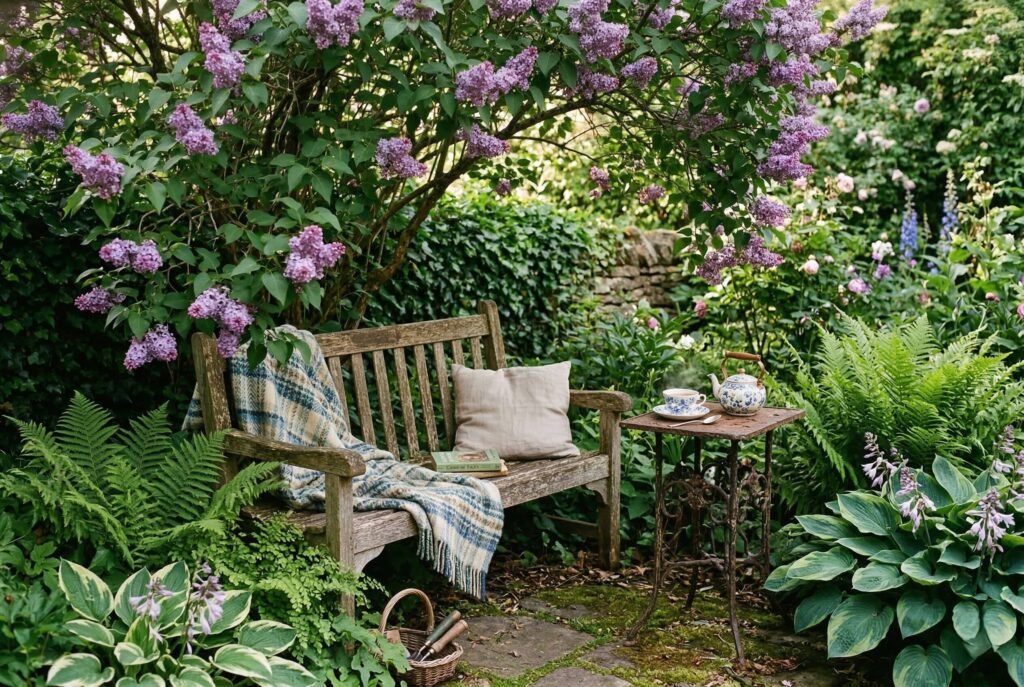
A beautiful outdoor space is meant to be enjoyed, not just looked at from the window. Carve out small, intimate seating areas where you can read a book, drink your morning coffee, or simply watch the bees at work.
You do not need a massive patio. A small bistro set tucked into a corner, a weathered wooden bench under a large shade tree, or even a simple hammock strung between two sturdy posts works perfectly. Surround these seating areas with highly fragrant plants like jasmine, gardenia, or sweet peas so that relaxing there becomes a full sensory experience.
8. Add Birdbaths and Wildlife Friendly Features
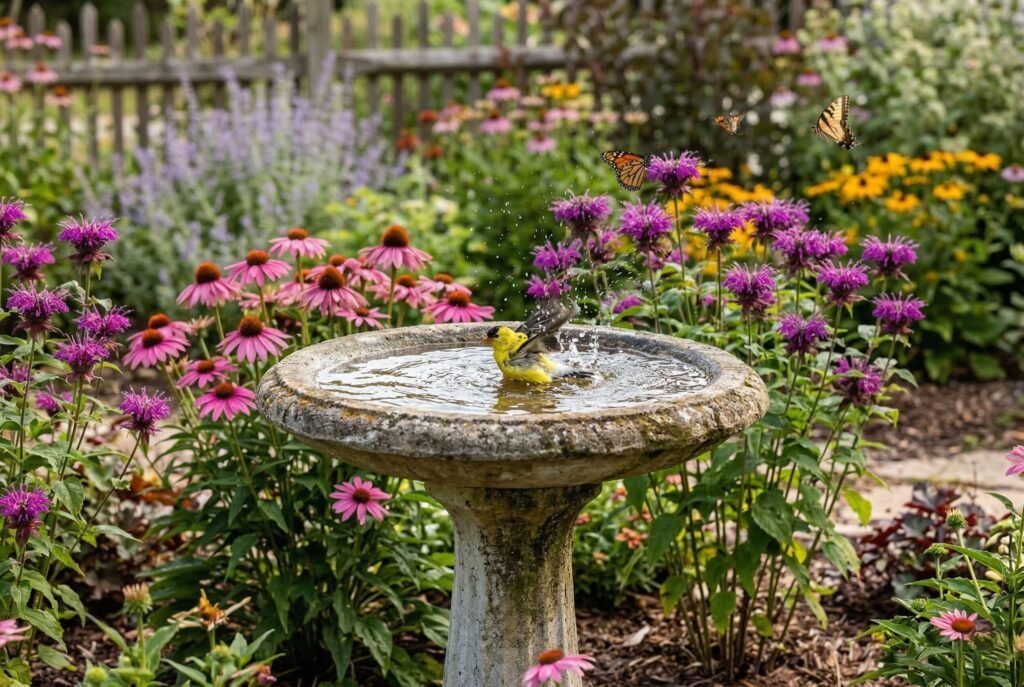
A successful garden is a living ecosystem. Cottage gardens naturally attract wildlife because of the diverse plant life, but you can intentionally invite more birds, bees, and butterflies by providing them with water and shelter.
A stone or concrete birdbath makes a wonderful centerpiece for a flower bed. Not only does it provide a critical water source for local birds, but the reflective surface of the water also adds visual interest. To support pollinators, choose nectar-rich flowers like bee balm, butterfly bush, milkweed, and lavender. Avoid using harsh chemical pesticides, which can harm the beneficial insects that keep your garden healthy.
9. Install Abundant Window Boxes
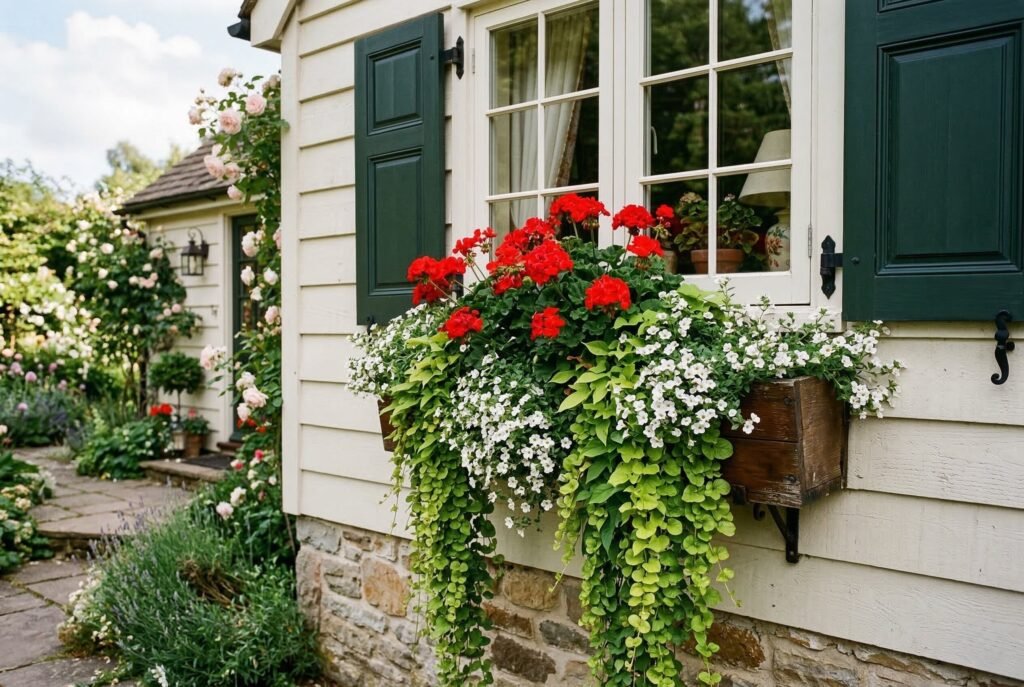
If you lack ground space, you can still achieve a cottage look by utilizing your home’s exterior. Window boxes instantly soften the hard lines of a house and connect the building to the landscape around it.
For a classic look, pack your window boxes tightly. Use the “thriller, filler, spiller” method for container planting. Use a tall plant in the center (the thriller, like an upright geranium), surround it with mounding plants (the filler, like petunias or begonia), and let trailing plants hang over the edges (the spiller, like creeping Jenny or English ivy). Be sure to water window boxes frequently, as soil in containers dries out much faster than soil in the ground.
10. Group Potted Plants in Terracotta Containers
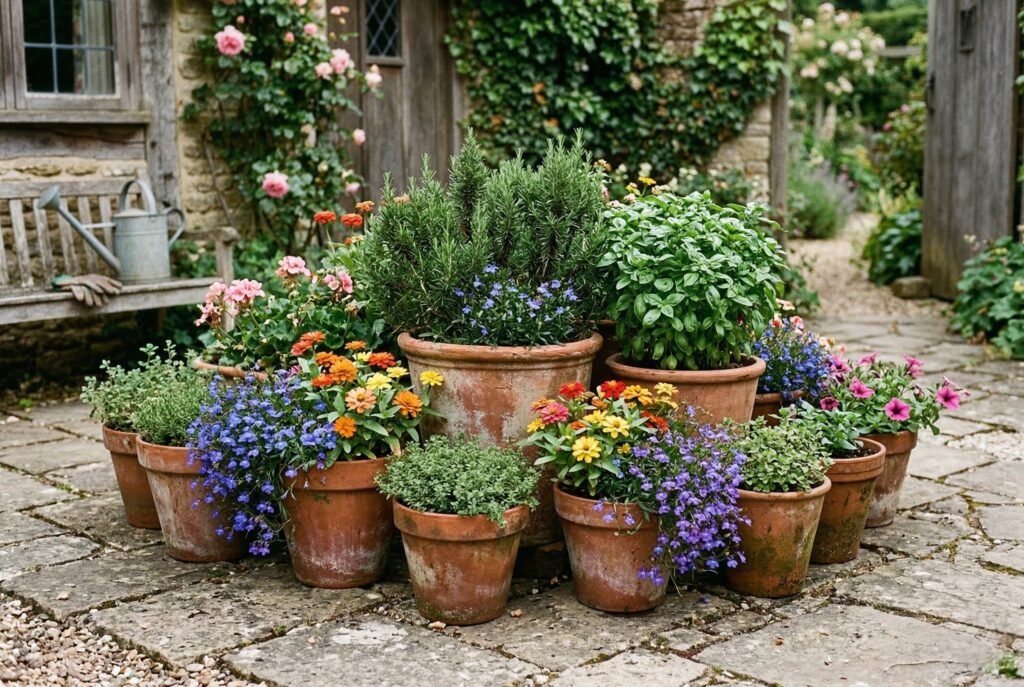
Container gardening is a staple of the informal cottage style. Gathering a cluster of pots on a patio, porch steps, or along a pathway adds instant charm and allows you to easily change your garden layout whenever you want.
Terracotta clay pots are the ideal material for this aesthetic. Over time, terracotta develops a beautiful, weathered patina, sometimes gathering a safe layer of green moss or white mineral deposits on the outside. Group pots of varying heights and sizes together to create a miniature, layered garden. This is also a great way to grow plants that require different soil types than what is naturally in your yard.
11. Hang Romantic Outdoor Lighting
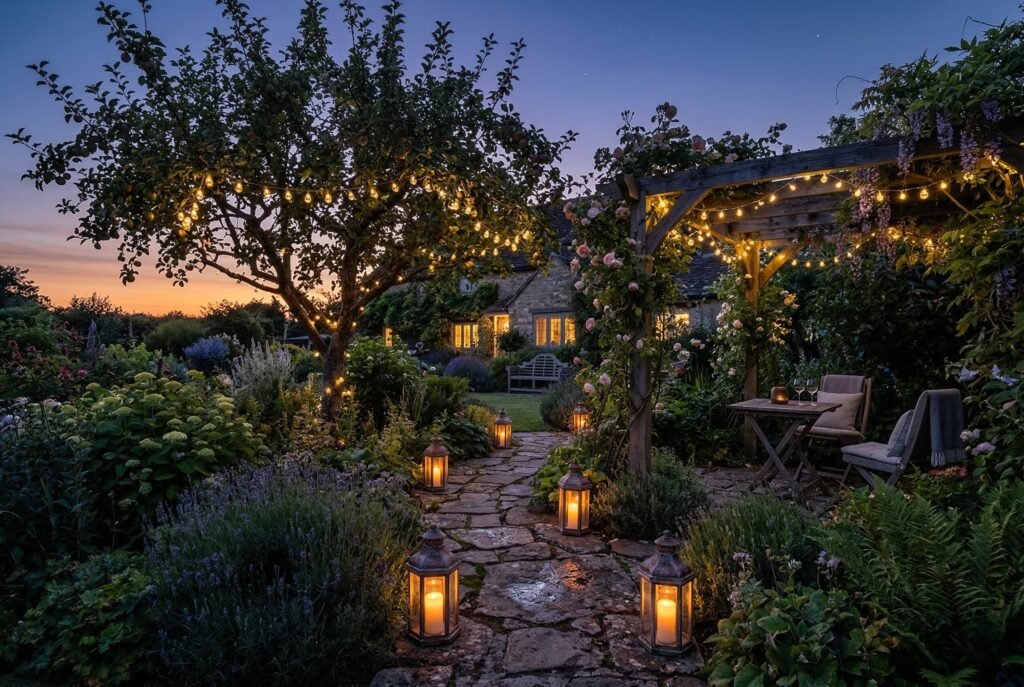
Do not let your garden disappear when the sun goes down. Proper lighting extends the time you can enjoy your outdoor space and adds a magical, romantic ambiance that fits perfectly with the cottage theme.
Avoid harsh, bright security floodlights. Instead, opt for soft, warm-toned lighting. String fairy lights or classic Edison bulbs through the branches of trees, along fences, or over arbors. Place solar-powered stake lights along your winding pathways. You can also hang vintage-style metal lanterns with battery-operated candles from tree branches or shepherd’s hooks to create a cozy, welcoming glow in the evening.
12. Utilize a Soft Pastel Color Palette
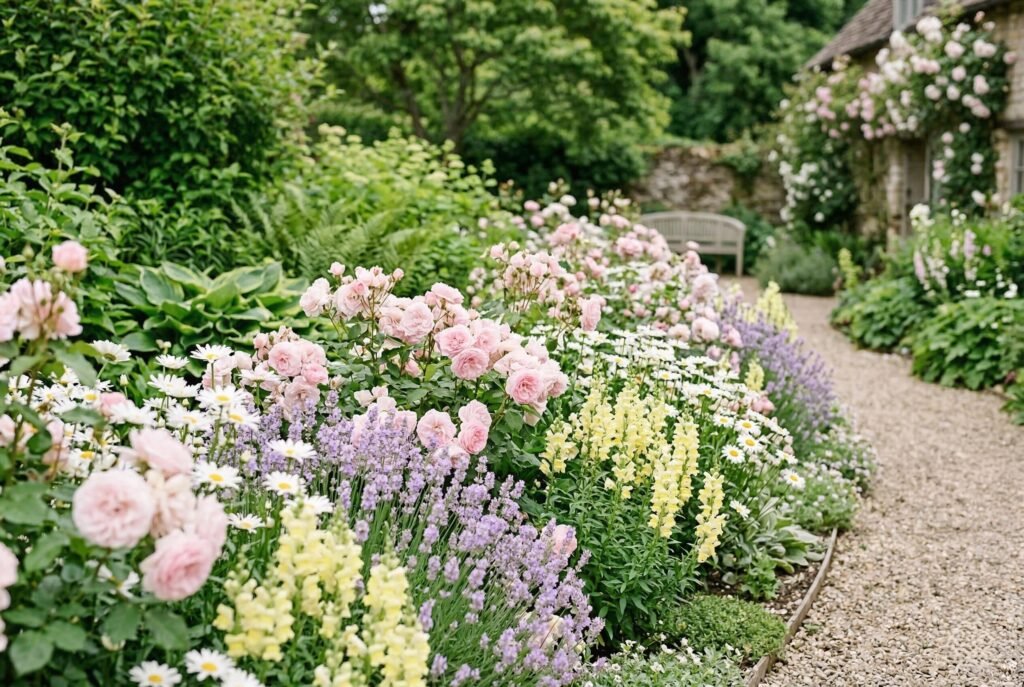
While you can certainly use bold, bright colors, traditional English cottage gardens lean heavily toward soft pastel color palettes. These lighter colors blend beautifully together, creating a soothing, harmonious environment that never feels harsh on the eyes.
Focus on shades of pale pink, lavender, powder blue, soft yellow, and crisp white. Plants like pale pink astilbe, blue hydrangeas, white shasta daisies, and lavender catmint look stunning when planted en masse. White flowers are particularly important; they act as a visual resting place for the eye between other colors and seem to glow beautifully during the evening hours.
13. Prioritize Fragrant Plants
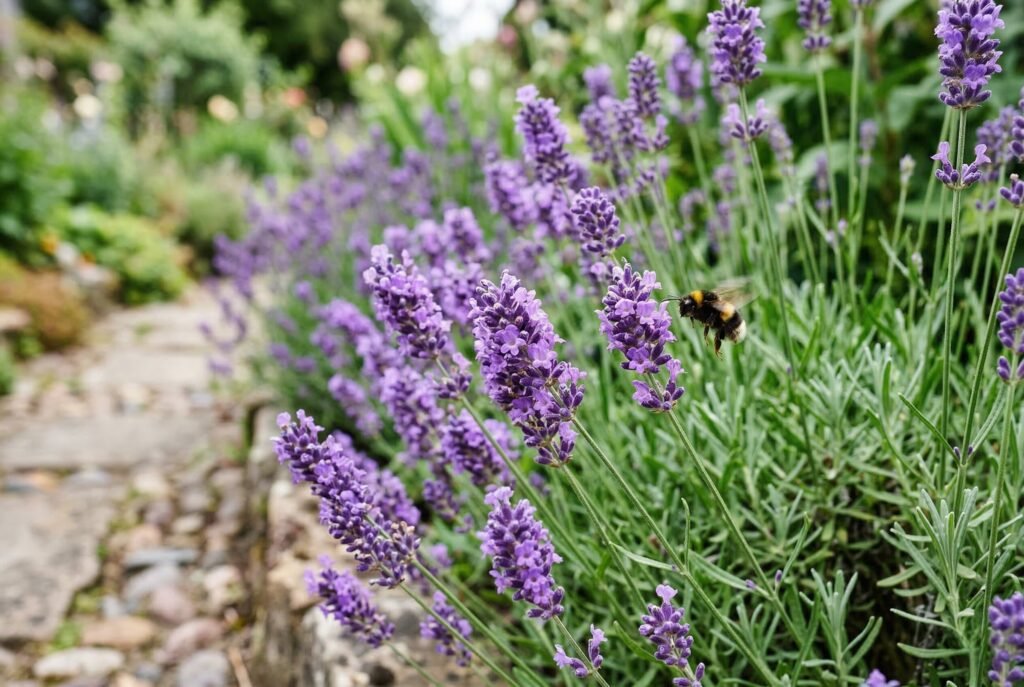
A cottage garden should smell just as good as it looks. Scent is strongly tied to memory and emotion, and planting fragrant flowers will make your yard feel like a true retreat. Place fragrant plants strategically near open windows, seating areas, or along high-traffic pathways where you will brush against them.
Excellent choices for fragrance include:
- Lavender: Offers a calming, earthy scent and beautiful purple spikes.
- Lilac Bushes: Provides an intoxicating, sweet perfume in the early spring.
- Mock Orange: Produces white flowers that smell remarkably like citrus blossoms.
- Sweet Alyssum: A low-growing ground cover that smells like honey.
- Scented Geraniums: The leaves release incredible scents—ranging from lemon to rose to peppermint—when rubbed or crushed.
14. Add Woven Willow Accents and Plant Supports
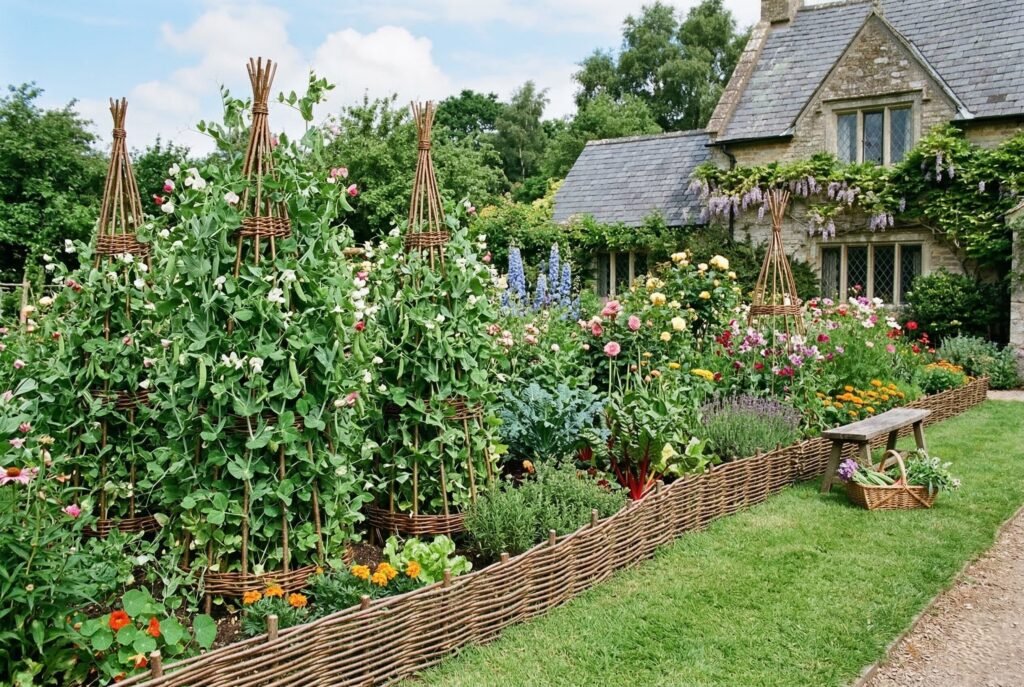
Plastic plant supports and metal tomato cages can disrupt the natural look of your garden. Instead, look for plant supports made from natural, rustic materials. Woven willow branches, hazel wood, or bamboo are perfect for this.
You can use woven willow to create tall, conical obelisks for climbing vines, sweet peas, or runner beans. You can also use low, woven willow panels (often called hurdles) to edge your garden beds and keep floppy plants from falling over onto your pathways. These natural materials eventually break down over the years, returning nutrients to the soil, and they look incredibly authentic to the old-world cottage aesthetic.
15. Bonus: Install a Small Water Feature
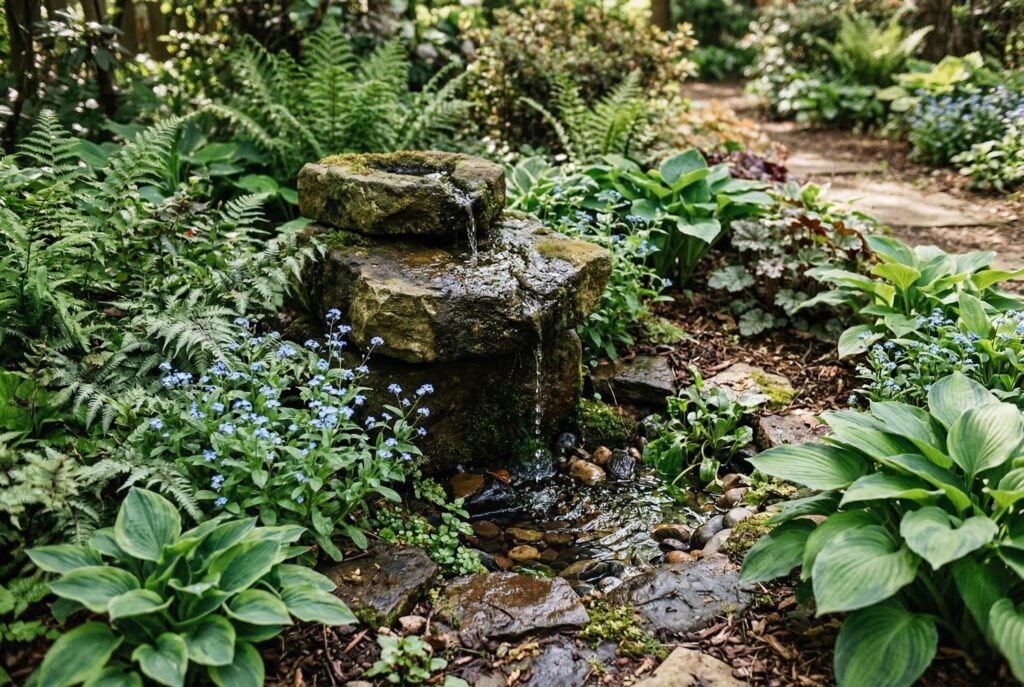
The sound of running water is instantly relaxing and helps drown out neighborhood noise or traffic. You do not need a massive koi pond to achieve this effect. A small, self-contained water feature can be tucked into any garden.
Look for a simple stone fountain, a recirculating glazed ceramic pot, or even a tabletop fountain for your patio area. Surround the base of the water feature with moisture-loving plants like ferns or hostas to blend it seamlessly into the surrounding landscape.
How to Start Your Cottage Garden
If you are starting from a blank slate or a plain lawn, the idea of creating a dense, abundant garden can feel overwhelming. However, by taking it one step at a time, you can easily build your dream space.
Start Small
Do not try to dig up your entire yard in one weekend. Start with a single border along a fence or one corner of your property. Master the soil and planting in that one area, and expand your garden beds outward each following season.
Prepare the Soil
Cottage gardens require rich, well-draining soil to support such dense planting. Before putting a single plant in the ground, assess your dirt. If you have heavy clay or sandy soil, you need to amend it. Dig in plenty of organic matter, such as high-quality compost, aged manure, or leaf mold. Healthy soil is the absolute foundation of a thriving, disease-free garden.
Map Your Sunlight
Watch your yard throughout the day to see how many hours of direct sunlight different areas receive. Most blooming cottage flowers (like roses, coneflowers, and lavender) need full sun, which means six or more hours of direct light per day. If you have a shady yard, do not panic; you can still create a cottage feel using shade-loving plants like hostas, astilbes, bleeding hearts, and ferns.
Layer Your Planting
When placing your plants, think in layers. Put the tallest plants in the back, medium plants in the middle, and low groundcovers in the front. Plant in groupings or “drifts” of three or five of the same plant, rather than placing one of everything. Odd numbers look more natural to the human eye and create larger, more impactful splashes of color.
Maintaining the Beauty of Your Space
While cottage gardens are meant to look slightly wild and informal, they are not entirely maintenance-free. Leaving them completely alone will eventually result in a tangled, weedy mess. A little routine care keeps the garden looking intentionally beautifully rather than abandoned.
Regular Deadheading
Deadheading is simply the process of cutting off old, faded flowers. When a flower fades and forms a seed pod, the plant stops producing new blooms because it thinks its job is done. By snipping off the dead flowers, you trick the plant into producing more blossoms, extending your colorful display for weeks or even months.
Pruning and Shaping
Because plants are grown closely together, you need to step in occasionally to make sure aggressive growers do not bully the slower-growing plants. Trim back vines that are getting too long, and prune shrubs in the early spring or late winter to maintain their shape and encourage healthy new growth.
Mulching the Beds
To keep weeds down and moisture in the soil, apply a layer of organic mulch around the base of your plants. Shredded bark, wood chips, or pine needles work well. Mulch also gives the garden beds a clean, finished look while the plants are still growing in during the early spring.
Dividing Perennials
After a few years, perennial plants like hostas, daylilies, and irises will grow into massive clumps. The centers may start to die out, or they may produce fewer flowers. Every three to four years, dig these plants up in the spring or fall, cut the root ball into smaller sections with a sharp spade, and replant them. This revitalizes the plant and gives you free plants to expand your garden or share with neighbors!
Final Thoughts on Creating Your Outdoor Sanctuary
Building a cottage garden is a highly rewarding process. It is a forgiving style of gardening where mistakes are easily hidden by the abundance of foliage, and rigid rules do not apply. It encourages creativity, sustainability, and a deep connection with nature.
By incorporating elements like winding pathways, classic arbors, vintage decor, and a rich tapestry of perennials and annuals, you can craft a space that is entirely your own. Remember that a garden is never truly “finished.” It is a living entity that will grow, change, and evolve with you year after year.
Would you like me to suggest some specific plant varieties tailored to the climate in Multan to help you get started on your own garden project?