

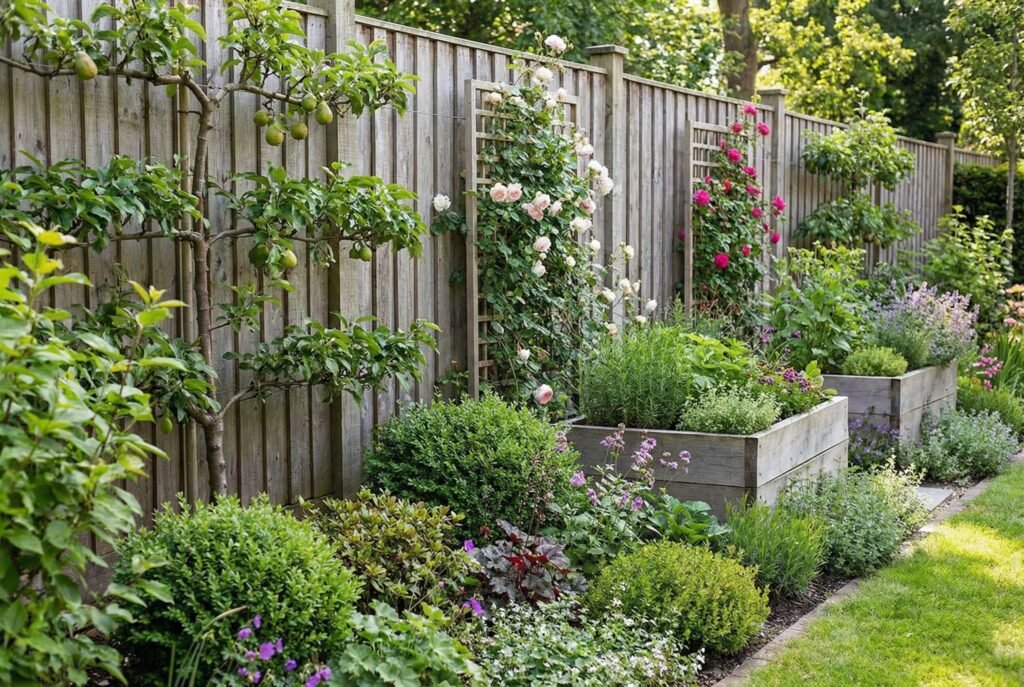
Fences are necessary for privacy and security, but they can often look stark and boring. A plain wooden or metal fence is a blank canvas waiting for some life. Planting along your fence line is one of the best ways to soften the edges of your yard, add color, and even increase your privacy.
Whether you have a small city garden, a sprawling backyard, or a sunny side yard, the area along your fence is prime real estate for plants. But it can be tricky. You need to choose plants that fit the space, handle the light conditions, and won’t destroy the fence itself.
This guide covers over 15 creative ideas to transform your fence line from a barrier into a beautiful feature.
Why Plant Along Your Fence?
Before diving into the specific ideas, it helps to know why you are doing this. Understanding the goal will help you pick the right design.
- Softening Hard Edges: Fences are rigid and straight. Plants add organic shapes and movement.
- Privacy: Even a tall fence might have gaps. Tall plants add an extra layer of screening.
- Space Saving: Vertical gardening along a fence uses very little ground space, leaving more room for lawn or patios.
- Wildlife: Flowering vines and shrubs attract pollinators like bees, butterflies, and hummingbirds.
- Camouflage: If your fence is old or ugly, plants can hide it completely.
Important Things to Consider Before You Plant
Don’t just start digging holes. A little planning prevents big headaches later.
1. Light Conditions
Walk along your fence at different times of the day. Which parts get full sun? Which parts are in deep shade? A north-facing fence will have a shady side and a sunny side. Choose plants that match the light.
2. Fence Material
- Wood: Needs airflow to prevent rot. Don’t let plants grow directly on the wood if possible. Use a trellis.
- Vinyl: Very durable. Can handle moisture better than wood.
- Chain Link: Perfect for climbing vines because the fence itself acts as a trellis.
- Metal/Iron: Great for visibility, but plants can get hot touching black metal in the summer.
3. Maintenance
Be honest about how much work you want to do. Some vines grow 10 feet a year and need constant pruning. Shrubs are generally lower maintenance.
4. Root Space
Check for underground utilities. Also, ensure you aren’t planting trees so close that their roots will heave up the fence posts in five years.
The Best Creative Ideas for Your Fence Line
Here are 15+ distinct ways to style your fence line, categorized by style and plant type.
1. The Classic Cottage Garden Mix
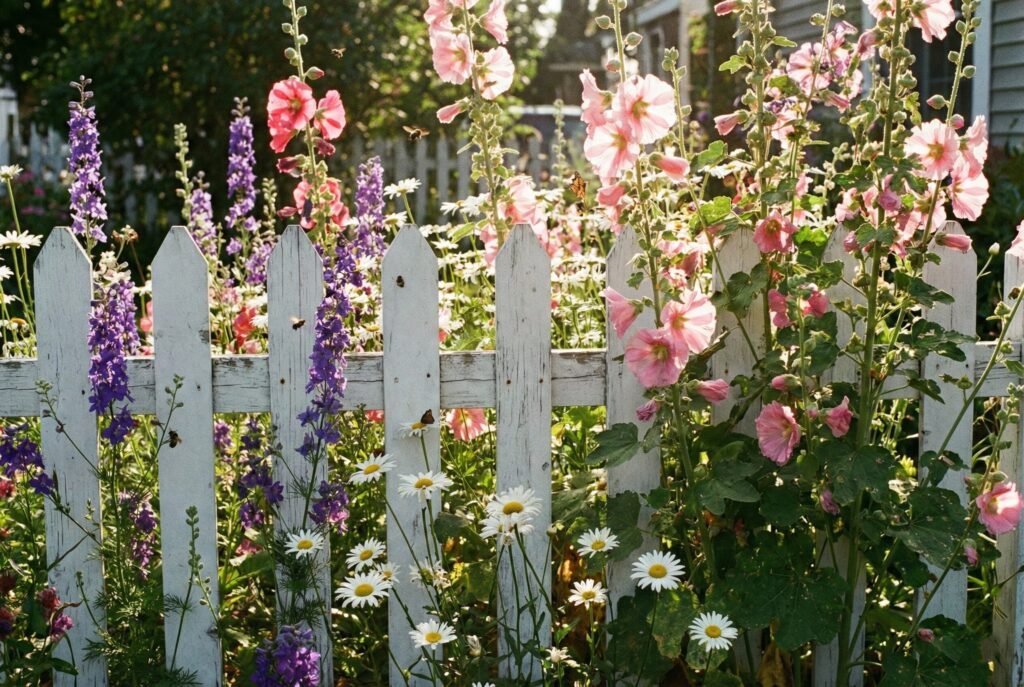
This style is loose, colorful, and informal. It relies on a mix of perennials and annuals that bloom at different times. It looks best against white picket fences or weathered wood.
What to plant:
- Hollyhocks (Tall back layer)
- Delphiniums
- Cosmos
- Lavender (Front border)
- Coneflowers (Echinacea)
Why it works: The height difference creates depth. Tall plants like Hollyhocks can actually peek over the fence, sharing the beauty with neighbors.
2. The Formal Boxwood Hedge
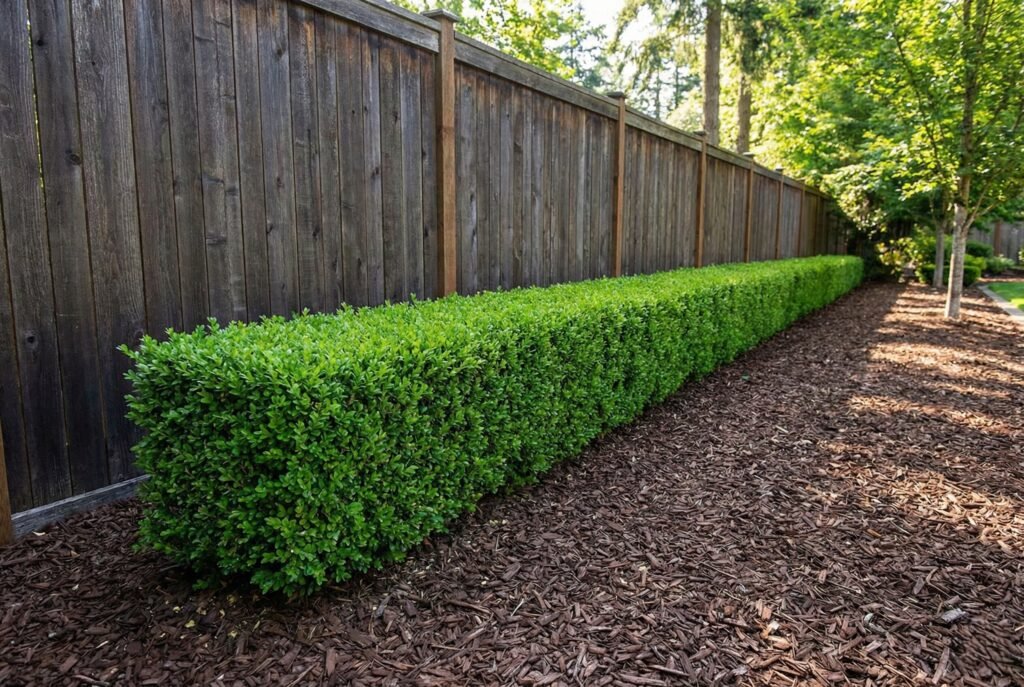
If you prefer clean lines and order, a formal hedge is the answer. This is perfect for modern homes or brick walls. It looks tidy year-round.
What to plant:
- Boxwood (Buxus)
- Yew
- Privet
Maintenance Tip: This requires regular shearing to keep the “box” shape. Ensure you leave about 12 inches between the shrub and the fence for airflow and trimming access.
3. Climbing Hydrangeas for Shade
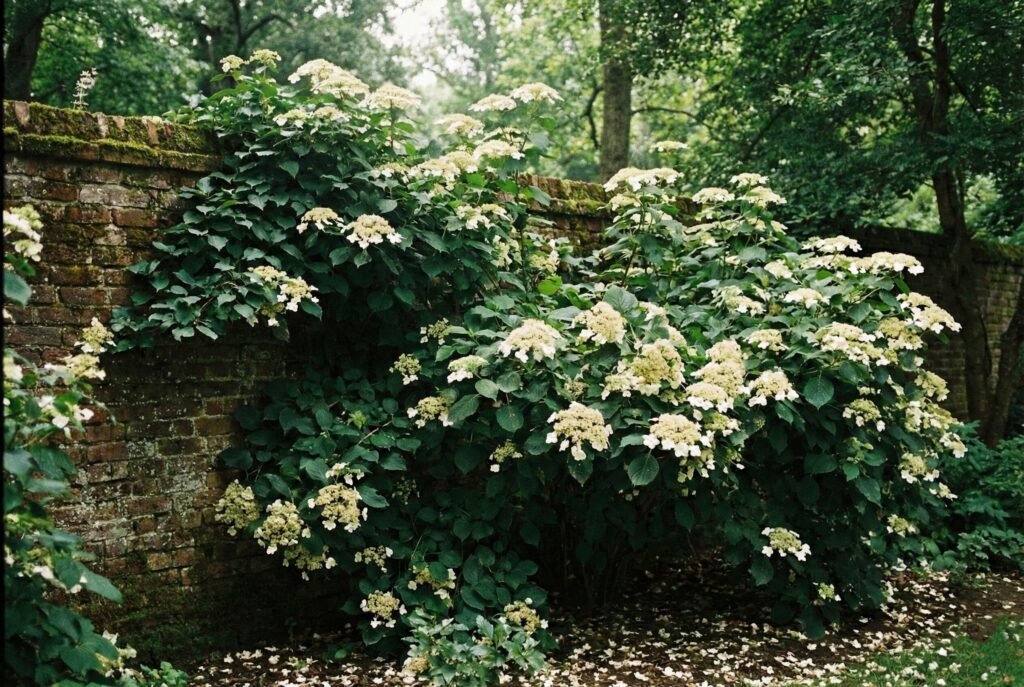
Shady fences can be tough. Many flowering vines crave sun, but the Climbing Hydrangea loves the shade. It attaches itself to surfaces and produces massive, lacy white flowers.
What to plant:
- Climbing Hydrangea (Hydrangea anomala petiolaris)
Note: These vines are heavy. They need a sturdy fence (like brick or heavy timber) rather than flimsy lattice.
4. The Edible Fence (Espalier Fruit Trees)
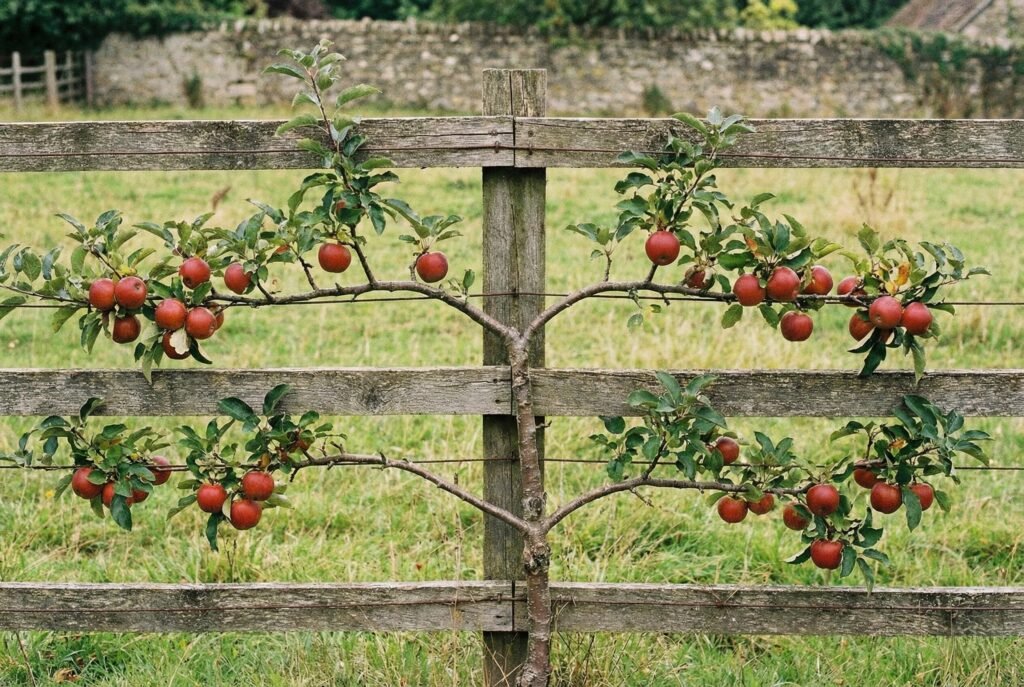
Espalier is an ancient technique of training trees to grow flat against a wall or fence. It turns an apple or pear tree into a 2D living sculpture. It saves massive amounts of space and yields fruit.
What to plant:
- Apple trees
- Pear trees
- Fig trees
How to do it: You will need horizontal wires running along the fence. Gently tie the tree branches to these wires as they grow.
5. Bamboo for Modern Zen
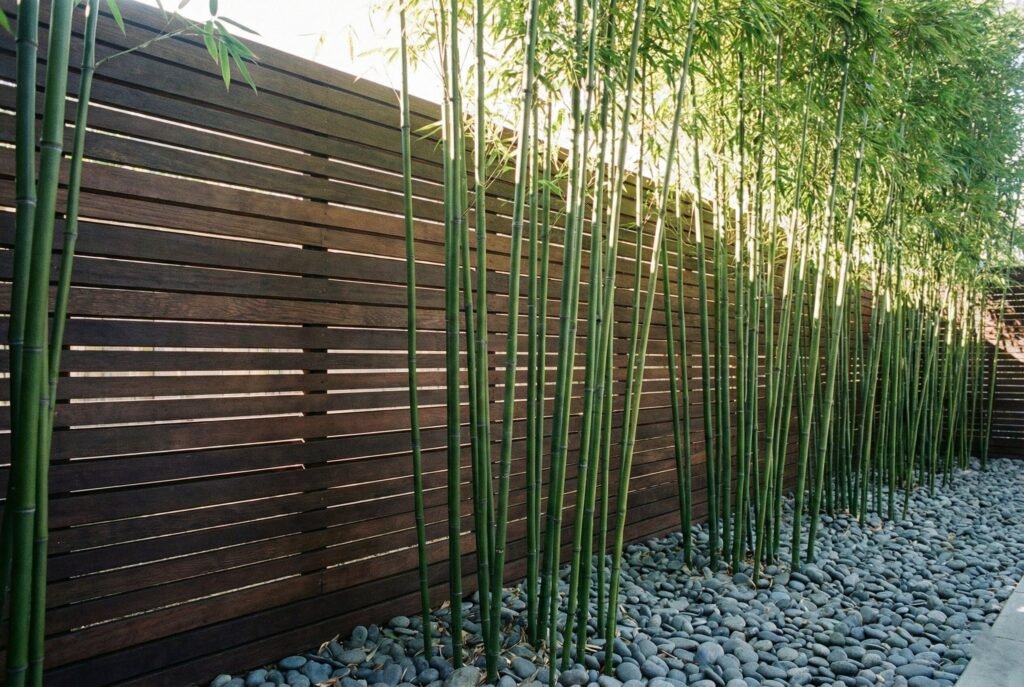
Bamboo creates an instant screen. It is tall, makes a lovely rustling sound in the wind, and looks very modern.
Warning: Never plant running bamboo directly in the ground. It is invasive and will destroy your yard and your neighbor’s yard. Always use “Clumping Bamboo” or plant it in sturdy metal containers sunk into the ground.
What to plant:
- Fargesia (Clumping bamboo varieties)
- Black Bamboo (In containers only)
6. The Tropical Canna Lily Wall
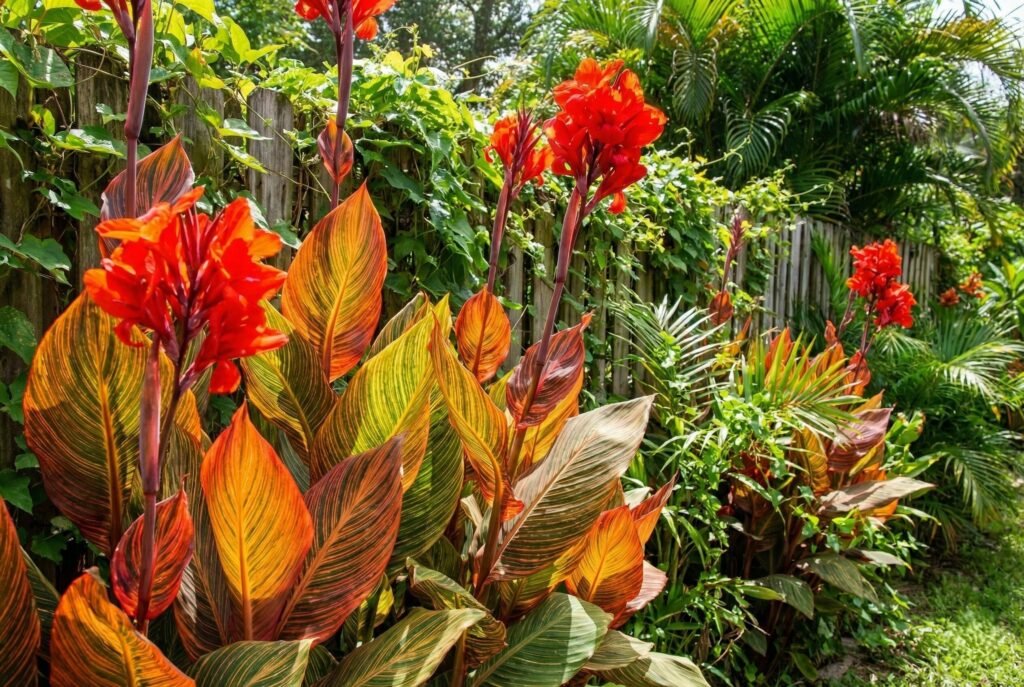
If you live in a warm climate (or treat them as annuals), Canna Lilies are fantastic. They grow very tall (5-6 feet) very quickly and have huge, tropical leaves.
What to plant:
- Canna ‘Tropicanna’ (Striped leaves)
- Canna ‘Musifolia’ (Giant leaves)
Why it works: The broad leaves contrast beautifully with the vertical lines of a fence.
7. Evergreen Clematis (The Year-Round Screen)
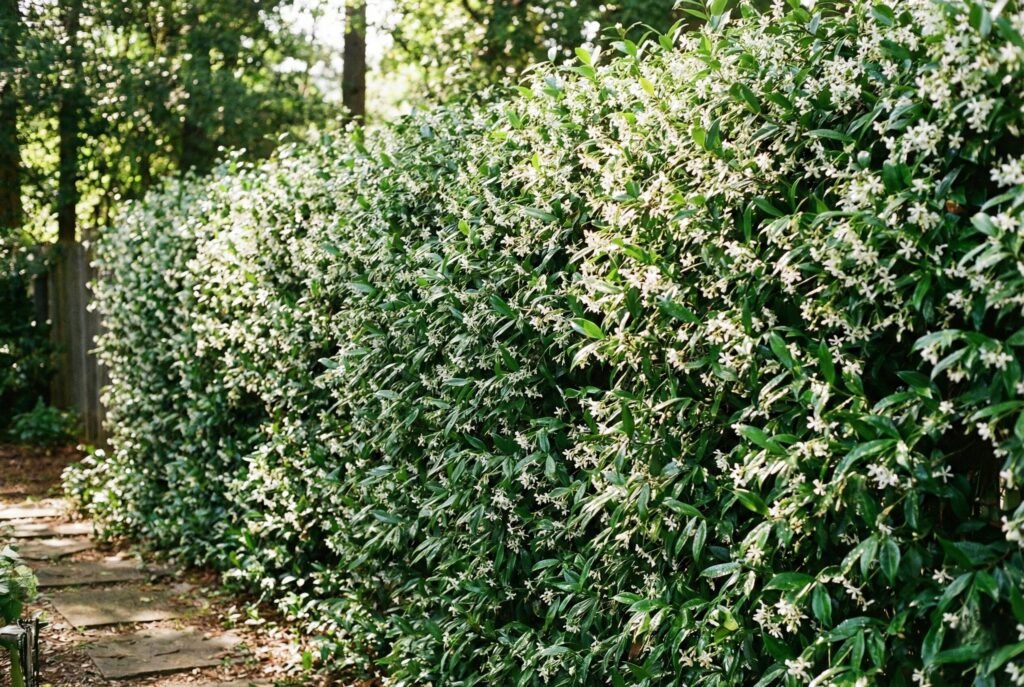
Most vines lose their leaves in winter, leaving the fence bare. Evergreen Clematis (Clematis armandii) keeps its glossy leaves all year. In spring, it covers itself in white, scented blossoms.
What to plant:
- Clematis armandii
Tip: This vine is vigorous. It can easily cover 20 feet of fence. Provide a sturdy trellis or wire system.
8. Ornamental Grasses for Texture
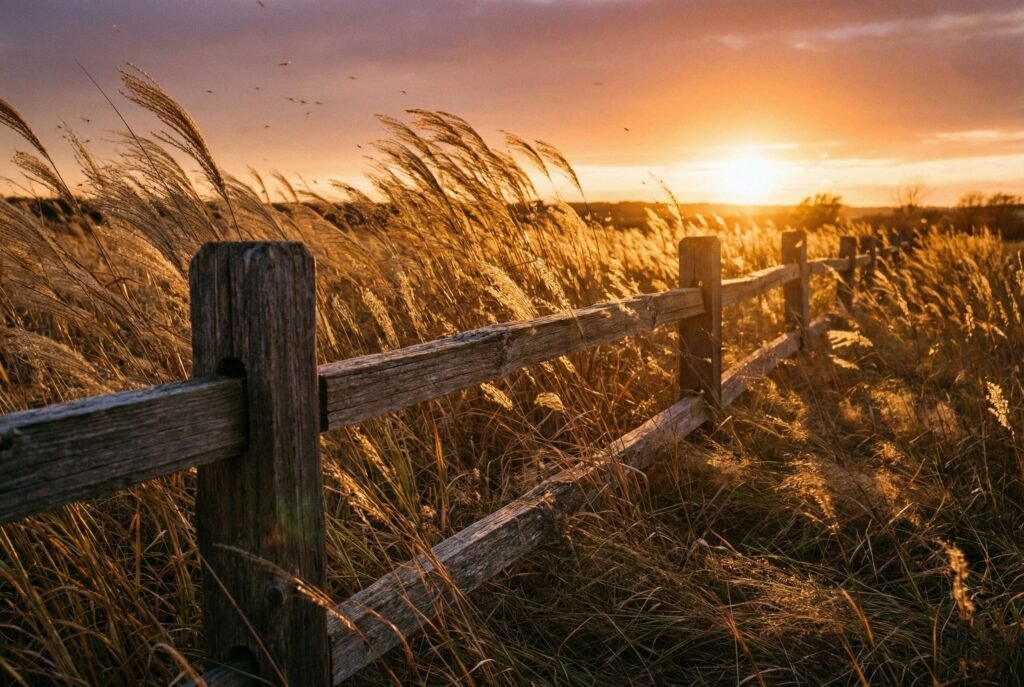
Grasses are low-maintenance and add movement. They sway in the breeze and catch the golden hour light perfectly. They are also drought-tolerant.
What to plant:
- Feather Reed Grass (‘Karl Foerster’)
- Maiden Grass (Miscanthus)
- Blue Fescue (for low borders)
Design Tip: Plant them in groups of three or five for a natural look. Do not plant them in a straight soldier row; stagger them slightly.
9. The Butterfly Buffet (Pollinator Garden)
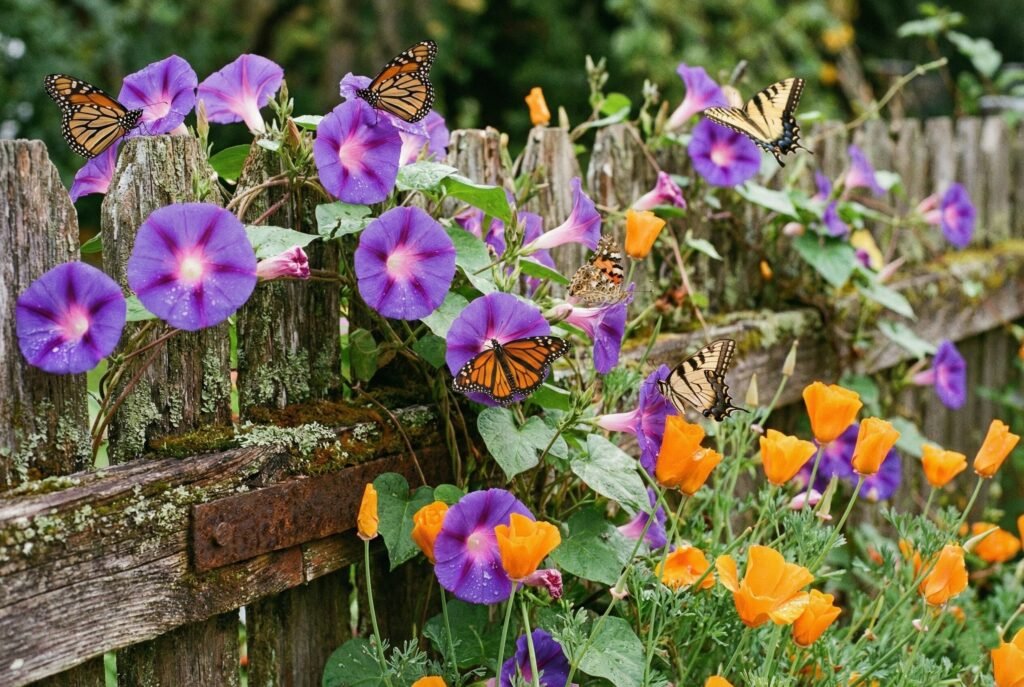
Turn your fence line into a highway for butterflies. This usually involves native plants that offer nectar.
What to plant:
- Butterfly Bush (Buddleja) – Check if invasive in your area.
- Milkweed (Essential for Monarchs)
- Joe Pye Weed (Tall and loves moisture)
- Lantana
Why it works: These plants are often tall and bushy, filling the vertical space nicely while doing good for the ecosystem.
10. Vertical Vegetable Garden
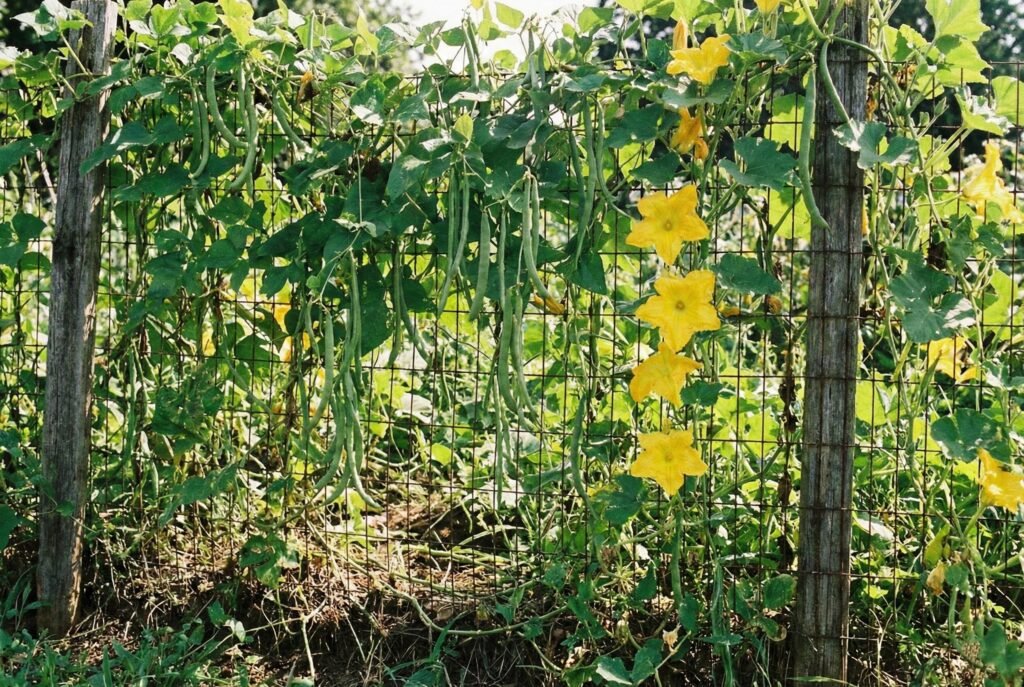
Use your fence to support your food. Many vegetables are climbers and will grow happier up a fence than sprawl on the ground. This keeps the veggies clean and saves space.
What to plant:
- Pole Beans
- Sugar Snap Peas
- Cucumbers
- Small squash varieties
Set up: Staple chicken wire or plastic netting to the fence for the tendrils to grab.
11. Layered Shrub Border
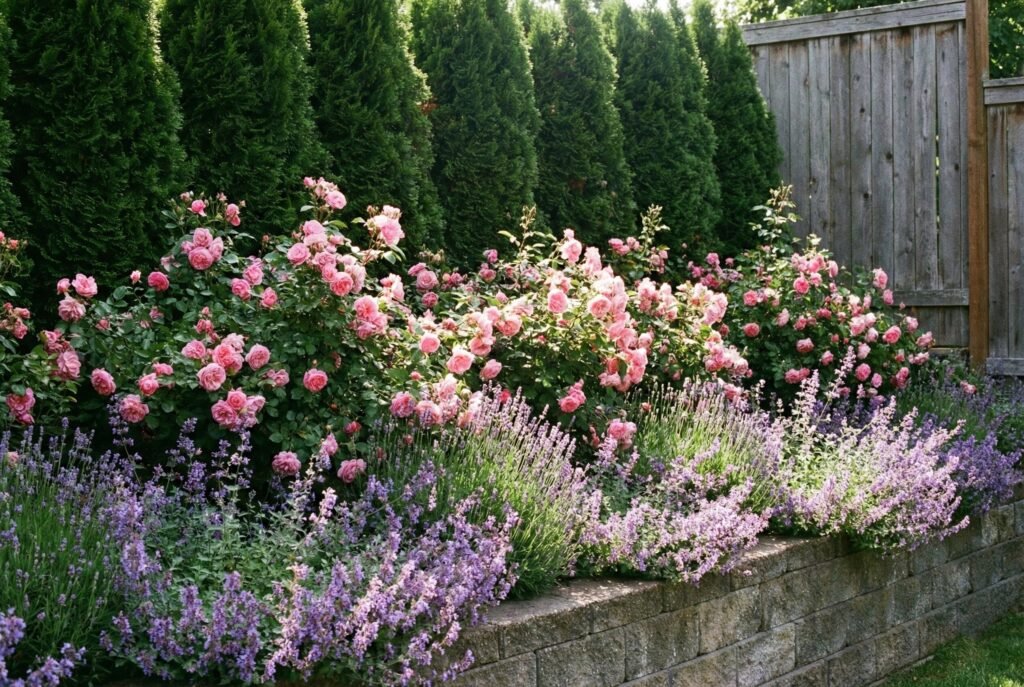
Instead of one type of plant, create layers. This mimics nature and provides visual interest from the ground up to the top of the fence.
The Strategy:
- Back Layer: Tall shrubs (Lilacs, Viburnum, Arborvitae).
- Middle Layer: Flowering perennials (Roses, Hydrangeas).
- Front Layer: Ground cover or low annuals (Hostas, Impatiens).
12. The Fragrant Jasmine Wall
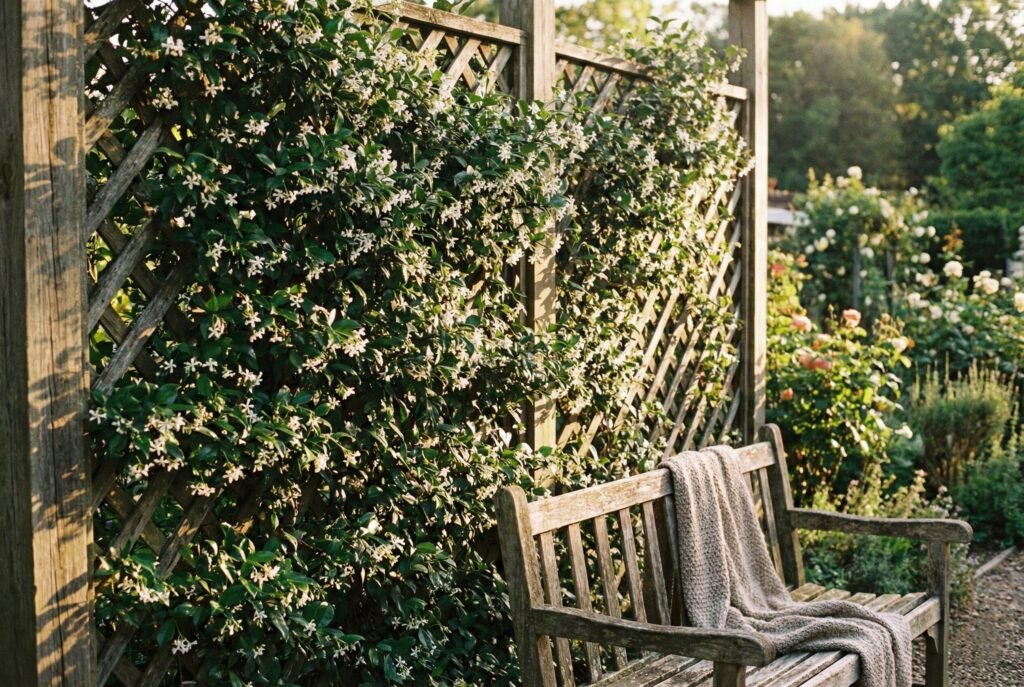
Star Jasmine is a classic for a reason. It smells incredible. If you have a patio or seating area near your fence, this is the best choice.
What to plant:
- Star Jasmine (Trachelospermum jasminoides)
Climate Note: This thrives in warmer climates (Zones 8+). In colder areas, you might need to bring it inside or treat it as an annual
13. Succulent Wall (For Dry Climates)
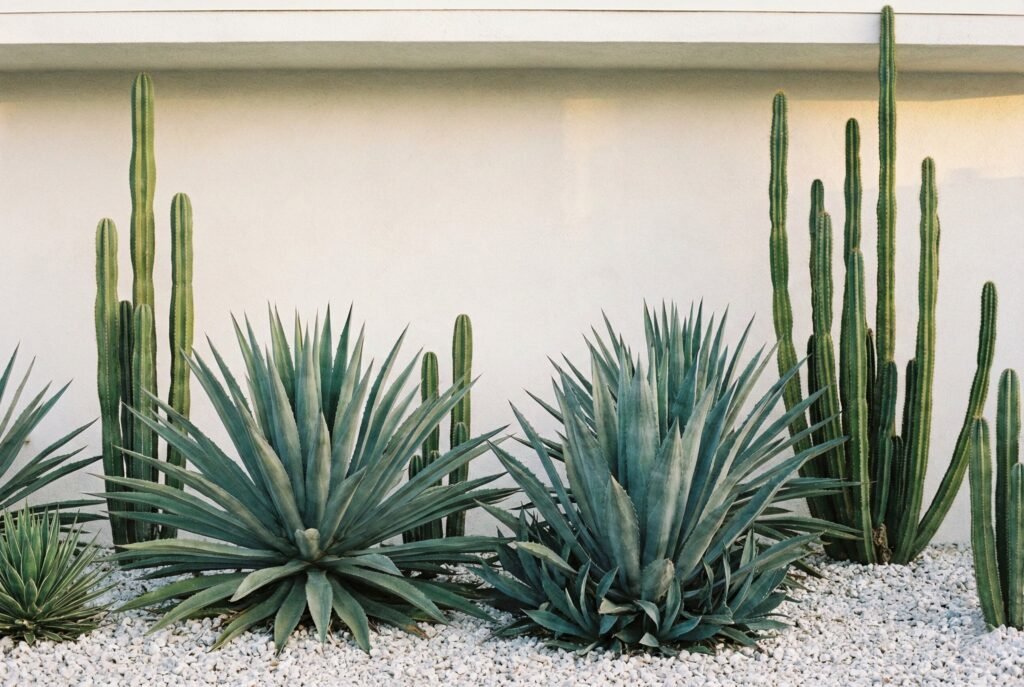
If you live in a desert area or have a very hot, dry wall, succulents are the answer. You can plant tall cacti or Agave along the base.
What to plant:
- Agave
- Prickly Pear Cactus
- Yucca
- Aloe
Design Tip: Use gravel or decorative rock as mulch instead of wood chips. It reflects heat and keeps the succulents dry.
14. Hanging Baskets and Window Boxes
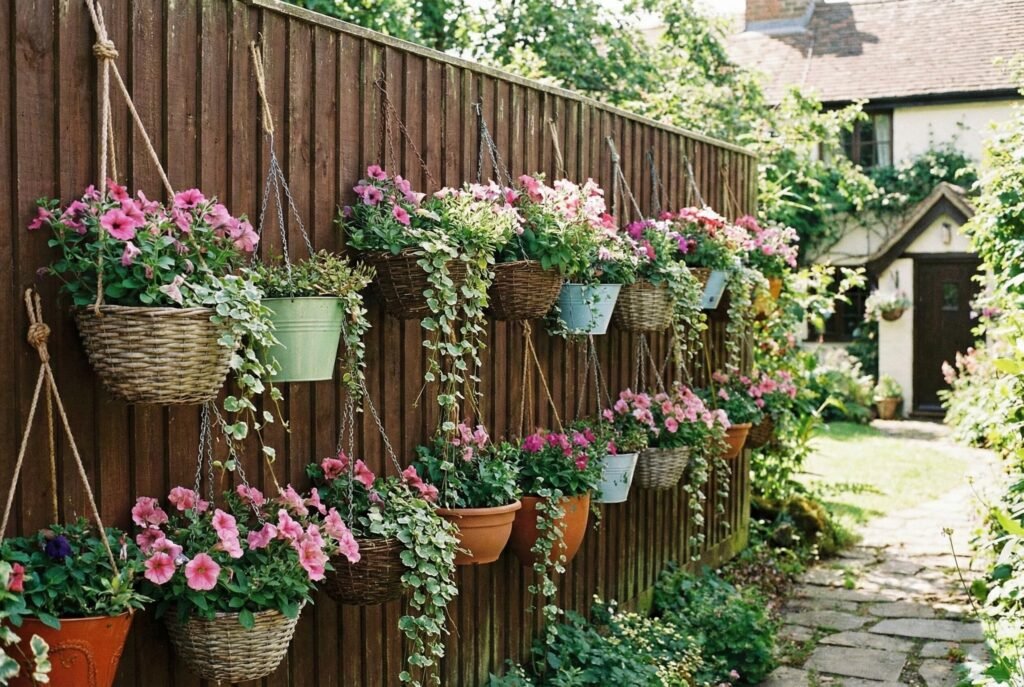
Sometimes you can’t dig in the ground near the fence (maybe there is concrete or too many tree roots). Go vertical by hanging planters directly on the fence.
How to do it: Screw sturdy hooks into the fence posts. Hang baskets filled with trailing plants.
What to plant:
- Petunias
- Fuchsias
- Trailing Ivy
- Ferns
15. The Rose Covered Trellis
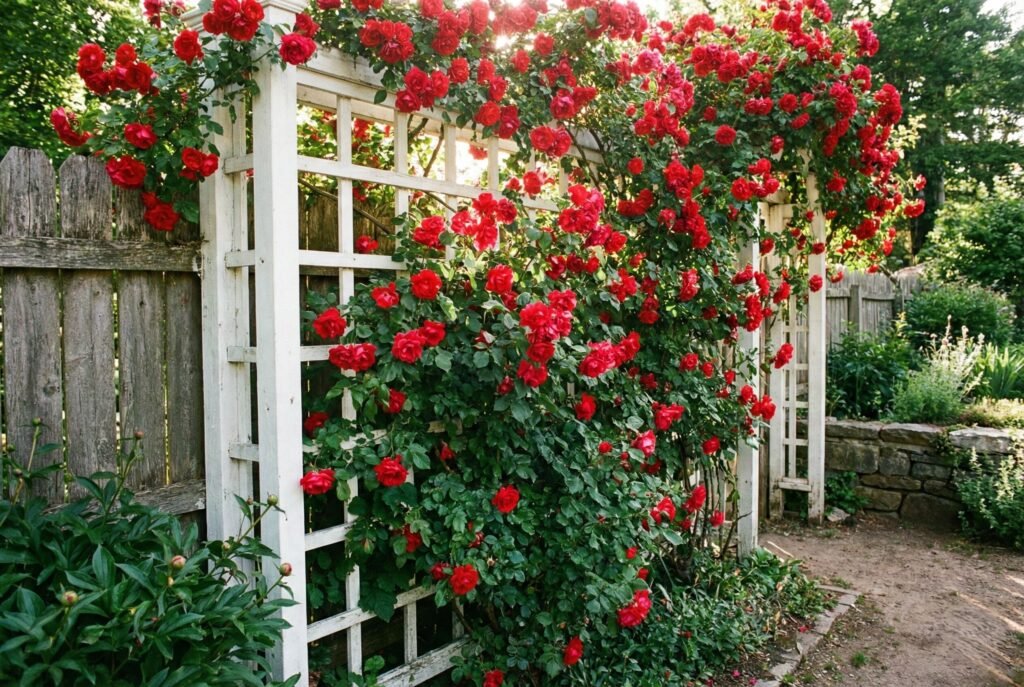
Nothing says “classic garden” like climbing roses. They are romantic and beautiful.
What to plant:
- Climbing Rose ‘New Dawn’ (Pink)
- Climbing Rose ‘Iceberg’ (White)
- Climbing Rose ‘Don Juan’ (Red)
Maintenance: Roses need pruning and feeding. They also need to be tied to the support structure, as they don’t attach themselves like ivy.
16. Shade-Loving Hostas and Ferns
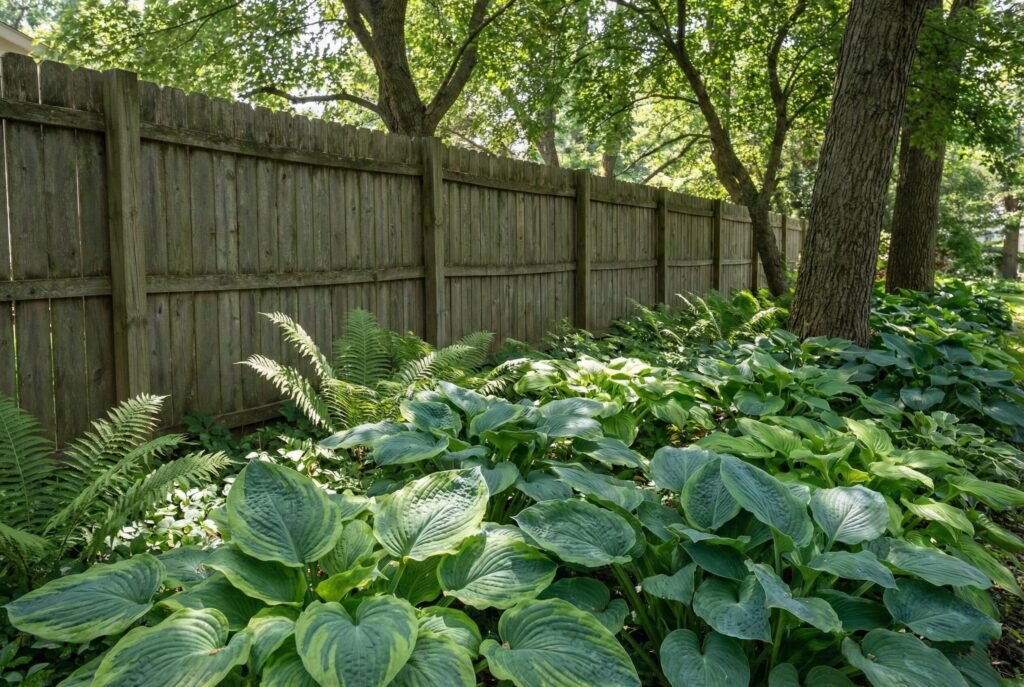
If your fence creates a dark, damp strip of shade, embrace it. Hostas and ferns love these conditions. They rely on foliage texture rather than flowers.
What to plant:
- Hostas (Mix varieties: Blue Angel, Patriot, etc.)
- Japanese Painted Ferns
- Bleeding Hearts
How to Prepare the Soil Along a Fence
The soil along fences is often poor. It might be compacted from construction or full of gravel and debris.
- Clear the Debris: Remove grass, weeds, and old rocks.
- Loosen the Soil: Dig down about 12 inches. If the soil is hard clay, you need to break it up.
- Amend: Add organic matter. Compost is gold. Mix it into the existing soil. This helps drainage and provides nutrients.
- Mulch: After planting, add 2-3 inches of mulch. This keeps moisture in and stops mud from splashing onto your fence during rain.
Entity Optimization for Fence Planting
To ensure your garden succeeds (and this article helps you find what you need), here is a quick breakdown of common terms and entities used in landscape design.
- Hardiness Zone: This tells you if a plant will survive the winter in your area. Always check your USDA Zone before buying.
- Perennial vs. Annual: Perennials come back every year. Annuals die after one season but bloom longer.
- Deciduous vs. Evergreen: Deciduous plants lose leaves in winter; Evergreens stay green.
- Invasive Species: Plants that spread uncontrollably (e.g., English Ivy or Bamboo). Avoid these to protect local ecosystems.
- Drip Irrigation: The best way to water fence lines. It delivers water to the roots without wetting the fence wood.
Common Mistakes to Avoid
- Planting too close: Plants grow. If the tag says “4 feet wide,” don’t plant it 6 inches from the fence. It will get squashed and rot the fence.
- Ignoring the neighbor: If you plant an invasive vine, it will go into your neighbor’s yard. Be a good neighbor.
- Forgetting water access: Ensure your hose reaches the far corners of the fence line.
- Blocking access: If you need to paint or repair the fence later, will you have to chop down your bushes? Leave a maintenance gap if possible.
FAQ: Planting Along Fences
Q: Can I hang plants on a vinyl fence?
A: Vinyl fences are hollow. You can use special vinyl fence hooks that drape over the top. Avoid drilling holes, as this can crack the vinyl and void warranties.
Q: What is the fastest-growing plant for privacy?
A: Bamboo is the fastest, but dangerous if not contained. Arborvitae ‘Green Giant’ is a fast-growing tree often used for privacy screens. Hops vines also grow incredibly fast in the summer.
Q: How do I stop grass from growing into my fence bed?
A: Install a physical edging barrier. Metal, brick, or plastic edging buried a few inches deep will stop grass roots from creeping into your flower bed.
Q: Will vines ruin my wood fence?
A: They can. Vines trap moisture against the wood, leading to rot. Twining vines can also pry boards apart. It is always safer to install a trellis in front of the fence rather than letting vines grow on the fence.
Conclusion
Planting along your fence line is one of the highest-impact projects you can do in your garden. It transforms the boundaries of your property from a cage into a living backdrop.
Start small. Pick one section of fence, maybe the one you see from your kitchen window. Choose a theme from the list above, prep your soil, and get planting. Whether you choose the romantic look of climbing roses or the sleek look of bamboo, you will love looking at green leaves instead of bare boards.