

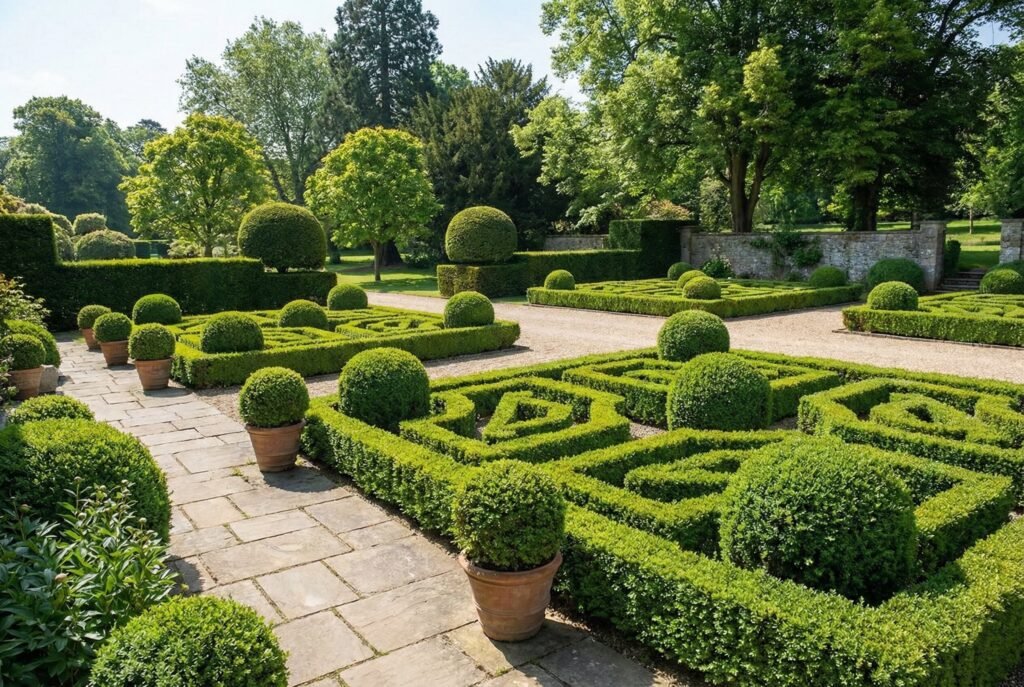
Boxwoods are the ultimate secret weapon in landscape design. Whether you are walking through a historic French estate or admiring a modern suburban front yard, you will likely spot these rich, green shrubs. Known scientifically as Buxus, boxwoods are incredibly versatile evergreen plants that bring structure, elegance, and year-round color to any outdoor space.
If you want to boost your home’s curb appeal, create natural property boundaries, or design a peaceful backyard retreat, boxwoods are the perfect foundation. They are relatively low-maintenance, deer-resistant, and can be shaped into almost any form you can imagine.
In this comprehensive guide, we will explore over 15 stunning boxwood landscaping ideas that you can easily replicate in your own yard. We will also cover essential care tips and the best boxwood varieties to use for different projects.
Why Choose Boxwoods for Your Landscape?
Before diving into the design ideas, it helps to understand why landscape architects and home gardeners love boxwoods so much.
First, they provide an evergreen structure. When perennial flowers die back in the winter, and deciduous trees lose their leaves, boxwoods keep your yard looking alive and intentional. They act as the “bones” of your garden.
Second, they are incredibly adaptable. You can plant them in USDA Hardiness Zones 5 through 9, and depending on the variety, they can thrive in full sun to partial shade.
Finally, they offer unmatched versatility. You can let Korean boxwoods grow naturally for a soft, fluffy look, or you can tightly clip English boxwoods into sharp, geometric shapes. From formal to casual, there is a boxwood for every garden style.
15+ Stunning Boxwood Landscaping Ideas
Here are some of the most beautiful and practical ways to incorporate boxwoods into your landscape design.
1. Classic Front Walkway Borders
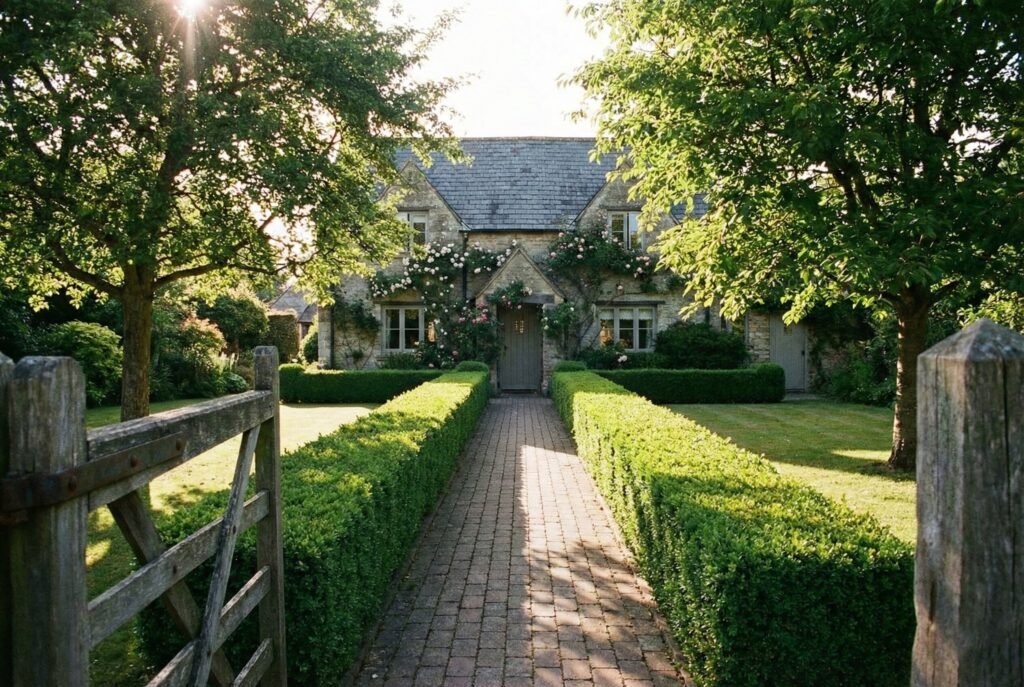
One of the most popular ways to use boxwoods is to line a front walkway. This creates a clear, inviting path to your front door and instantly boosts curb appeal. A low boxwood hedge acts as a visual guide, drawing the eye exactly where you want it to go.
To achieve this look, choose a dwarf or low-growing variety like the ‘Sprinter’ boxwood or ‘Green Gem’. Plant them about 18 to 24 inches apart so they grow together into a solid, seamless green wall. Keep them trimmed to a height of about one to two feet, so they define the path without overwhelming the space or making the walkway feel cramped.
2. Geometric Parterre Gardens
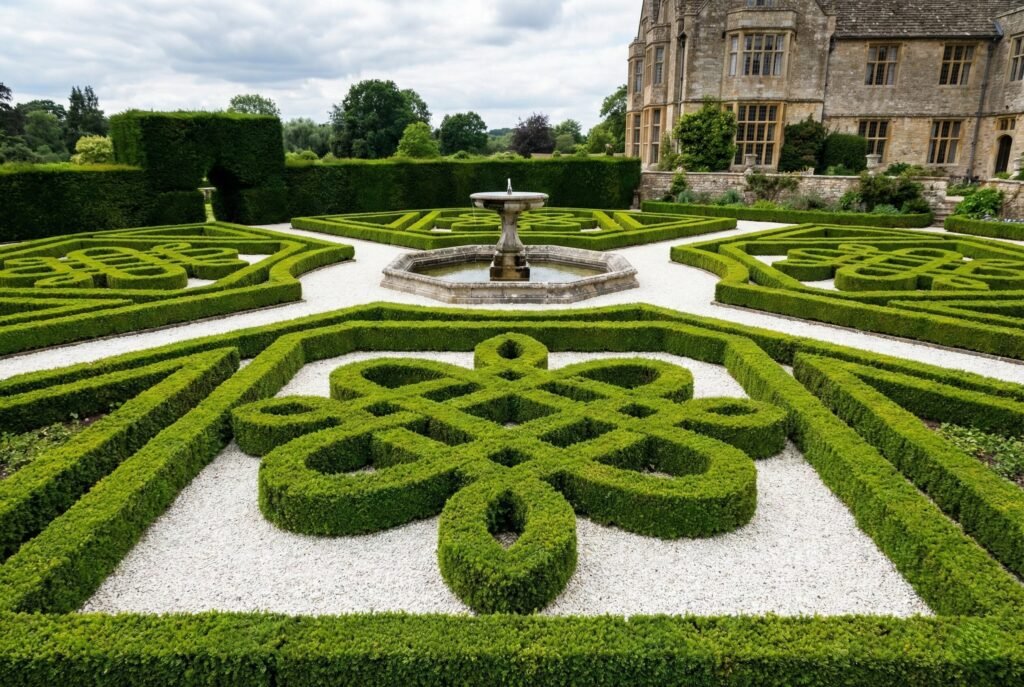
If you love the look of classic European estates, a parterre garden is a brilliant way to use boxwoods. A parterre is a formal garden laid out on a level surface, consisting of plant beds separated by gravel or paved pathways, designed to form a pleasing, symmetrical pattern.
You do not need a massive estate to pull this off. You can create a small parterre in a sunny corner of your backyard. Use dwarf English boxwoods (Buxus sempervirens ‘Suffruticosa’) to create the outline of squares, rectangles, or even circles. You can leave the centers of these geometric shapes empty with decorative gravel, or fill them with seasonal blooming annuals for a pop of color.
3. Potted Boxwood Topiaries for Porches
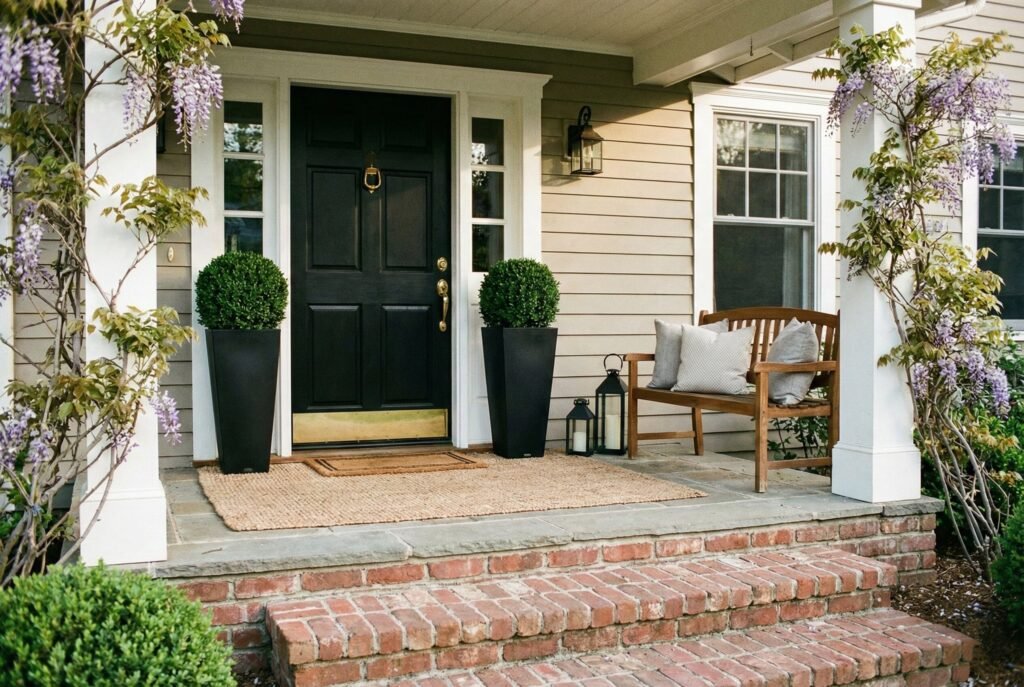
You do not even need an open garden bed to enjoy boxwoods. They thrive in containers, making them perfect for dressing up porches, patios, and balconies. Placing identical potted boxwoods on either side of a front door is a classic design trick that creates symmetry and framing.
For this idea, you can buy boxwoods that have already been trained into topiary shapes, such as globes, cones, or spirals. Plant them in heavy, high-quality planters equipped with good drainage holes. Remember that potted boxwoods dry out faster than those planted in the ground, so you will need to water them more frequently, especially during the hot summer months.
4. Layered Foundation Planting
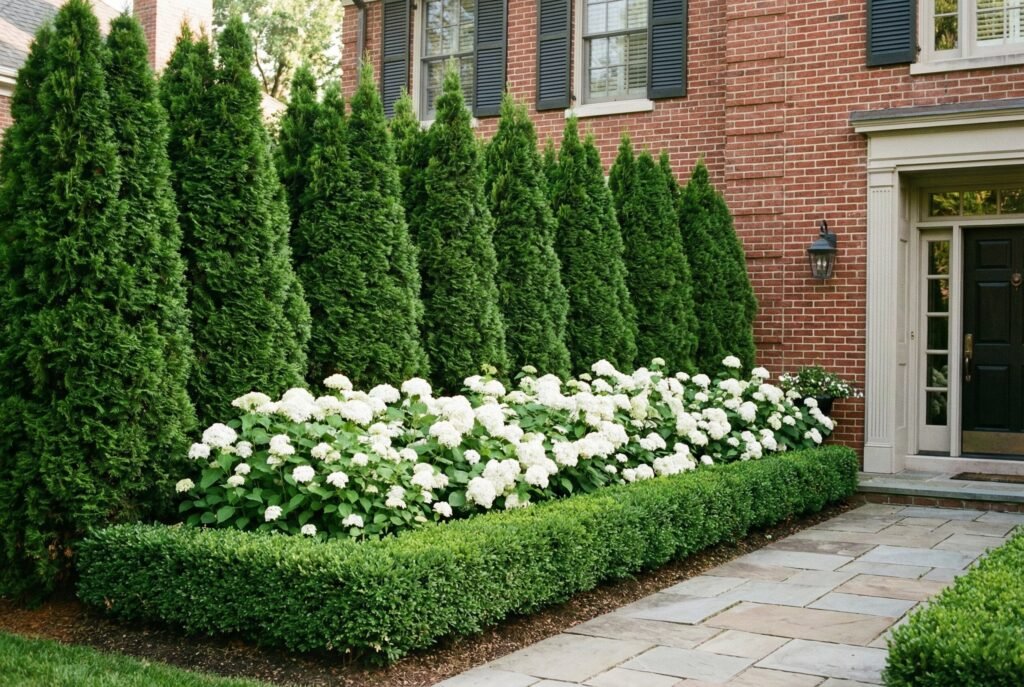
Foundation planting refers to the beds located right against the walls of your house. Instead of planting a single row of identical shrubs, use boxwoods to create a layered effect. Layering adds depth and texture to your yard.
Plant taller evergreens or flowering shrubs near the wall of the house. Next, plant a row of medium-sized perennials. Finally, use a low, continuous boxwood hedge as the front border. The dark green foliage of the boxwood provides a clean, solid edge that hides the bare stems of taller plants behind it and anchors the entire planting bed to the lawn.
5. Privacy Hedges and Screens
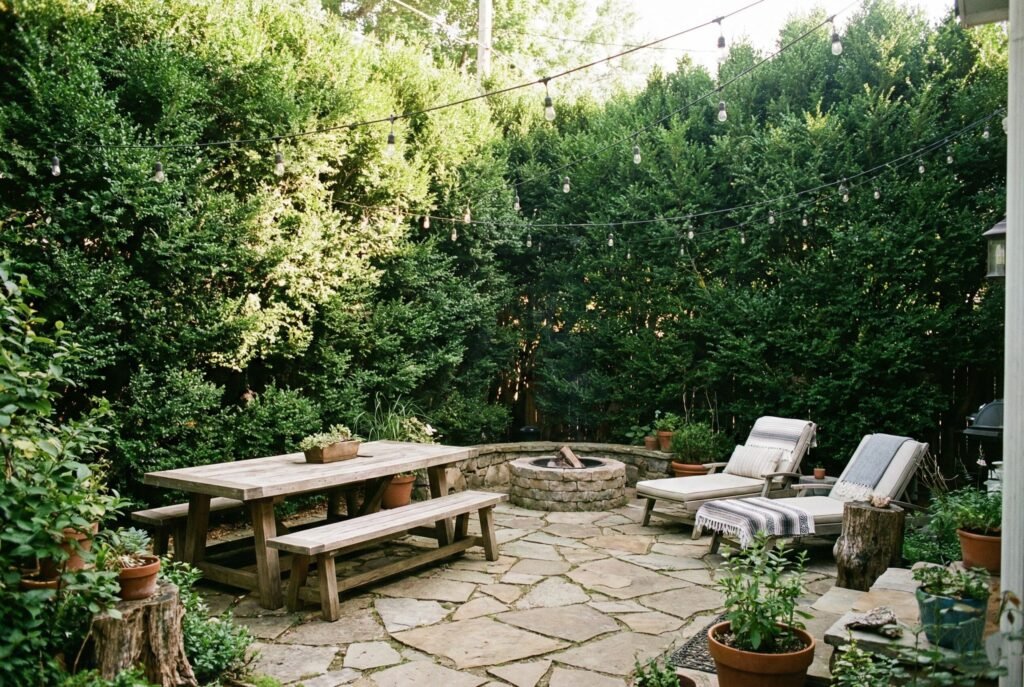
While many people think of boxwoods as short edging plants, certain varieties can grow incredibly tall. If you need a privacy screen to block a busy road or separate your yard from a neighbor’s, a tall boxwood hedge is a beautiful, living alternative to a wooden fence.
For a tall privacy hedge, look for upright varieties like the ‘Green Mountain’ or ‘American’ boxwood, which can grow up to 10 feet tall. When planting for privacy, space the root balls close enough so the branches will eventually interlock, but far enough apart to allow for proper air circulation to prevent fungal diseases. You can shear the top flat for a formal look or let them grow naturally for a softer, organic feel.
6. Framing Garden Benches or Focal Points
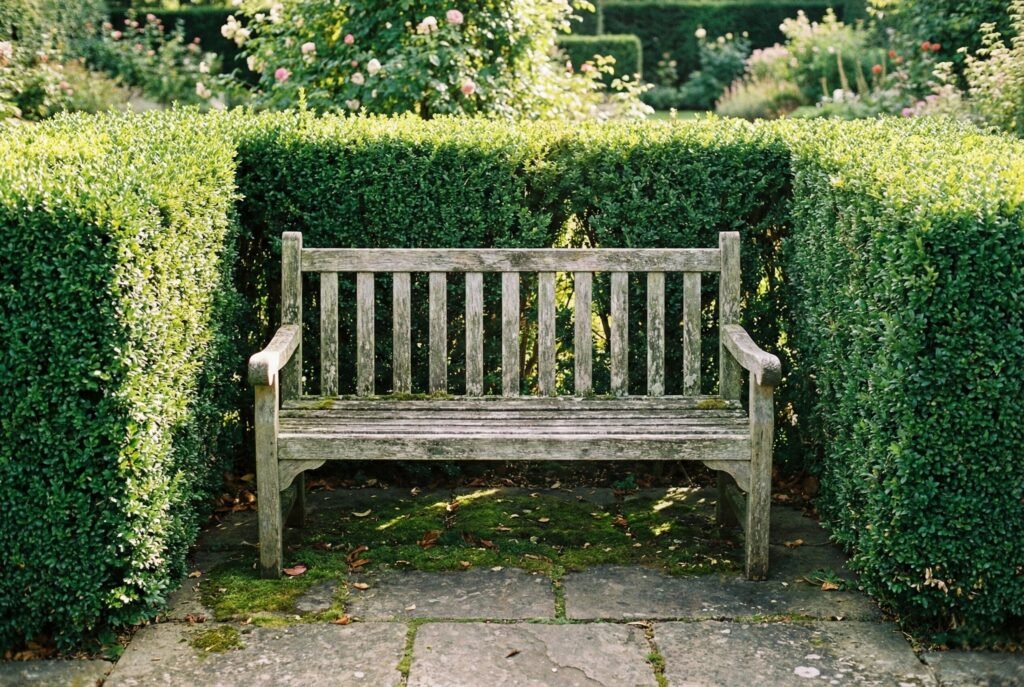
Boxwoods are excellent tools for highlighting focal points in your garden. If you have a beautiful garden bench, a birdbath, or a piece of outdoor sculpture, you can use boxwoods to draw attention to it.
Create a U-shaped hedge around the back and sides of a garden bench to create a cozy, sheltered seating area. Alternatively, plant four matching boxwood spheres at the corners of a square patio holding a central fountain. The rigid structure of the boxwoods contrasts beautifully with the dynamic movement of water or the relaxed shape of a resting bench.
7. Boxwood and Hydrangea Combinations
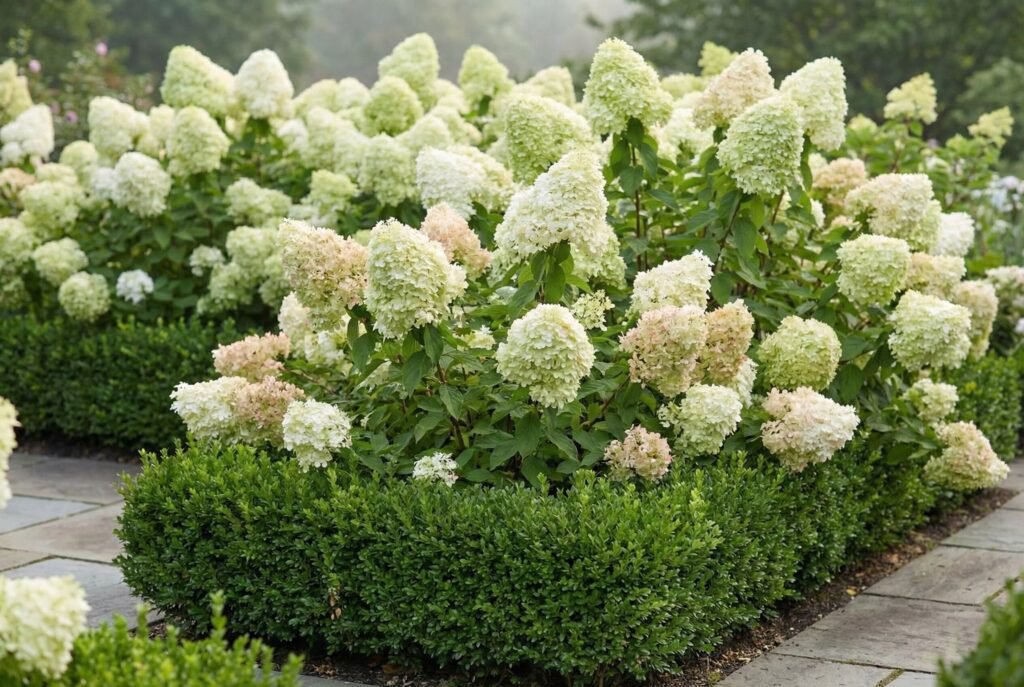
Pairing boxwoods with hydrangeas is a match made in landscaping heaven. It is a highly popular combination in coastal and Southern gardens because the two plants perfectly complement each other.
Hydrangeas provide massive, soft, colorful blooms and large deciduous leaves, but they lose their leaves and look like bare sticks in the winter. Boxwoods provide tight, small, evergreen foliage that looks great all year. Plant a row of hydrangeas in the background and a tidy boxwood hedge in the foreground. The boxwood will hide the bare hydrangea stems in the winter and provide a striking green contrast to the pink, blue, or white flowers in the summer.
8. Curved Boxwood Paths
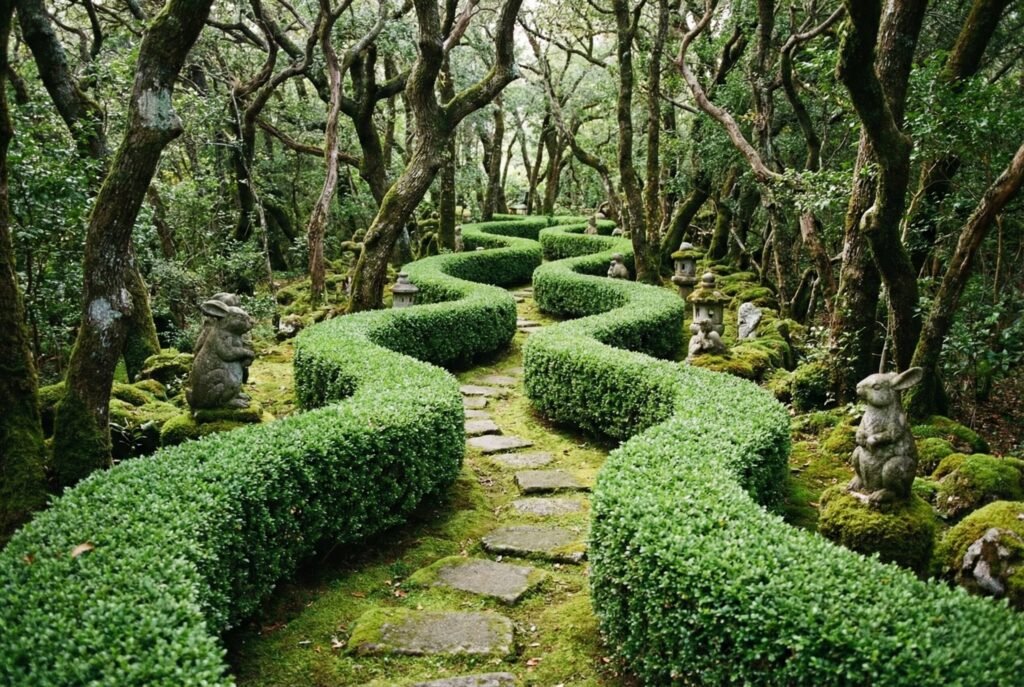
While boxwoods are famous for straight lines and sharp corners, they can also be pruned to follow graceful curves. A curved boxwood path adds a sense of mystery and whimsy to a garden, encouraging visitors to walk around the bend to see what comes next.
To create a curved hedge, use a garden hose or spray paint to mark out a fluid, winding line on the ground before digging your trench. Plant your boxwoods along this line and, when pruning, use hand shears to carefully follow the sweeping contour rather than cutting a straight line. This technique softens the landscape and works beautifully in cottage-style or informal gardens.
9. Creating Outdoor Rooms
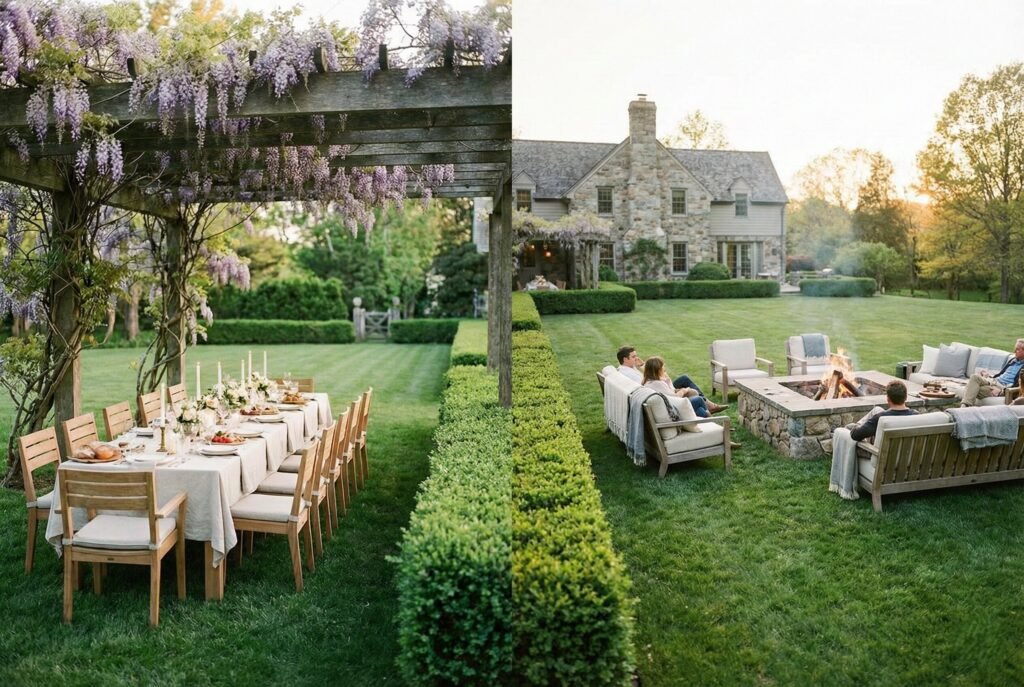
Landscape architects often use the concept of “outdoor rooms” to make large yards feel more intimate and purposeful. Just as walls separate the rooms inside your house, you can use boxwood hedges to define different functional areas in your backyard.
You might plant a waist-high boxwood hedge to separate a dining patio from a children’s play area, or to create a boundary between a swimming pool deck and a vegetable garden. The hedges do not have to be exceptionally tall; even a three-foot hedge is enough to visually break up an expansive lawn and give each area a distinct purpose.
10. Spherical Boxwood Clusters (Cloud Pruning)
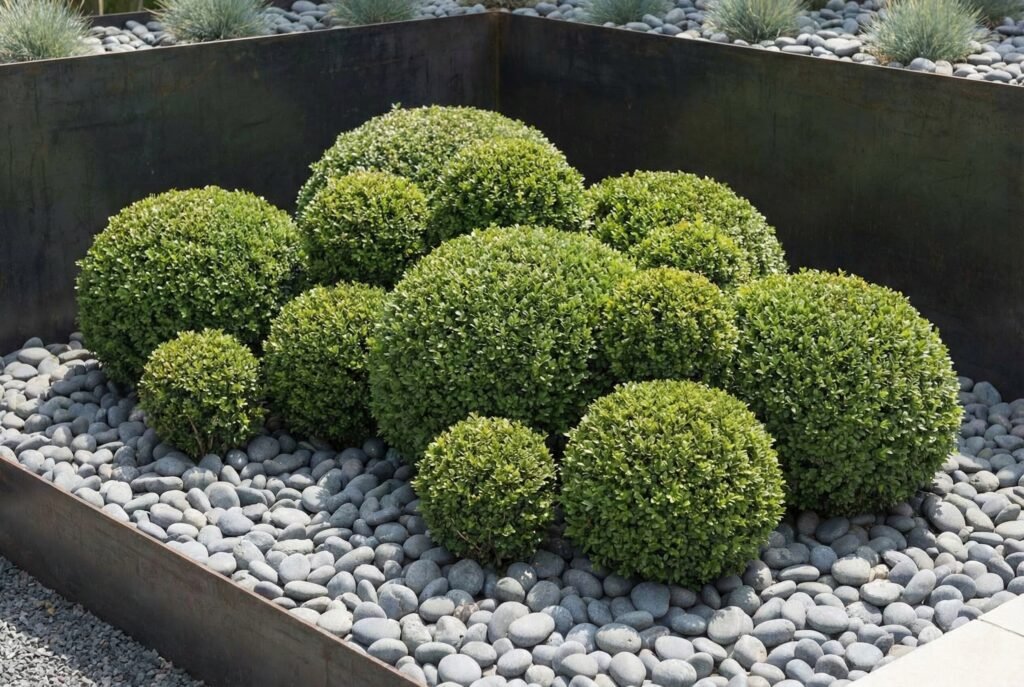
If you want a modern, sculptural look, try planting clusters of boxwoods and pruning them into spheres of varying sizes. This technique is sometimes inspired by Japanese cloud pruning. Instead of a continuous, flat-topped hedge, you end up with a bed full of bubbly, rolling green globes.
To achieve this, plant different varieties of boxwoods together—some that naturally stay small and others that grow larger. Prune each individual plant into a tight orb. The contrasting sizes create a playful, dynamic texture that looks amazing against modern architecture, concrete walls, or minimalist gravel beds.
11. Framing Driveway Entrances
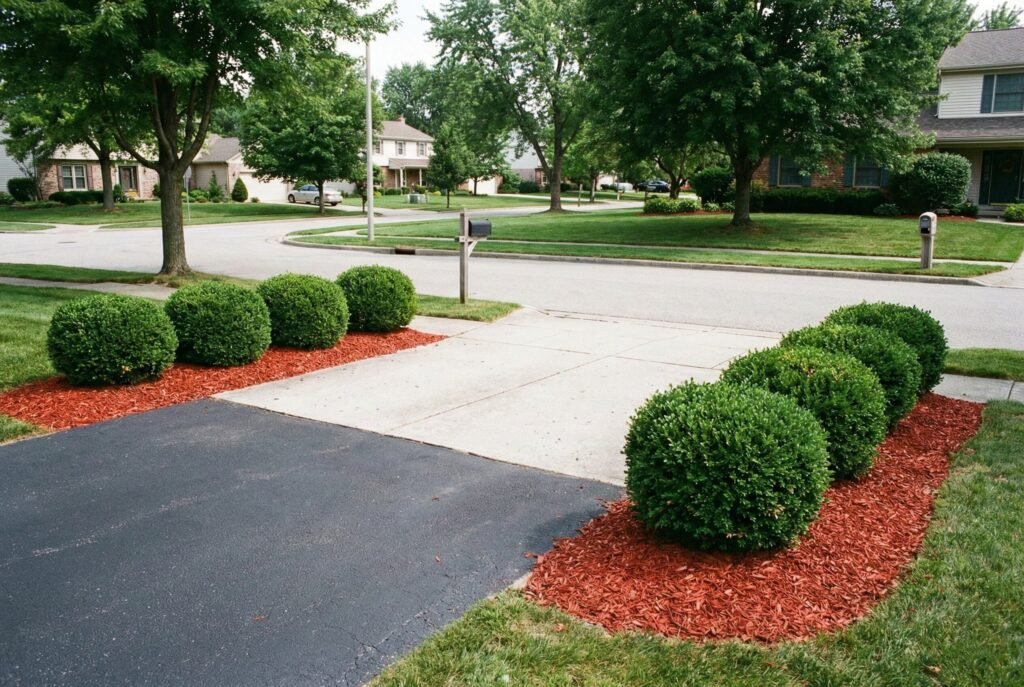
The end of your driveway is the first thing guests see when they arrive at your home. Planting boxwoods at the entrance of your driveway creates a stately, grand entrance, even for an average suburban home.
You can plant a short line of boxwoods running parallel to the street on either side of the driveway, or place a large, impressive boxwood cone at the two front corners. Just be sure to plant them a few feet back from the actual pavement to ensure they are not damaged by car tires, snowplows, or heavy road salt during the winter months.
12. Boxwoods in Raised Planter Boxes
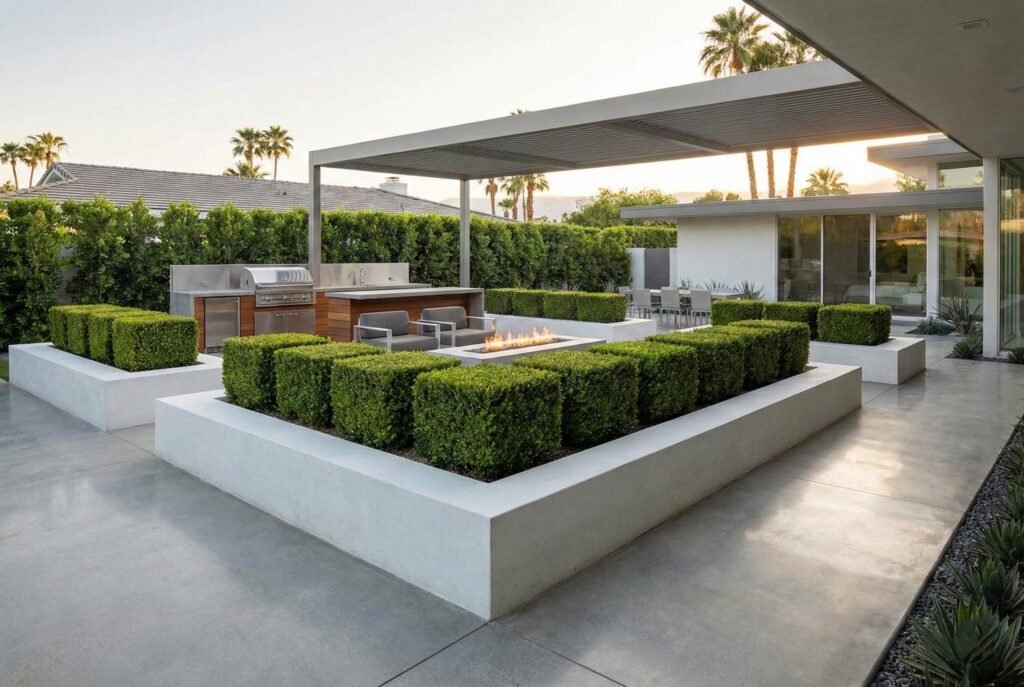
For a sleek, contemporary aesthetic, consider planting boxwoods in raised planter boxes built from concrete, corten steel, or painted wood. Elevating the boxwoods brings the greenery closer to eye level and adds architectural interest to flat patios or decking.
Raised planters also give you complete control over the soil quality and drainage, which is a major advantage since boxwoods are highly susceptible to root rot if left in standing water. A simple row of ‘Green Velvet’ boxwoods in a long, dark metal planter can serve as a stunning, modern railing for a raised deck.
13. Knot Gardens for Small Spaces

A knot garden is a highly intricate, formal garden design where lines of plants are arranged to look as though they are weaving under and over one another, much like a Celtic knot. This is a spectacular idea if you have a small, flat yard and want to create a high-impact visual piece.
Designing a knot garden requires careful planning and precise planting. You will need a slow-growing, very dwarf boxwood variety. You can also mix boxwoods with other low-growing plants of a different color, like purple barberry or gray lavender, to make the woven “threads” of the knot stand out even more.
14. Mixing Boxwoods with Ornamental Grasses
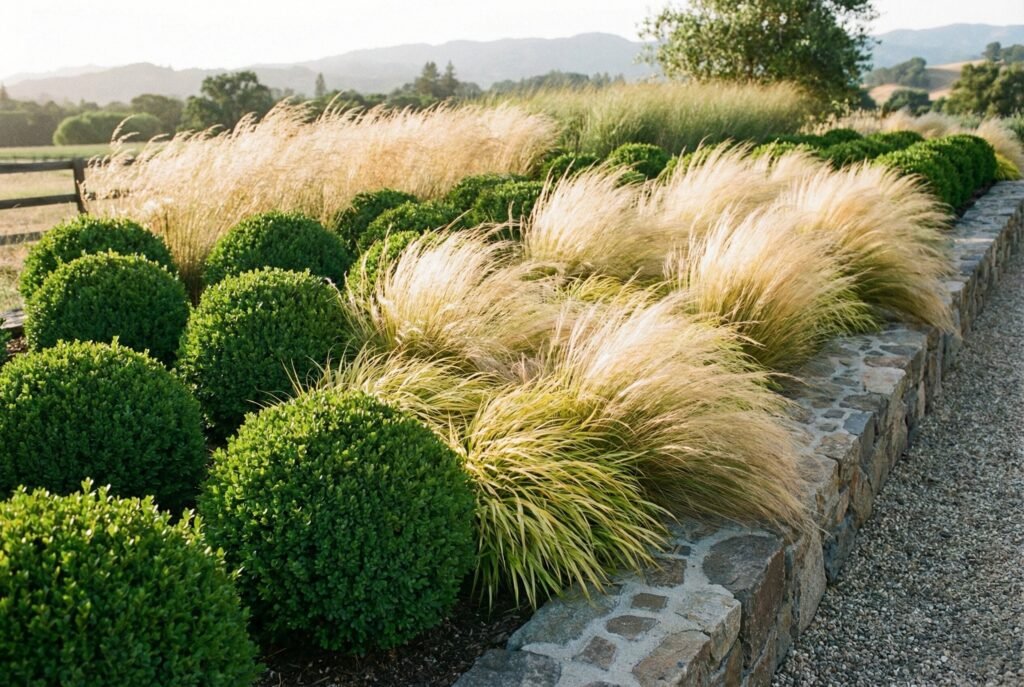
Landscaping is all about contrast. If you have too many stiff, formal plants, the yard can feel rigid. If you have too many loose, wild plants, the yard can look messy. The perfect balance is achieved by mixing structural boxwoods with soft, moving plants like ornamental grasses.
Plant tight boxwood spheres next to tall, feathery grasses like Maiden Grass or Fountain Grass. The wind will catch the grasses, bringing beautiful motion and softness to the garden, while the solid, heavy boxwoods provide a grounding, permanent anchor to the scene.
15. Spiral Topiary Accents
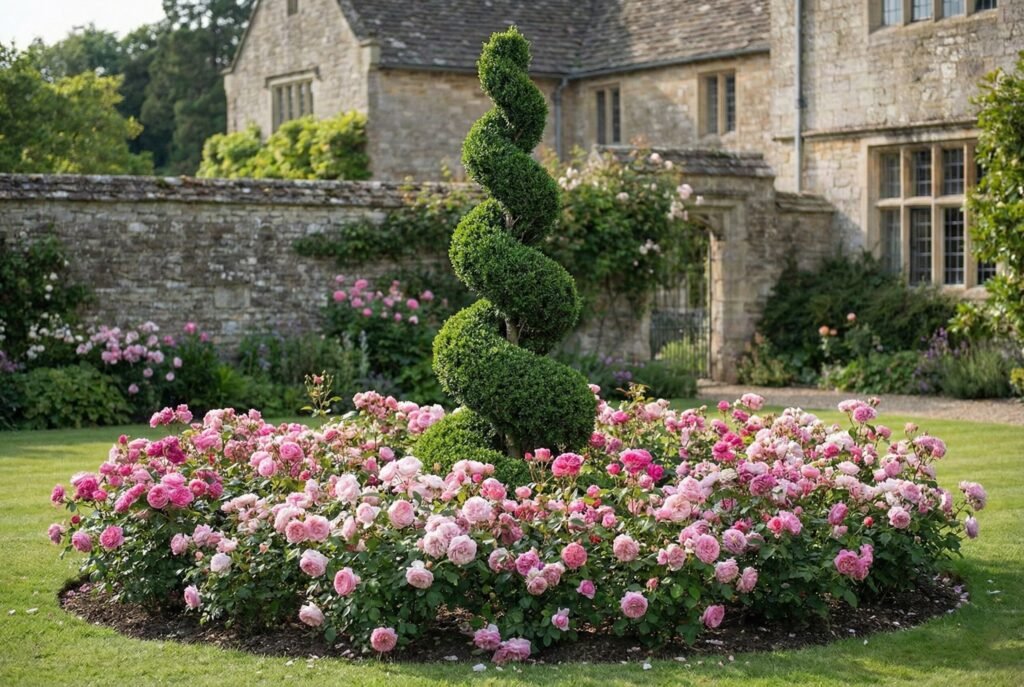
If you want to add a touch of drama and artistry to your garden, a spiral topiary is the way to go. Spiral boxwoods instantly draw the eye and serve as living sculptures.
You can purchase boxwoods already trained into spirals, or if you are patient and enjoy pruning, you can train one yourself over a few years. Plant a spiral boxwood in the center of an herb garden, at the corner of a house, or use two of them to flank a garden gate. Because the spiral shape is so demanding, these require regular, careful clipping to maintain their sharp edges.
16. Framing Water Features or Fountains
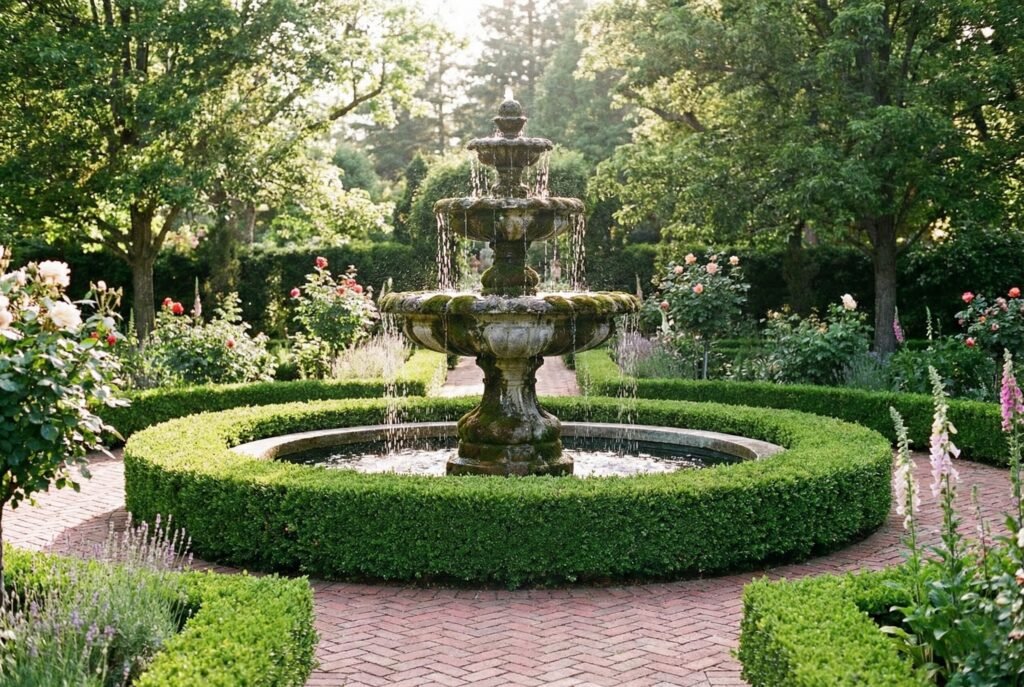
Water features naturally draw the eye, but without proper landscaping around them, they can look like they were just dropped onto the lawn as an afterthought. Boxwoods help integrate fountains and ponds into the surrounding landscape.
Plant a circular boxwood hedge around the base of a tiered fountain to anchor it to the ground. The constant splashing from the fountain will keep the immediate area humid, which boxwoods generally enjoy, provided the soil remains well-draining. The dark green leaves also provide a beautiful backdrop that makes the sparkling water pop visually.
17. Boxwoods with Bright Perennial Flowers
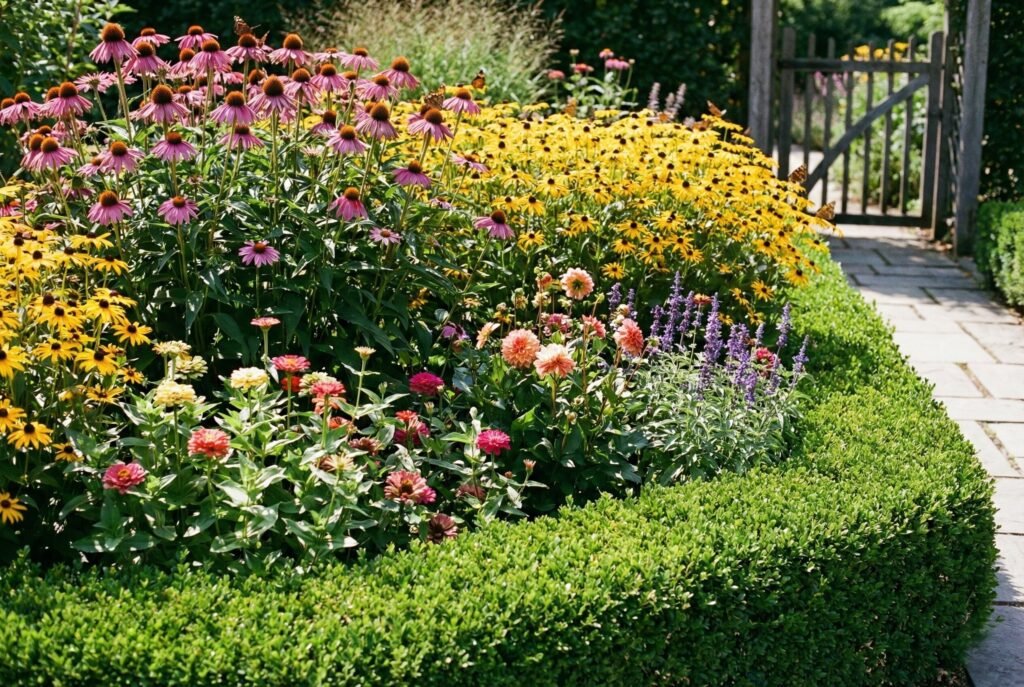
While boxwoods are often associated with strict, green-on-green formal gardens, they are equally useful in colorful, chaotic cottage gardens. Bright perennial flowers can sometimes look messy when they flop over onto lawns or walkways in the late summer.
By planting a low boxwood border at the edge of your flower bed, you create a tidy, structured frame that contains the wildness of the blooms. The solid green edge makes the bright colors of tulips in the spring, or coneflowers and daylilies in the summer, look even more vibrant and intentional.
Essential Boxwood Care and Maintenance Tips
To ensure your boxwood landscaping ideas look beautiful year after year, you must understand their basic needs. Boxwoods are not difficult to grow, but they do have specific requirements regarding soil, water, and pruning.
Sunlight and Soil Requirements
Most boxwoods prefer full sun to partial shade. If they are planted in deep shade, they may become leggy and sparse. However, in regions with extremely hot, scorching summers, afternoon shade is highly beneficial to prevent the leaves from burning.
The most critical factor in boxwood care is soil drainage. Boxwoods have shallow root systems and absolutely despise wet feet. If they are planted in heavy clay soil that holds standing water, they will succumb to root rot very quickly. Ensure your soil is well-draining, and consider planting them on a slight mound if your yard is prone to flooding. Add a two-inch layer of organic mulch around the base to keep the shallow roots cool and retain moisture, but keep the mulch an inch or two away from the main trunk to prevent rot.
Watering Needs
Newly planted boxwoods need regular, deep watering to establish their root systems. Water them at the base of the plant using a drip line or a soaker hose. Avoid overhead watering with a sprinkler if possible, as wet foliage can invite fungal diseases. Once established, boxwoods are relatively drought-tolerant, but they will still need supplemental watering during long, dry spells in the summer.
Pruning and Shaping
The best time to heavily prune or shear boxwoods is in the late winter or early spring before the new growth pushes out. If you prune in the late summer or fall, the plant may push out new, tender growth that will not have time to harden off before the freezing winter temperatures arrive, leading to severe winter burn.
When pruning dense hedges, it is crucial to shape them so the bottom is slightly wider than the top. This slight trapezoid shape allows sunlight to reach the lower branches. If you shear them perfectly straight up and down, the top branches will shade out the bottom branches, causing the lower half of the shrub to lose its leaves and look bare. Use sharp, clean shears, and clean your tools with rubbing alcohol between plants to prevent the spread of diseases.
Protecting Against Pests and Diseases
Boxwoods are generally hardy, but they are susceptible to a few specific issues. The Boxwood Leafminer is a tiny insect that lays eggs inside the leaves, causing them to look blistered and yellow. Boxwood Blight is a serious fungal disease that causes rapid defoliation and black streaks on the stems. To prevent blight, always buy healthy plants from reputable nurseries, ensure good air circulation by not planting them too closely, and avoid overhead watering. If you notice signs of disease, consult a local extension office or certified arborist for treatment options immediately.
Conclusion
Boxwoods are truly the little black dress of landscape design. They are timeless, versatile, and elevate everything around them. Whether you are aiming for the rigid symmetry of a French parterre or simply want a neat, green border to contain your messy summer flowers, there is a boxwood landscaping idea perfectly suited to your yard. By choosing the right variety, ensuring proper drainage, and practicing basic pruning techniques, your boxwoods will provide structure and beauty to your property for decades to come.