

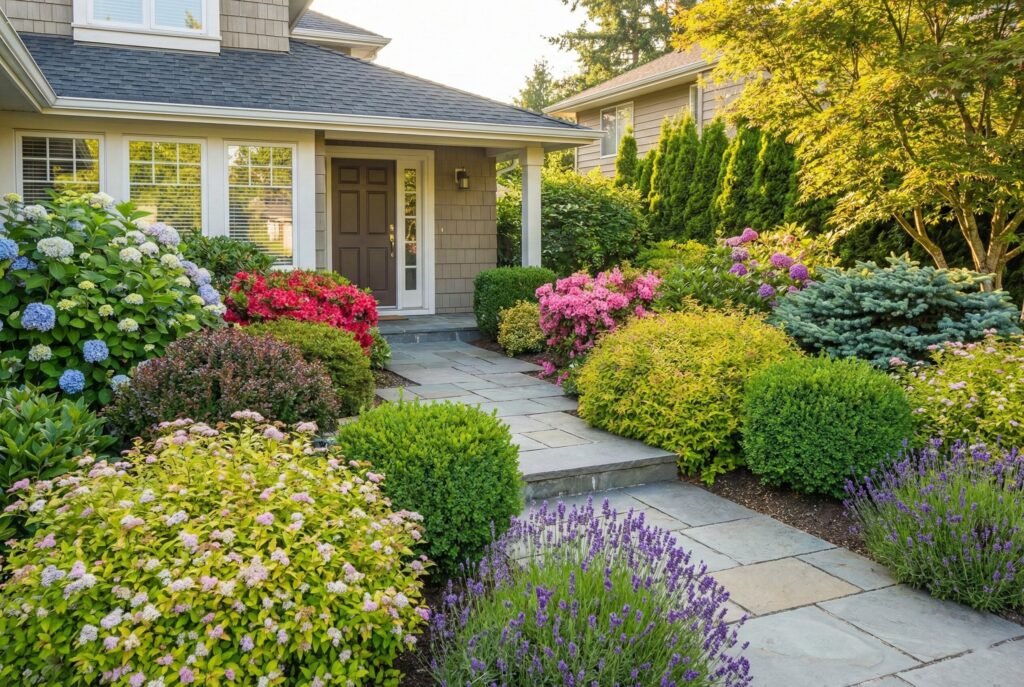
Upgrading your front yard landscaping is one of the easiest ways to boost your home’s curb appeal and increase its overall value. If you are looking to make a great first impression, planting the right bushes and shrubs is the perfect place to start. Bushes provide structure, frame your home’s architecture, and add year-round color to your foundation planting.
However, choosing the right plant is about more than just picking what looks pretty at the local nursery. You need to consider your climate, the amount of sunlight your front yard receives, and how much time you want to spend on maintenance.
This comprehensive guide covers 17+ beautiful bushes for the front of your house, broken down by category so you can find exactly what your yard needs.
What to Consider Before Planting Front Yard Bushes
Before digging a hole in your front yard, you need to plan your landscaping layout. Every yard has different environmental factors that dictate which bushes will thrive.
Understand Your Climate and Hardiness Zone
Different bushes survive in different temperatures. The USDA Plant Hardiness Zone Map divides North America into different zones based on its lowest average winter temperatures. Always check a bush’s hardiness zone before buying it. If you live in Zone 5, a bush rated for Zones 8 through 10 will not survive your winter.
Assess Your Sunlight
Watch your front yard throughout the day to see exactly how much sun it gets.
- Full Sun: The area gets six or more hours of direct sunlight every day.
- Partial Sun or Partial Shade: The area gets three to six hours of sunlight, usually in the morning or late afternoon.
- Full Shade: The area receives less than three hours of direct sun.
Check Your Soil Drainage
Most landscaping bushes hate “wet feet,” which means they do not like sitting in soggy, poorly drained soil. If your front yard tends to flood after a rainstorm, you will need to amend the soil with compost and sand or choose moisture-loving shrubs.
Plan for Mature Size
A common landscaping mistake is planting small bushes too close to the house or the sidewalk. While that small hydrangea might look cute in its plastic pot, it could grow to be six feet wide. Always read the plant tag for the mature height and width, and space your bushes accordingly so they do not block your windows or crowd your walkways.
Top Evergreen Bushes for Year-Round Curb Appeal
Evergreen shrubs hold their foliage all year long, meaning your front yard will not look bare and empty in the middle of winter. These bushes form the backbone of a good foundation planting design.
1. Boxwood
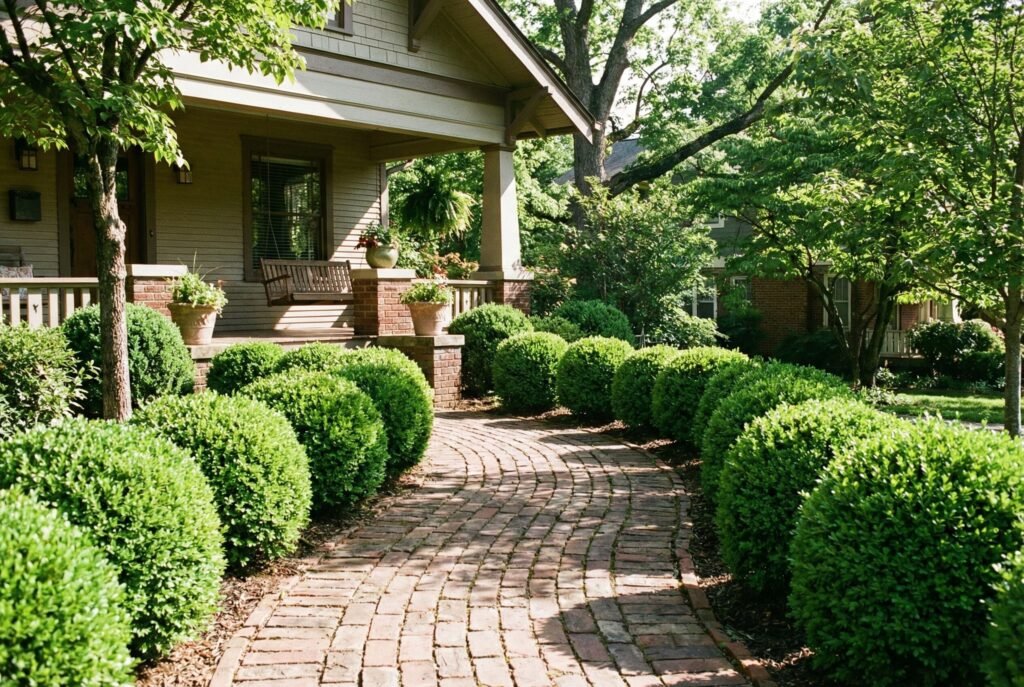
Boxwoods are the classic, traditional front-yard shrub. They feature dense, small green leaves and can be easily shaped into spheres, squares, or low hedges. They are deer-resistant and incredibly versatile.
- Best for: Framing a front door, lining a walkway, or creating a formal foundation hedge.
- Sun Needs: Full sun to partial shade.
- Growing Zones: 5 to 9.
2. Winter Gem Holly
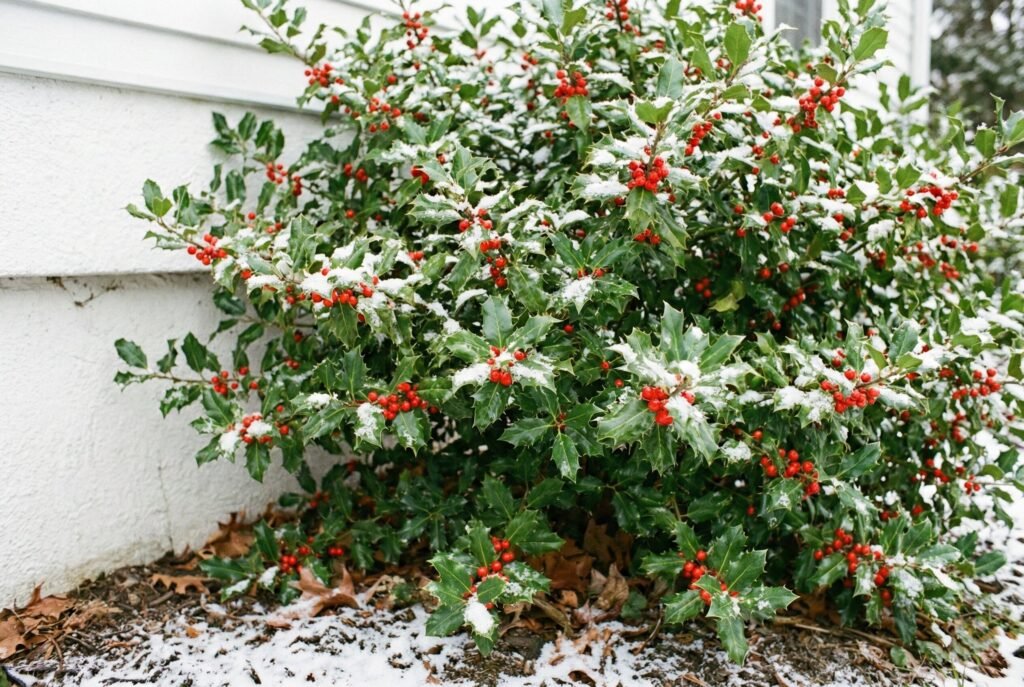
If you want something that looks vibrant in the dead of winter, the Winter Gem Holly is an excellent choice. It features glossy, dark green leaves and, if pollinated, produces bright red berries that look beautiful against winter snow and attract local birds.
- Best for: Adding winter interest and creating natural security barriers under windows.
- Sun Needs: Full sun to partial shade.
- Growing Zones: 5 to 9.
3. Yew (Taxus)
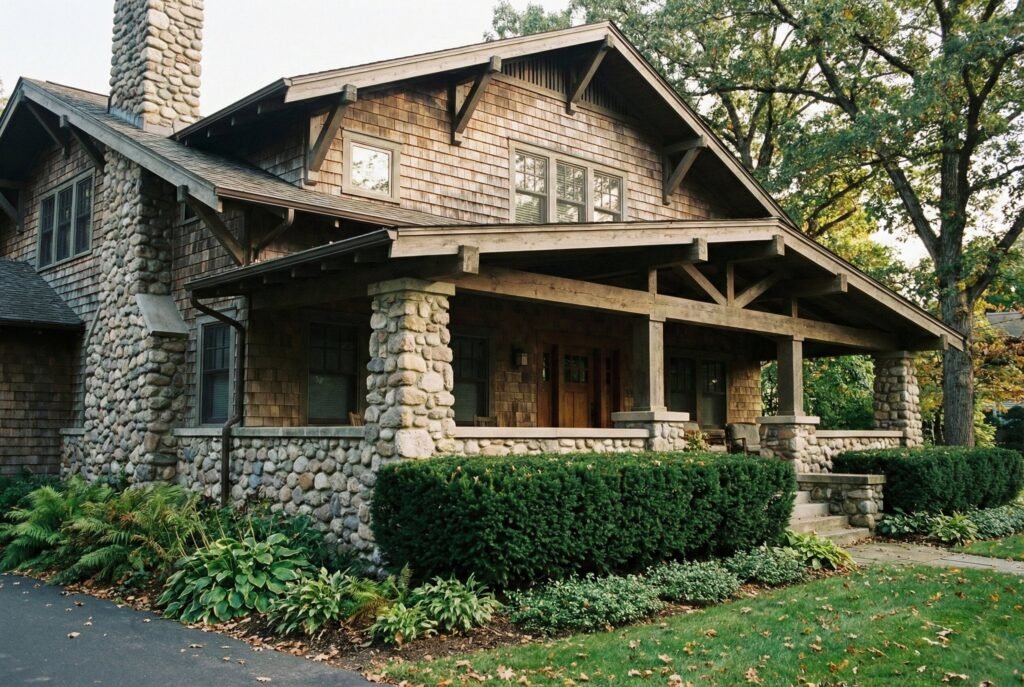
Yews are incredibly tough evergreen bushes that can tolerate a wide variety of conditions, including heavy shade and poor soil. They have soft, dark green needles and take very well to heavy pruning, making them great for structured landscaping.
- Best for: Planting on the north side of your house where sunlight is limited.
- Sun Needs: Full sun to full shade.
- Growing Zones: 4 to 7.
4. Juniper
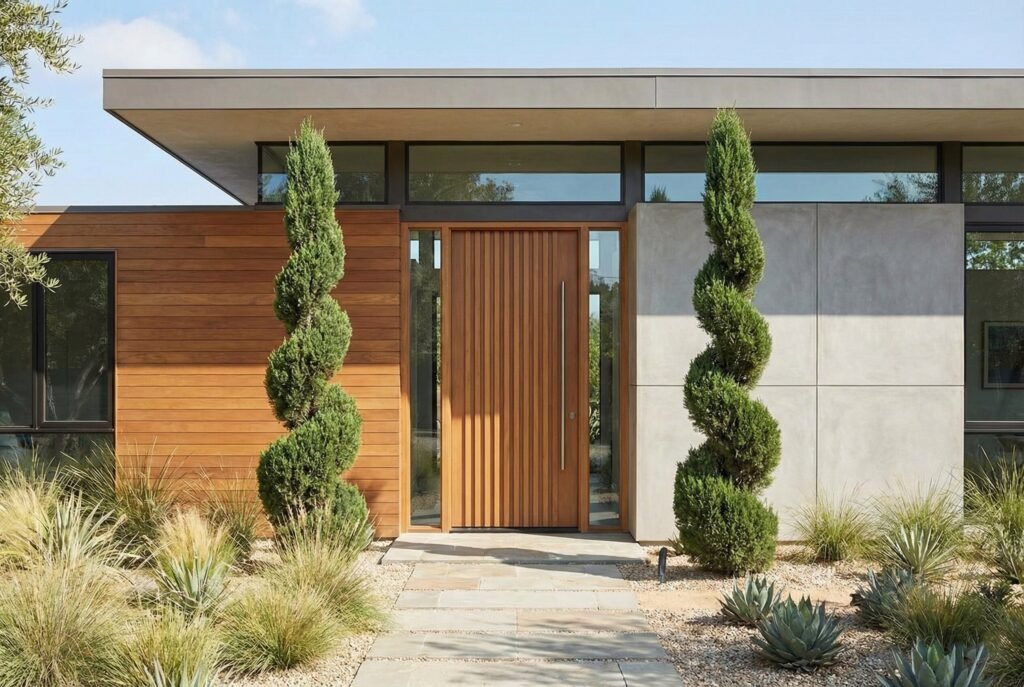
Junipers come in many different varieties, from low-growing ground covers to tall, upright pillars. They are highly drought-tolerant once established and have a distinct texture. Upright junipers like the ‘Skyrocket’ or ‘Spartan’ varieties are perfect for framing the corners of a house.
- Best for: Dry climates, softening the harsh corners of a building, or creating a windbreak.
- Sun Needs: Full sun.
- Growing Zones: 3 to 9.
5. False Cypress (Chamaecyparis)

For a softer, more feathery look, False Cypress is a stunning evergreen. Varieties like the ‘Gold Mop’ offer striking yellow-green foliage that stands out beautifully when planted next to darker green bushes or dark-colored mulch.
- Best for: Adding a pop of golden color and unique texture to a mixed shrub border.
- Sun Needs: Full sun to partial shade.
- Growing Zones: 4 to 8.
Best Flowering Bushes for Front Yard Color
If you want your house to turn heads in the spring and summer, you need flowering bushes. These plants provide massive bursts of colorful blooms that instantly elevate your home’s visual appeal.
6. Hydrangea
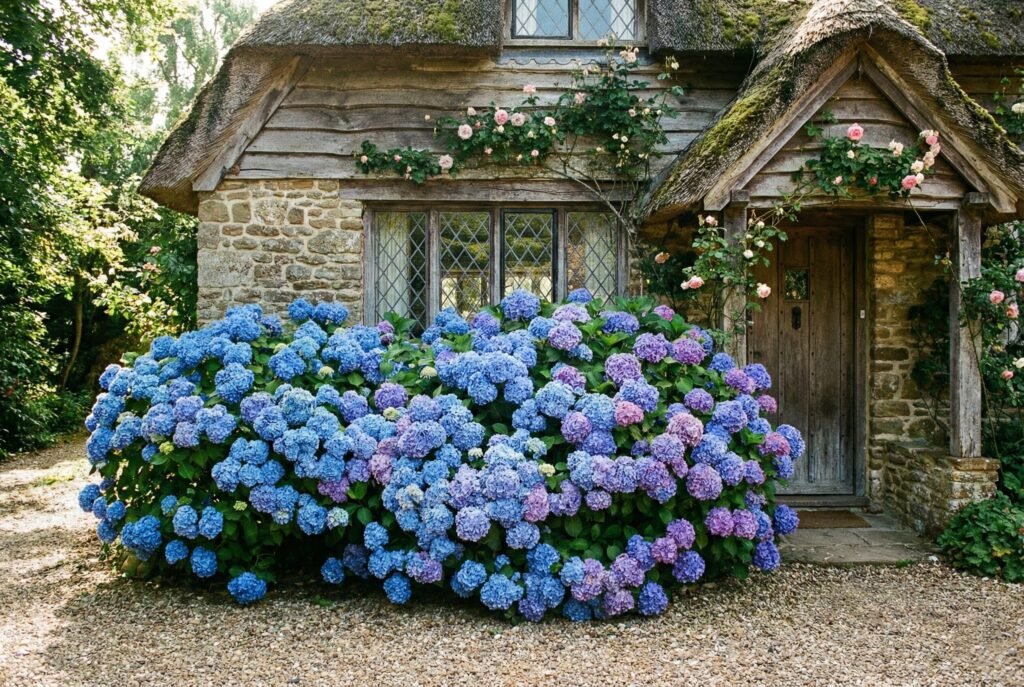
Hydrangeas are universally loved for their massive, globe-shaped flower heads that bloom from summer all the way into fall. Depending on your soil’s acidity, varieties like the Bigleaf Hydrangea can bloom in vibrant blues, rich purples, or bright pinks.
- Best for: Cottage-style homes and creating massive walls of summer color.
- Sun Needs: Morning sun with afternoon shade.
- Growing Zones: 3 to 9.
7. Azalea
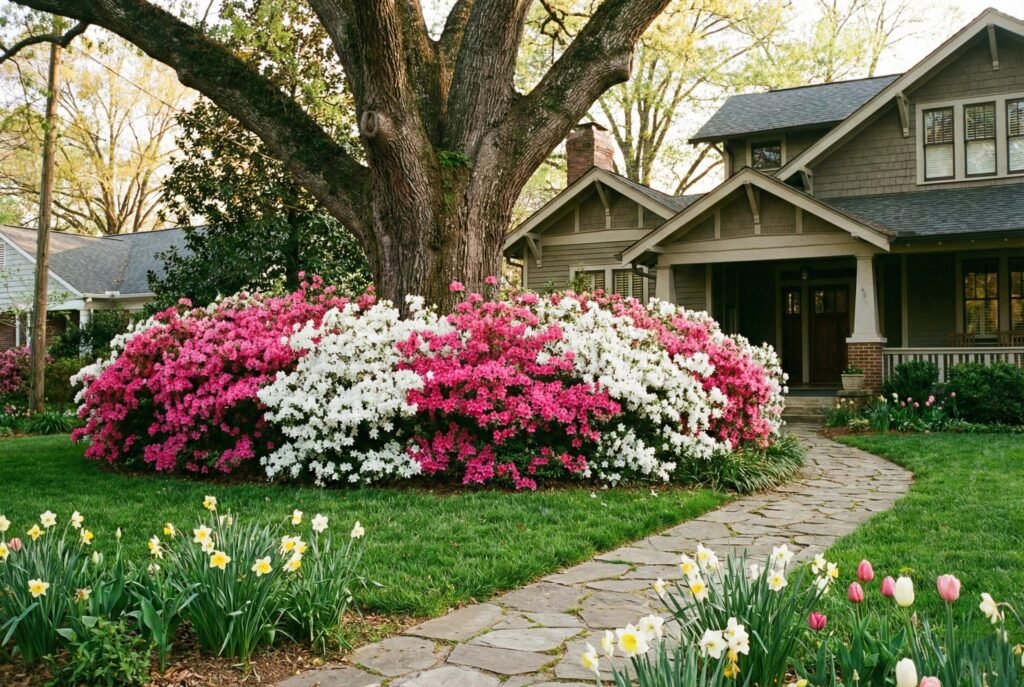
Azaleas are the royalty of the spring landscape. These bushes explode with hundreds of vibrant flowers in shades of pink, red, white, and purple. They prefer slightly acidic soil and look best when planted in sweeping clusters under large shade trees.
- Best for: Springtime curb appeal and planting under trees.
- Sun Needs: Dappled sunlight or partial shade.
- Growing Zones: 6 to 9.
8. Rhododendron
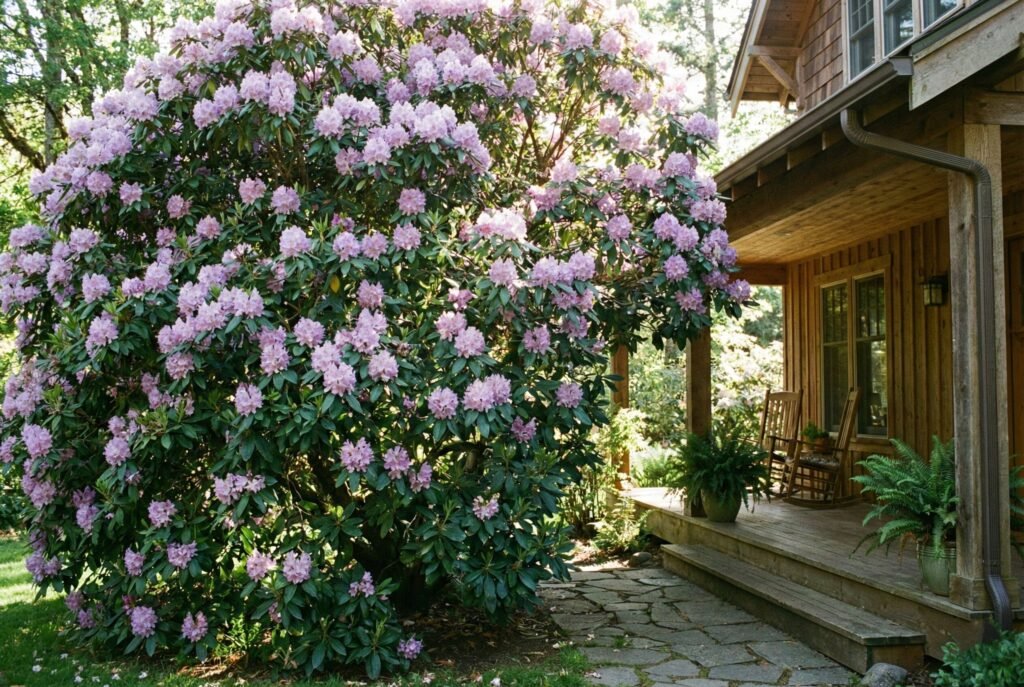
Close cousins to the Azalea, Rhododendrons feature larger, leathery evergreen leaves and massive clusters of bell-shaped flowers. Because they keep their leaves year-round, they serve a dual purpose: colorful spring blooms and winter greenery.
- Best for: Shady front yards and woodland garden styles.
- Sun Needs: Partial shade.
- Growing Zones: 4 to 8.
9. Spirea
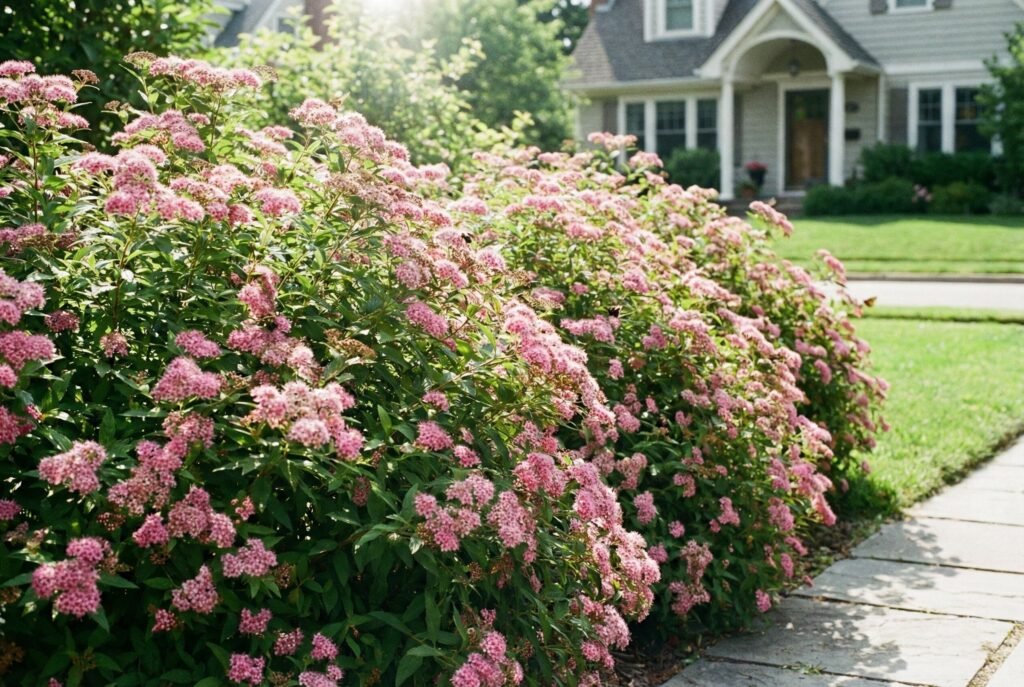
Spirea is a fast-growing, deciduous shrub that is incredibly easy to care for. In the spring or summer, they are covered in tiny, delicate clusters of flowers. Some varieties, like ‘Goldflame’, also offer spectacular orange and red foliage in the fall.
- Best for: Low-maintenance borders and attracting butterflies to the front yard.
- Sun Needs: Full sun.
- Growing Zones: 3 to 8.
10. Weigela
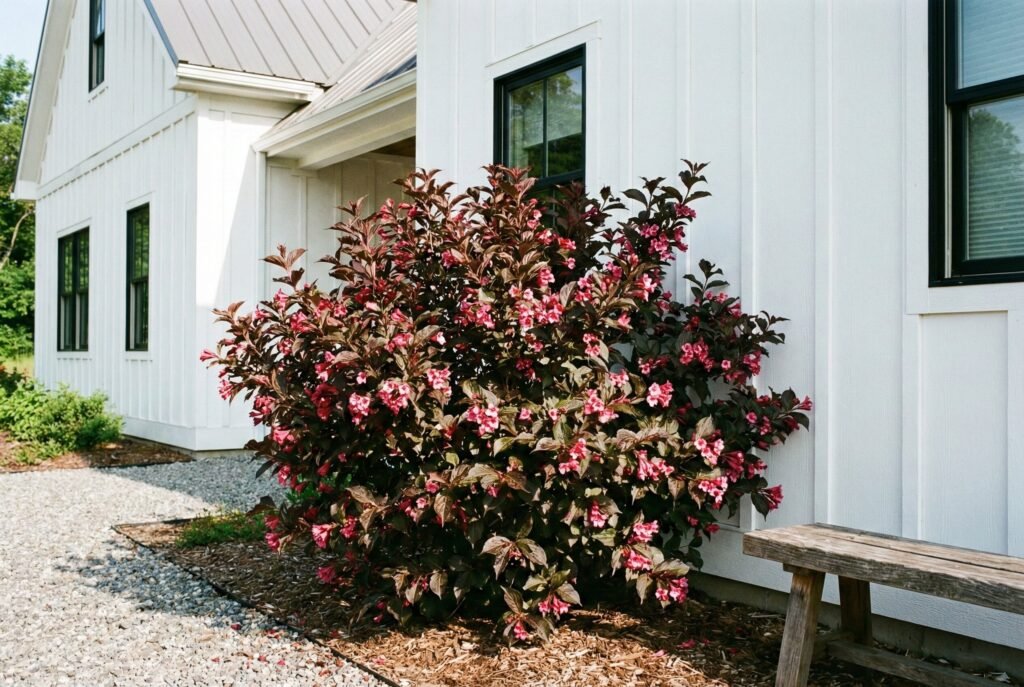
Weigela is an old-fashioned shrub that has made a major comeback thanks to new, compact varieties. They feature beautiful trumpet-shaped flowers in pink or red that hummingbirds absolutely love. wide modern varieties also feature striking dark purple or nearly black foliage.
- Best for: Creating a dramatic color contrast against light-colored house siding.
- Sun Needs: Full sun.
- Growing Zones: 4 to 8.
11. Lilac (Syringa)
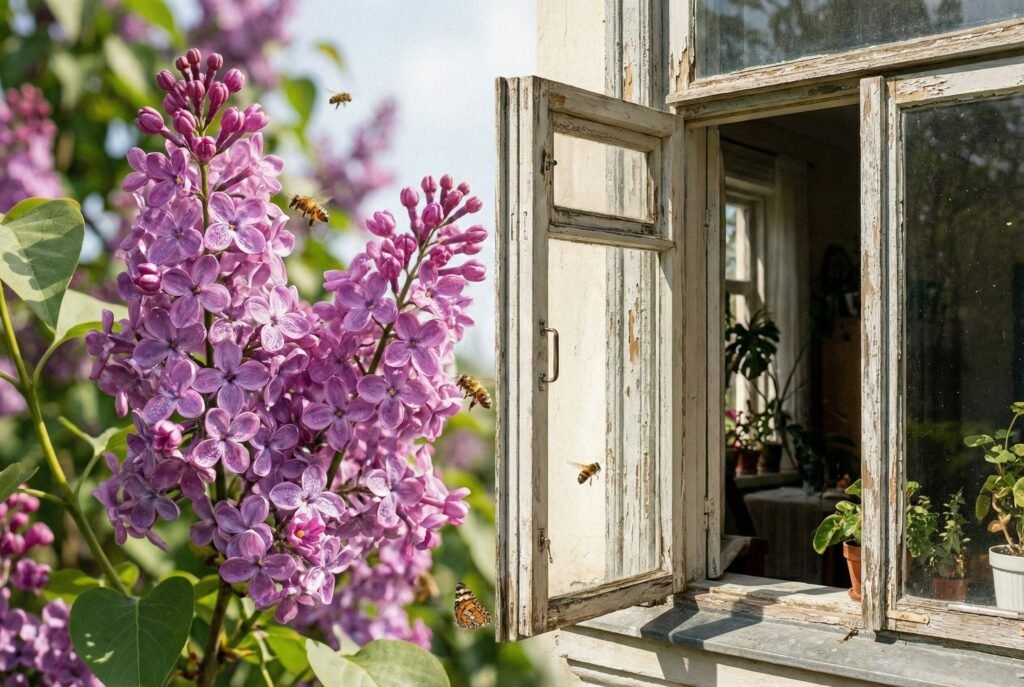
Nothing smells quite like a lilac bush in full bloom. These large, upright bushes produce beautiful cones of purple, pink, or white flowers that carry a strong, sweet fragrance across your entire yard. They are incredibly cold-hardy.
- Best for: Planting near front windows or porches where you can enjoy their sweet scent.
- Sun Needs: Full sun.
- Growing Zones: 3 to 7.
Low-Maintenance Shrubs for Busy Homeowners
Not everyone wants to spend their weekends pruning and fertilizing. If you want a front yard that looks good with minimal effort, these rugged, low-maintenance bushes are perfect for you.
12. Barberry (Berberis)
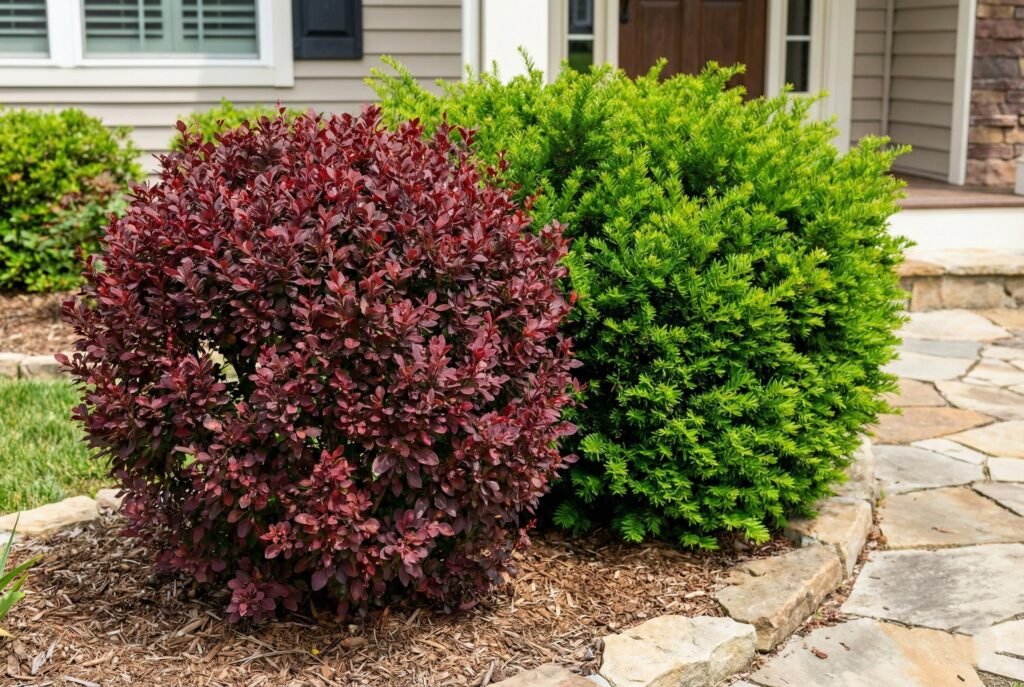
Barberry bushes are practically indestructible. They tolerate poor soil, drought, and urban pollution. They are best known for their vibrant foliage, which comes in shades of deep red, burgundy, and bright yellow. Keep in mind that they do have sharp thorns.
- Best for: Barrier planting, adding rich red foliage color, and high-traffic areas.
- Sun Needs: Full sun to partial shade.
- Growing Zones: 4 to 8.
13. Ninebark (Physocarpus)

Ninebark gets its name from its peeling bark, which provides an interesting texture in the winter. During the growing season, it features beautiful dark purple or golden leaves and small clusters of white flowers. It is incredibly tough and requires very little pruning.
- Best for: Native plant gardens and filling large gaps in a foundation planting.
- Sun Needs: Full sun to partial shade.
- Growing Zones: 2 to 7.
14. Viburnum
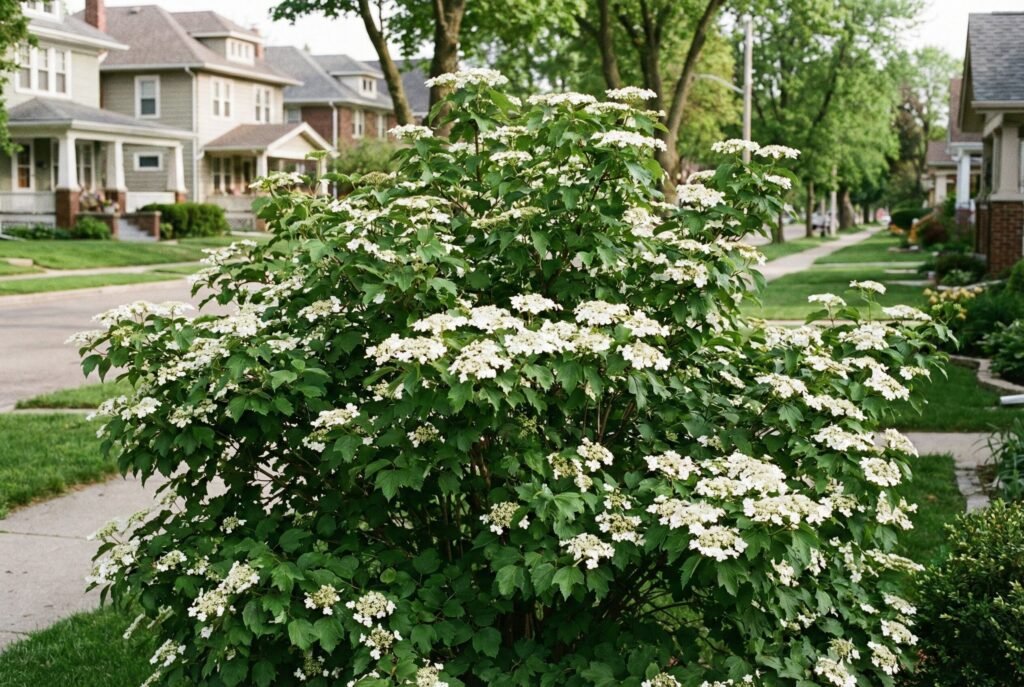
Viburnum is a diverse family of shrubs that offers something for every season. They have attractive spring flowers, thick green foliage in the summer, beautiful leaf colors in the fall, and berries that feed birds in the winter. Once established, they need almost no attention.
- Best for: Multi-season interest and creating a privacy screen in the front yard.
- Sun Needs: Full sun to partial shade.
- Growing Zones: 2 to 9.
15. Forsythia
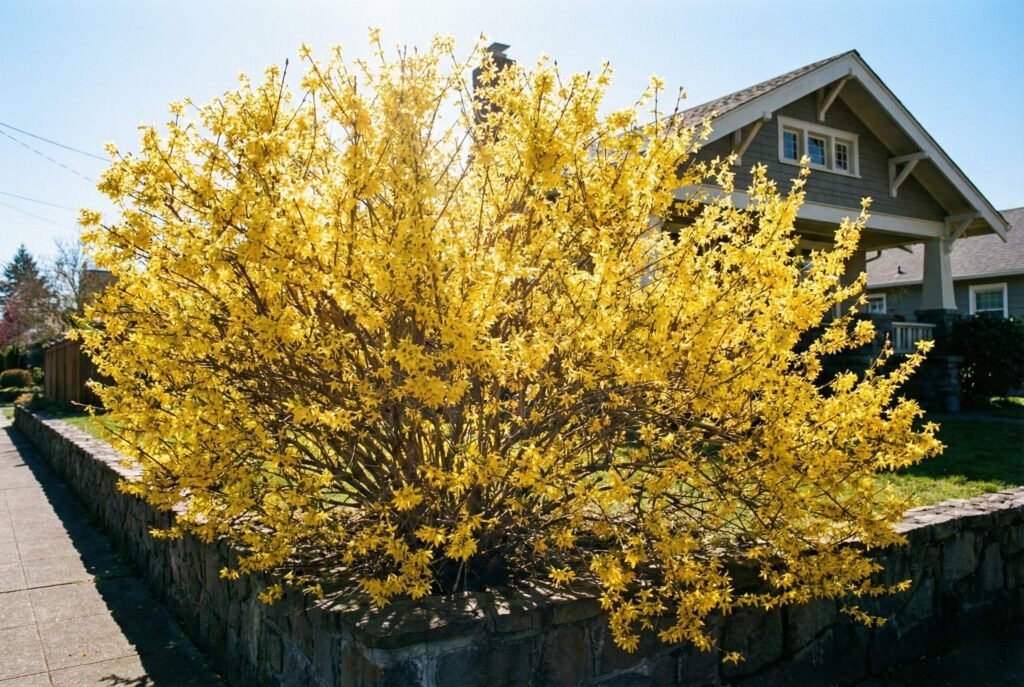
Forsythia is the ultimate sign that spring has arrived. Before they even grow leaves, these fast-growing bushes explode into a mass of bright, cheerful yellow flowers. They are incredibly resilient and can handle almost any soil type.
- Best for: Early spring color and creating a fast-growing informal hedge.
- Sun Needs: Full sun.
- Growing Zones: 5 to 8.
Unique and Eye-Catching Front Yard Bushes
If you want your house to stand out from the rest of the neighborhood, consider planting a specimen shrub. These are unique bushes that act as focal points in your landscaping.
16. Smoke Bush (Cotinus)
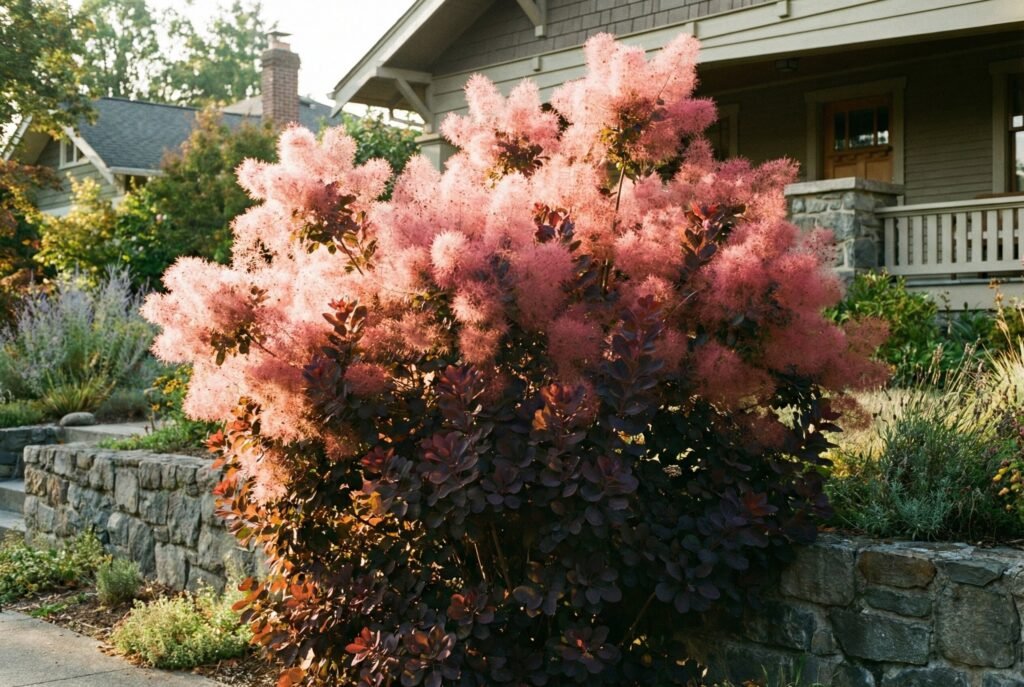
The Smoke Bush is a true showstopper. It features deep purple or gold leaves, but its real claim to fame is its flowers. In the summer, it produces fluffy, hazy plumes of pink flowers that make the bush look like it is surrounded by a cloud of colorful smoke.
- Best for: Acting as a dramatic focal point in the center of a front lawn or at the corner of a house.
- Sun Needs: Full sun.
- Growing Zones: 5 to 8.
17. Dwarf Japanese Maple
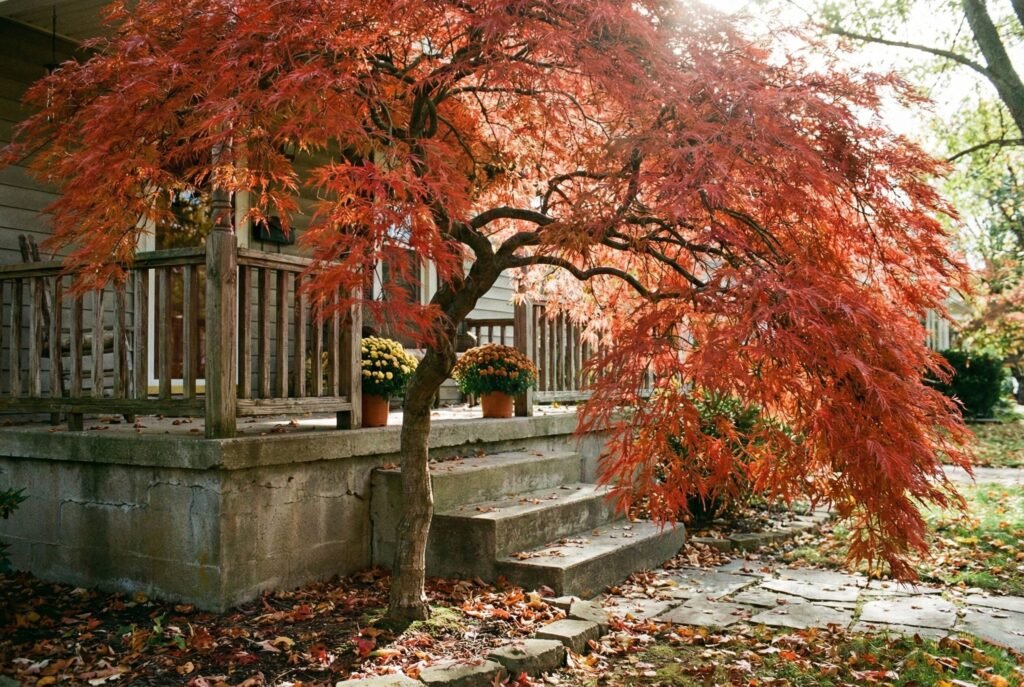
While technically a tree, dwarf varieties of the Japanese Maple (such as the ‘Crimson Queen’) behave like large, spreading bushes. They have incredibly delicate, lacy leaves that turn fiery red, orange, and purple in the fall. They are elegant, sophisticated, and perfect for framing an entryway.
- Best for: High-end, luxury curb appeal and adding architectural interest near a front door.
- Sun Needs: Dappled shade to partial sun.
- Growing Zones: 5 to 8.
18. Butterfly Bush (Buddleja)
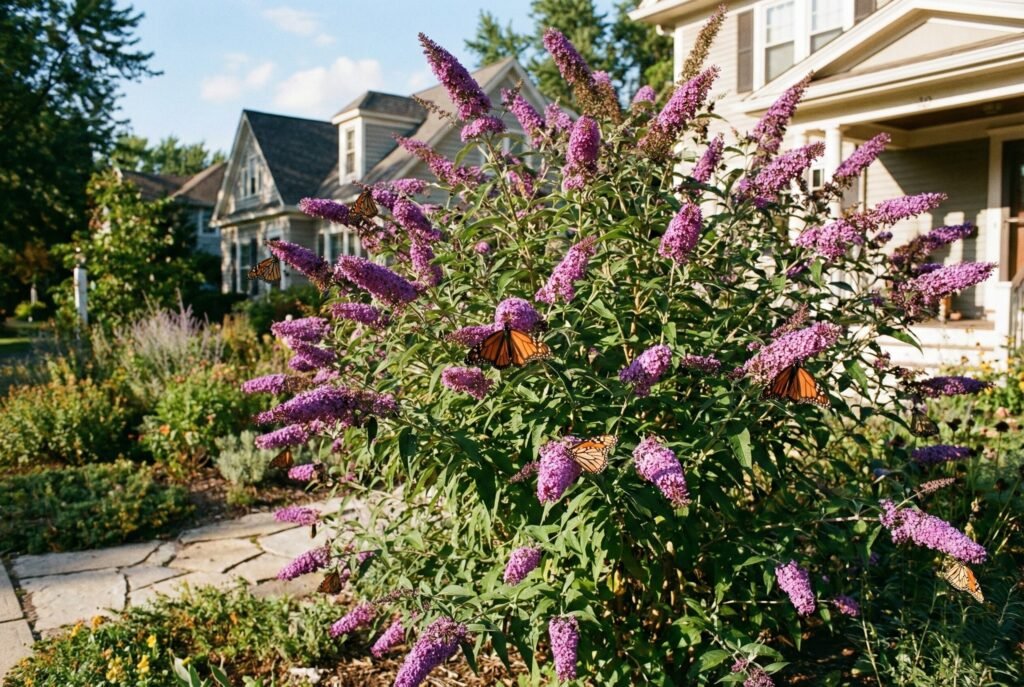
If you want to turn your front yard into a pollinator paradise, the Butterfly Bush is exactly what you need. These fast-growing shrubs produce long, cone-shaped flower spikes in purple, pink, or white that act like magnets for butterflies, bees, and hummingbirds.
- Best for: Wildlife gardens and rapid summer growth.
- Sun Needs: Full sun.
- Growing Zones: 5 to 9.
Essential Landscaping Tips for Front Yard Bushes
Now that you have selected your favorite bushes, it is time to plan how you will arrange them in your front yard. Proper placement is the key to professional-looking curb appeal.
Layer Your Plantings
Do not just plant a single row of bushes in a straight line. For a professional look, you should plant in layers. Place taller evergreen shrubs in the back, closest to the house foundation. Place medium-sized flowering bushes in the middle. Finally, put low-growing ground covers or small perennials in the very front.
Plant in Odd Numbers
Landscapers use the “Rule of Three.” Plants look much more natural and visually appealing when planted in groupings of odd numbers, such as clusters of three, five, or seven. A group of three hydrangeas looks much better than two hydrangeas placed side by side.
Soften House Corners
The corners of a house can look harsh and boxy. You can soften these architectural edges by planting taller bushes, like upright junipers or a large spirea, right at the corners. This helps blend the house into the surrounding landscape.
Use Mulch
A fresh layer of mulch is the fastest way to make your front yard look clean and finished. Mulch also serves a vital purpose for your bushes: it suppresses weeds, retains moisture in the soil, and protects the plant’s roots from extreme temperature changes. Apply a two-to-three-inch layer of natural wood mulch around the base of your shrubs, making sure the mulch does not directly touch the bark of the plant stems to prevent root rot.
Conclusion
Upgrading your front yard with beautiful bushes is a rewarding project that pays off in immediate curb appeal and long-term property value. By mixing evergreens for year-round structure with flowering shrubs for seasonal pops of color, you can create a balanced, welcoming landscape. Remember to always match your plant choices to your local climate, sunlight, and soil conditions to ensure your new front yard garden thrives for years to come.