

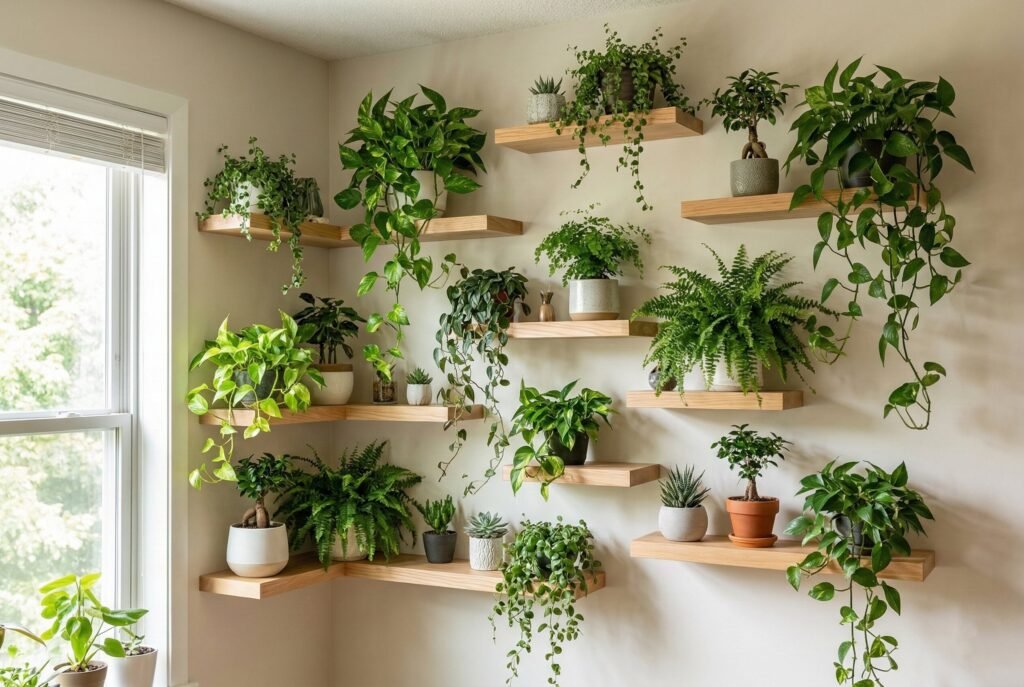
Bringing nature indoors is one of the most effective ways to make your home feel more relaxing, refreshing, and alive. But when floor space gets tight, the best direction to grow is up. Plant wall shelves are the perfect solution for displaying your favorite houseplants, optimizing your living space, and creating stunning, natural focal points in any room.
Whether you are an experienced indoor gardener with a massive collection or a beginner looking to add a touch of green to your bedroom, utilizing wall space changes the entire dynamic of your home decor. This guide covers the best plant wall shelf ideas, complete with styling tips, plant recommendations, and practical installation advice.
Why You Need Plant Wall Shelves in Your Home
Before diving into the specific ideas, it helps to understand why vertical plant displays are so beneficial for modern living spaces.
Maximizing Small Spaces
If you live in an apartment or a home with limited square footage, large floor planters can quickly make a room feel cluttered. Wall shelves utilize empty vertical space, allowing you to build an impressive indoor garden without sacrificing a single inch of your floor plan.
Creating a Calming Atmosphere
Studies show that incorporating elements of nature into your home, a concept known as biophilic design, reduces stress, lowers blood pressure, and boosts your overall mood. Looking at a wall of lush, green leaves provides a natural visual break from screens and artificial lighting.
Improving Indoor Air Quality
Houseplants naturally filter toxins from the air while releasing oxygen. By grouping several plants together on a wall shelf, you create a localized zone of fresh, humidified air. This is especially beneficial in home offices or bedrooms where you spend long periods.
Keeping Plants Safe from Pets and Children
Many popular houseplants, like Pothos and Philodendrons, can be toxic if ingested by curious cats, dogs, or toddlers. Elevating these plants on high wall shelves keeps your loved ones safe while allowing you to enjoy a wider variety of greenery.
Choosing the Best Plants for Wall Shelves
Not every plant thrives on a shelf. You need to consider how the plant grows, its weight, and how much light the specific wall receives.
- Trailing Plants: These are the undisputed stars of shelf displays. Plants like Golden Pothos, Heartleaf Philodendron, String of Pearls, and English Ivy feature vines that cascade beautifully over the edges of a shelf, creating a waterfall of greenery.
- Low-Light Tolerant Plants: If your wall is far from a window, opt for hardy species. ZZ Plants, Snake Plants, and Cast Iron Plants can survive in dimly lit corners.
- Small and Lightweight Plants: For delicate or lightweight shelving, stick to small succulents, cacti, and air plants (Tillandsia). These require very little soil and infrequent watering, keeping the overall weight manageable.
- Humidity Lovers: If you are putting shelves in a bathroom, ferns (like the Bird’s Nest Fern or Maidenhair Fern) and Calatheas will thrive in the steamy environment.
13+ Relaxing & Refreshing Plant Wall Shelf Ideas
Here are detailed ideas to help you transform your empty walls into lush, relaxing indoor gardens.
1. Minimalist Floating Wooden Shelves
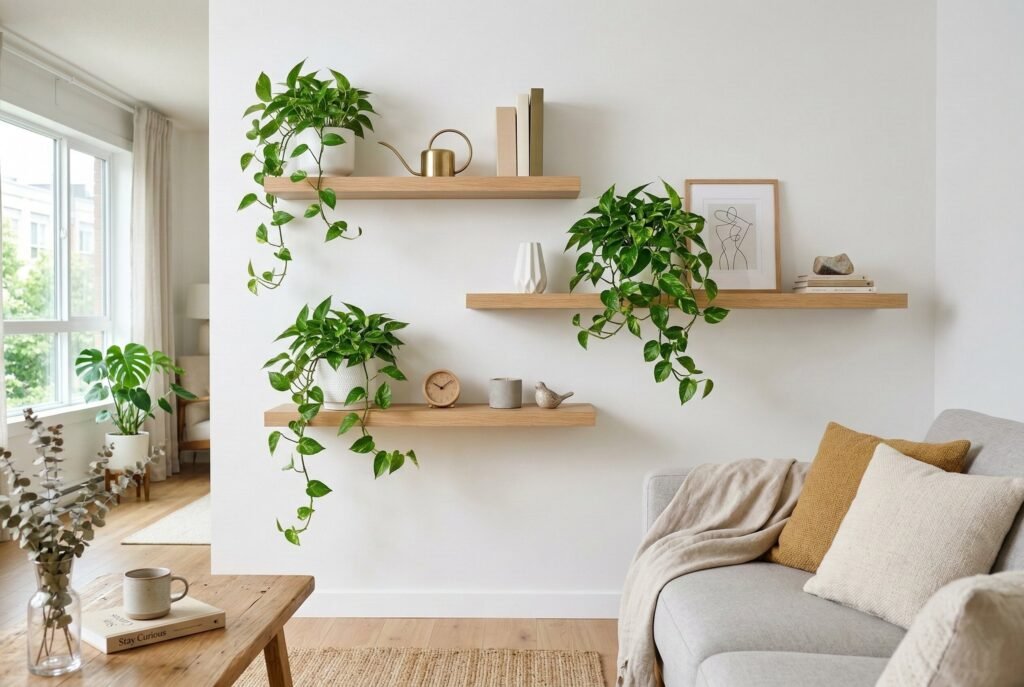
Floating shelves offer a clean, seamless look because the mounting hardware is completely hidden inside the shelf itself. Thick wooden slabs, such as raw oak, rich walnut, or light pine, provide a beautiful natural contrast against plain white or painted walls. This design works perfectly in modern, Scandinavian, or minimalist homes.
Because the shelves have a strong, solid appearance, you can pair them with bold, broad-leafed plants. To create a striking visual, try alternating the placement of the plants on staggered floating shelves.
Best Plants for this Shelf: Monstera Deliciosa (young plants), Rubber Trees, and trailing Pothos to soften the straight wooden edges.
2. Geometric Hexagon Honeycomb Shelves
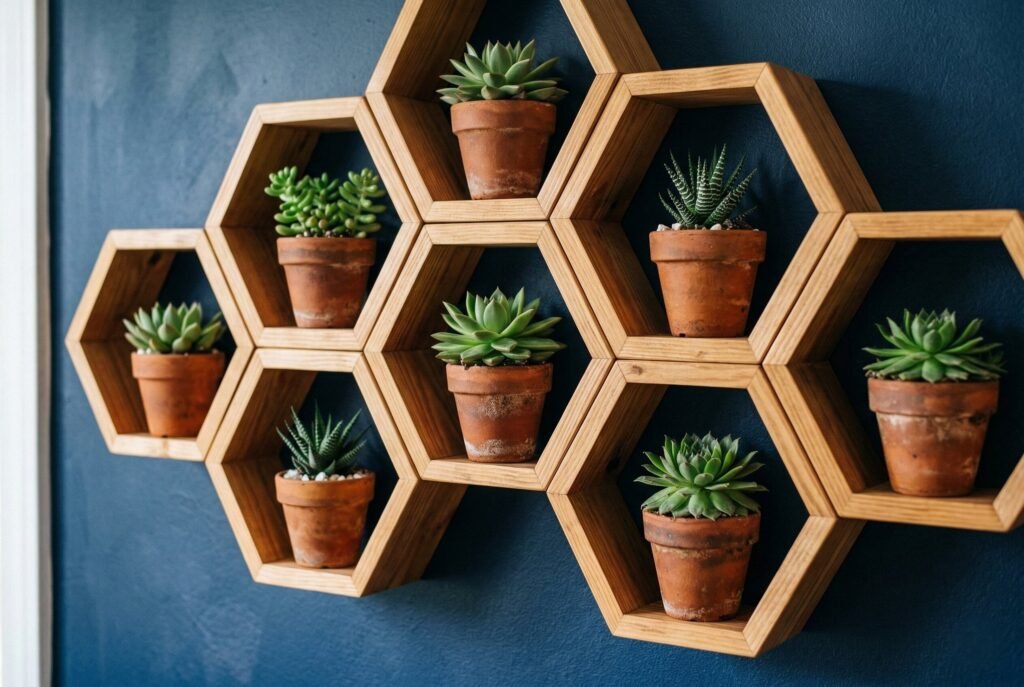
Hexagon shelves add instant architectural interest to a room. When you group three to five of these geometric wooden frames together, they resemble a natural honeycomb. You can place small potted plants inside the bottom ledge of the hexagon, or even rest trailing plants on the flat top exterior.
This style is excellent for bedrooms and home offices where you want a structured, modern art piece that doubles as a plant display. You can paint the inside of the hexagons a bold accent color to make the green of the plants pop even more.
Best Plants for this Shelf: Small succulents, mini cacti, Air Plants, and compact Peperomias that will not outgrow the confined space of the geometric shape.
3. Bohemian Macrame Hanging Shelves
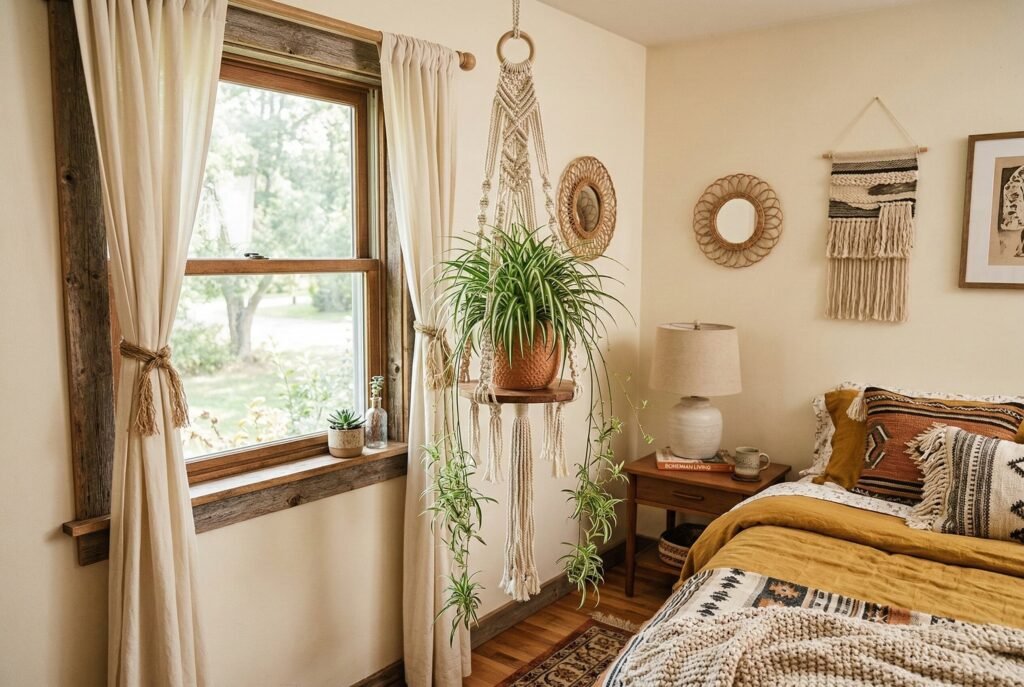
For a relaxed, free-spirited vibe, macrame hanging shelves are a fantastic choice. These consist of a flat wooden base suspended by intricately knotted cotton ropes. You typically hang them from a single hook in the ceiling or a bracket on the wall.
Macrame shelves add texture and softness to a room. They look incredibly positioned near windows where the natural light can catch the details of the woven rope. Because they swing slightly, they are best suited for areas without heavy foot traffic.
Best Plants for this Shelf: Spider Plants, String of Hearts, and Boston Ferns. The wild, unruly foliage of these plants perfectly complements the boho aesthetic.
4. Industrial Pipe and Wood Shelving
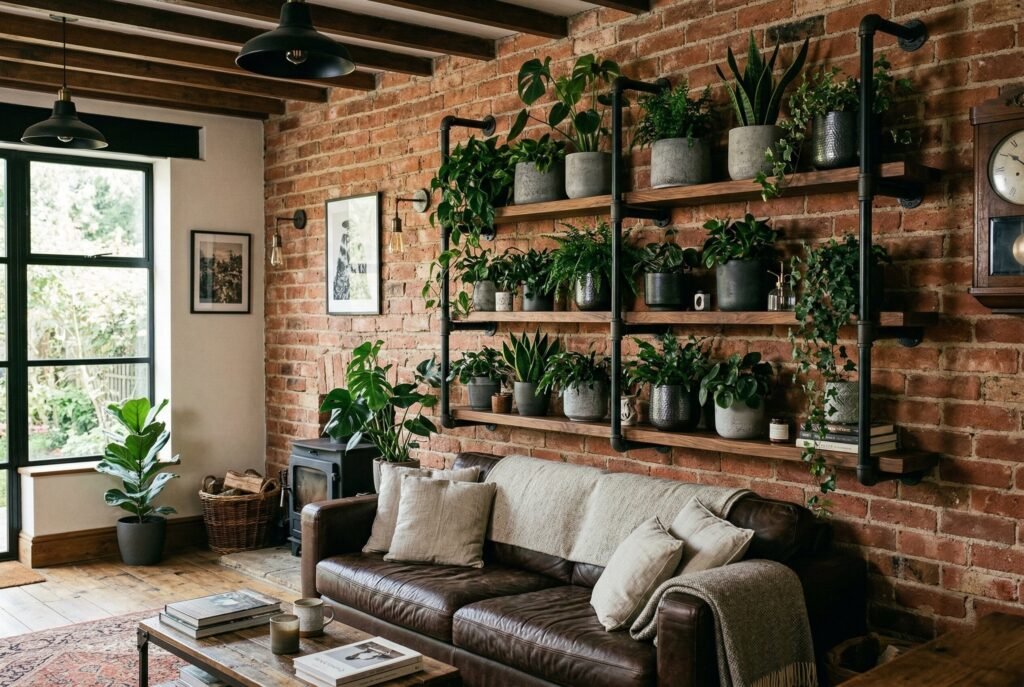
If your home features exposed brick, concrete floors, or urban loft aesthetics, industrial pipe shelving is the way to go. This design uses heavy-duty black or galvanized steel plumbing pipes as the mounting brackets, supporting thick, dark-stained wooden planks.
The main advantage of industrial shelving is its incredible strength. If properly anchored into wall studs, these shelves can hold a massive amount of weight, making them ideal for serious plant collectors who use heavy ceramic or terracotta pots filled with moist soil.
Best Plants for this Shelf: Large Snake Plants, mature ZZ Plants, and heavy trailing plants like the Neon Pothos.
5. Clear Acrylic Invisible Shelves
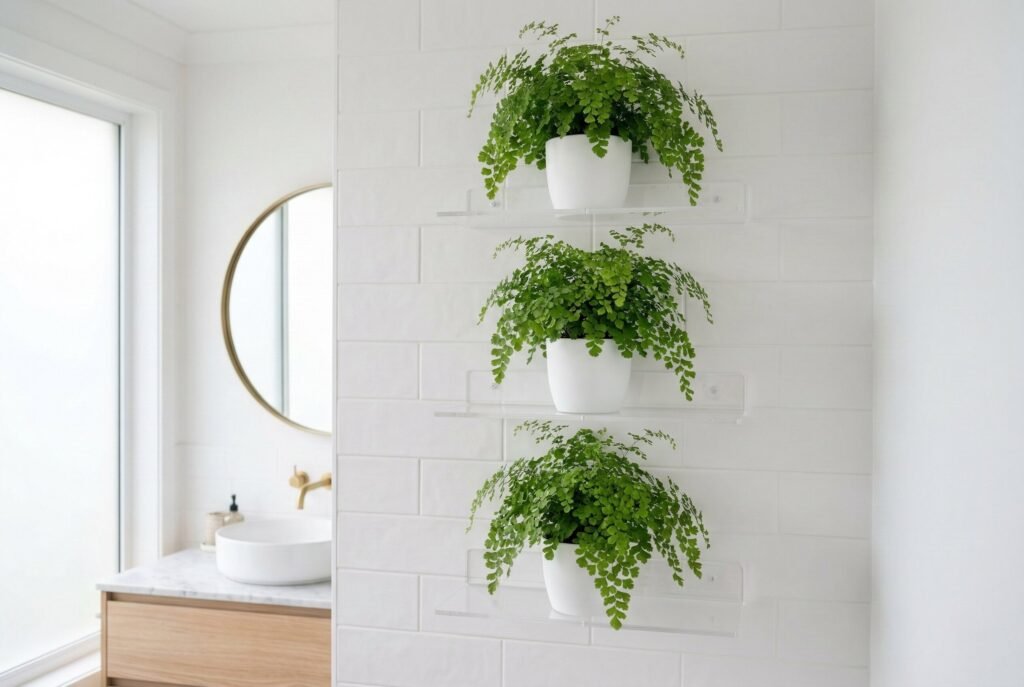
If you want the absolute focus to be on your plants and nothing else, clear acrylic shelves offer a magical “floating” illusion. These U-shaped or L-shaped shelves are completely transparent. When installed, the shelf practically disappears, making the plant pots look like they are hovering against the wall.
This idea is perfect for small spaces or bathrooms where heavy wooden shelves might feel visually overwhelming. Acrylic is also waterproof, meaning you never have to worry about water rings or wood rot from accidental overwatering.
Best Plants for this Shelf: Colorful plants like the Pink Princess Philodendron, or plants in highly decorative, brightly colored pots that you want to show off.
6. Corner Zig-Zag Shelves
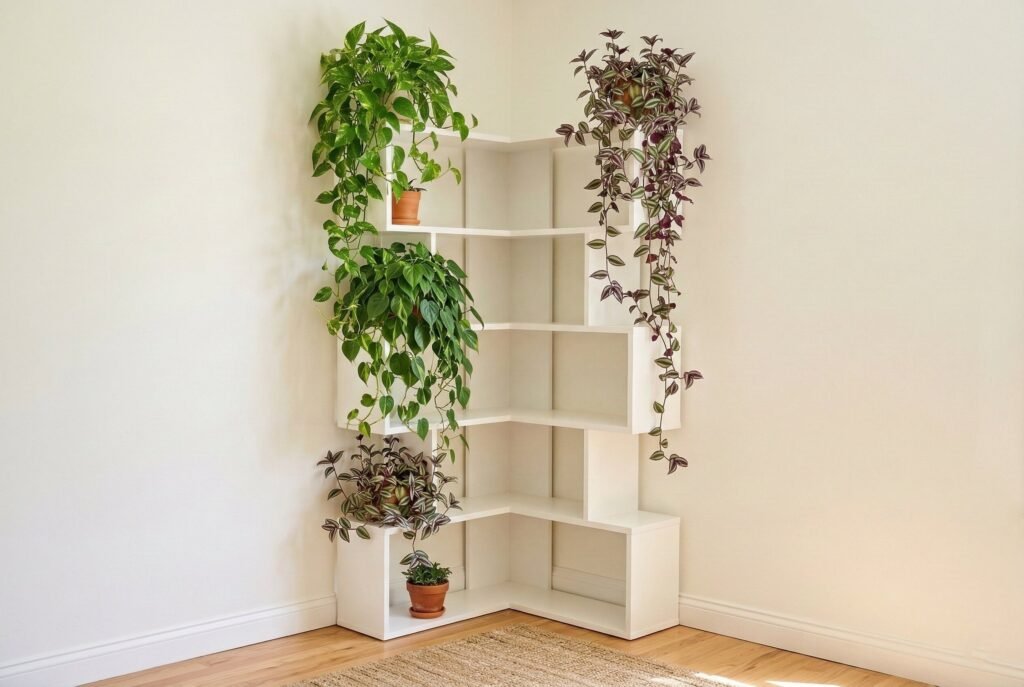
Corners are often the most wasted space in a room. A corner zig-zag shelf fits perfectly into a 90-degree angle, alternating its projection from the left wall to the right wall as it goes up.
This creates a highly efficient, space-saving display that draws the eye upward, making the ceiling feel higher. A corner plant shelf is great for bringing life to the forgotten nooks of dining rooms or hallways.
Best Plants for this Shelf: Trailing varieties like the Philodendron Brasil or String of Turtles, which can cascade down the sides of the alternating tiers to create a continuous waterfall effect.
7. Wall-Leaning Tiered Ladder Shelves
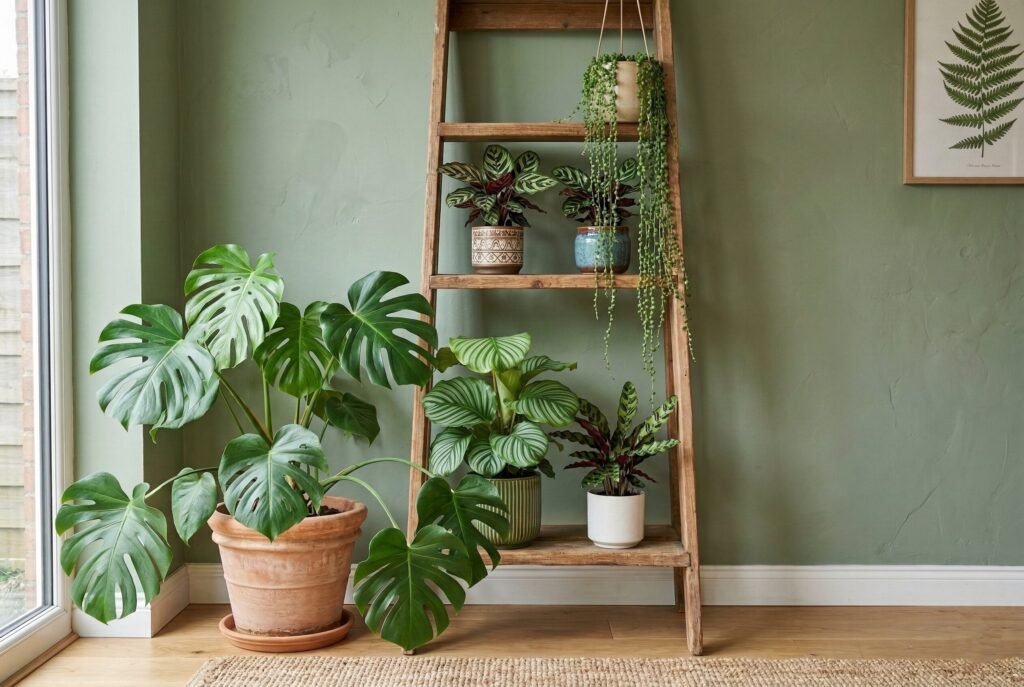
While not mounted directly onto the wall, ladder shelves lean securely against it, making them a staple in plant display design. They feature deep shelves at the bottom and progressively narrower shelves at the top.
Ladder shelves offer immense versatility. You can group large, heavy plants on the sturdy bottom rungs and delicate, sun-loving plants on the top rungs. They require minimal installation (often just a single anchor strap at the top for safety) and can easily be moved if you decide to rearrange your room.
Best Plants for this Shelf: A mix of everything. Place a heavy Monstera on the bottom, medium-sized Aglaonemas in the middle, and trailing English Ivy on the top shelf.
8. Window Tension Rod Shelves
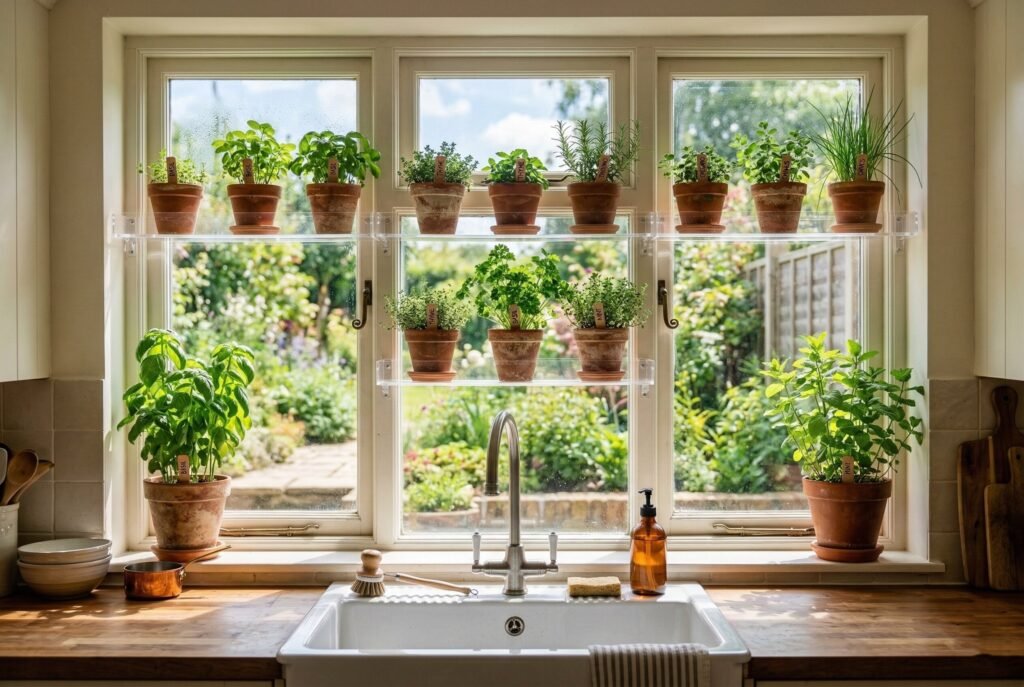
Many plants require bright, indirect sunlight, which means they need to be right up against a window. Tension rod shelves (or clear acrylic shelves that mount directly to the window frame or glass via heavy-duty suction cups) allow you to put plants directly in the path of the sun.
This is an incredibly refreshing look, especially for kitchen windows above the sink. It turns your window into a living stained-glass feature, filtering the sunlight through vibrant green leaves before it enters the room.
Best Plants for this Shelf: Sun-loving succulents, Aloe Vera, culinary herbs (basil, thyme, mint), and colorful Coleus.
9. Repurposed Vintage Wooden Crates
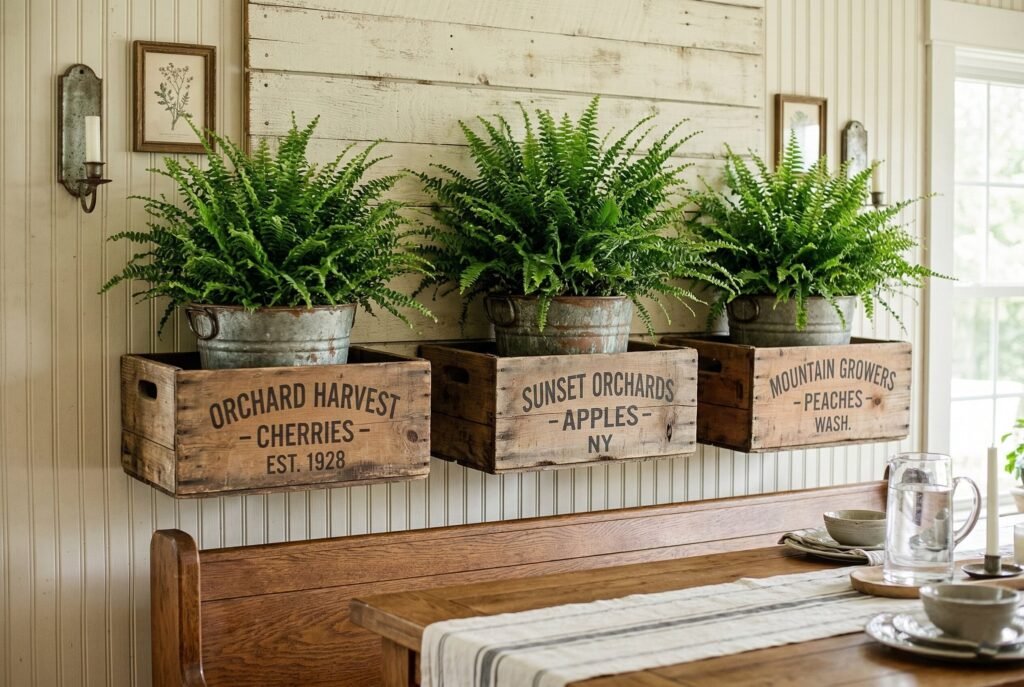
For farmhouse or rustic decor enthusiasts, upcycling old wooden fruit or wine crates into wall shelves adds immense character. You simply mount the sturdy bottoms of the crates directly to the wall so the open sides face outward, acting as shadow boxes.
The deep sides of the crates provide a cozy, enclosed backdrop that frames your plants beautifully. You can leave the wood raw and weathered, or paint the outside of the crates to match your room’s color palette.
Best Plants for this Shelf: Bushy plants that fill the space, like Boston Ferns, Pilea Peperomioides (Chinese Money Plant), or clustered groups of different-textured succulents.
10. Wire Grid Memo Board Shelves
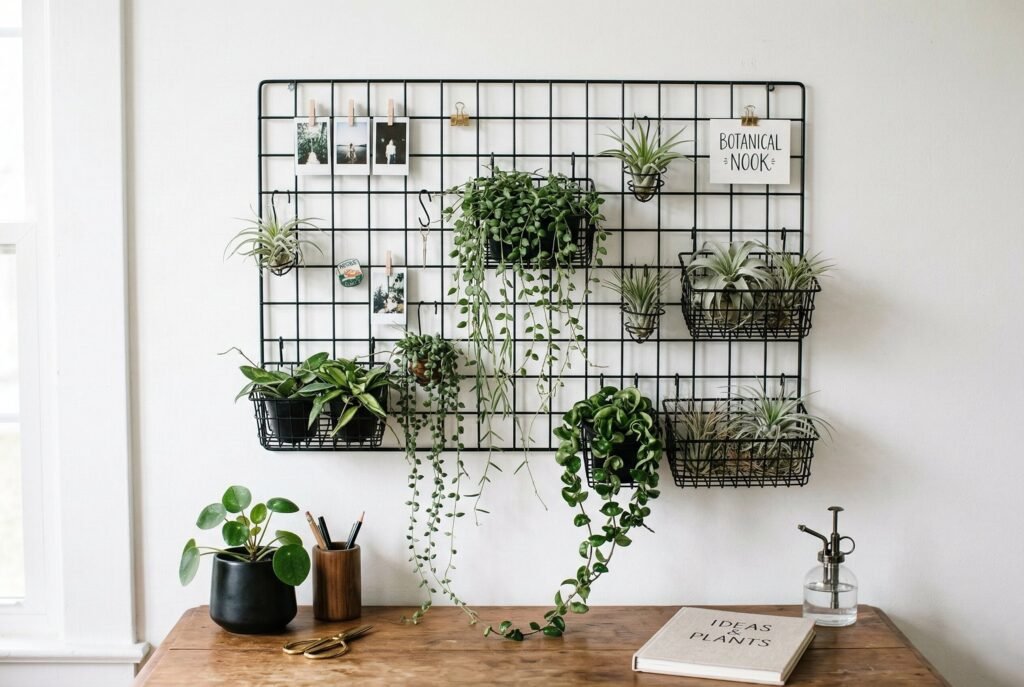
A metal wire grid panel, typically used for office organization, can be easily repurposed into an edgy, customizable plant wall. By mounting the grid to the wall, you can use specialized wire baskets and hooks to hang small plant pots at varying heights.
This system is endlessly flexible. As your plants grow or as you acquire new ones, you can simply unhook a basket and move it to a different square on the grid. It is highly functional and looks great in modern apartments and teen bedrooms.
Best Plants for this Shelf: Air plants (which can be tied directly to the wire grid), small Hoya varieties, and lightweight trailing vines that can be woven through the metal squares.
11. Asymmetrical Cubby Shelves
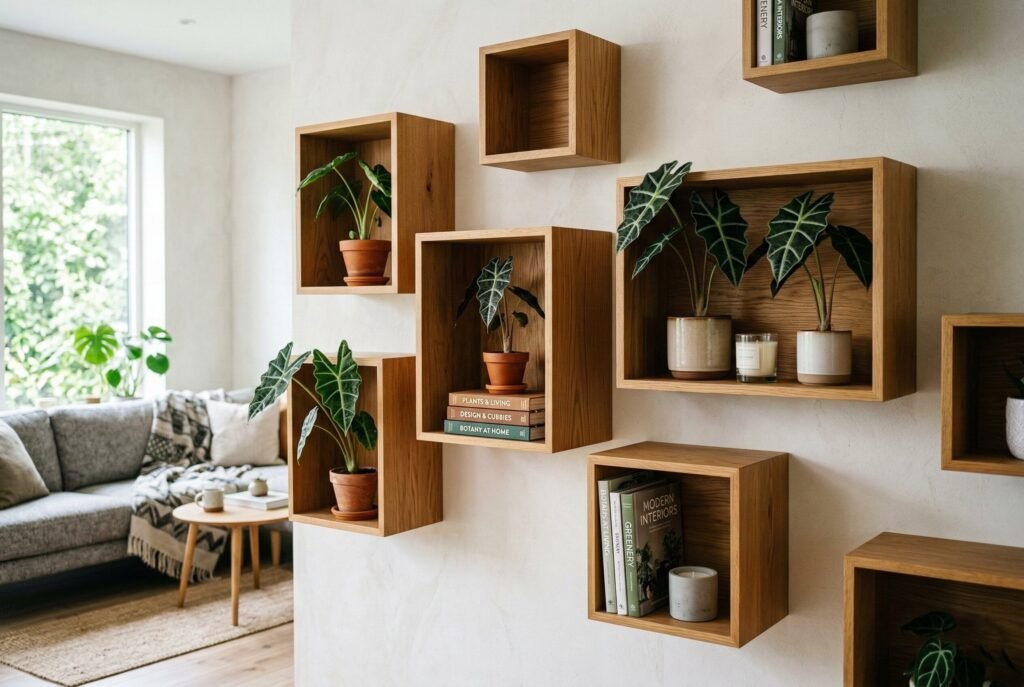
Step away from traditional straight lines by installing asymmetrical, box-like cubbies. These are square or rectangular frames with an open back, allowing the wall color to show through. By hanging them in a scattered, uneven pattern, you create a dynamic, modern art gallery feel.
You can place plants inside the cubbies or on top of them. Mixing plants with other decorative objects like books, candles, or framed photos creates a balanced, lived-in aesthetic rather than looking like a stark greenhouse.
Best Plants for this Shelf: Upright growers like the Ficus Elastica (Rubber Tree), Alocasia Polly, and structured succulents like Haworthia.
12. Upcycled Skateboard Deck Shelves
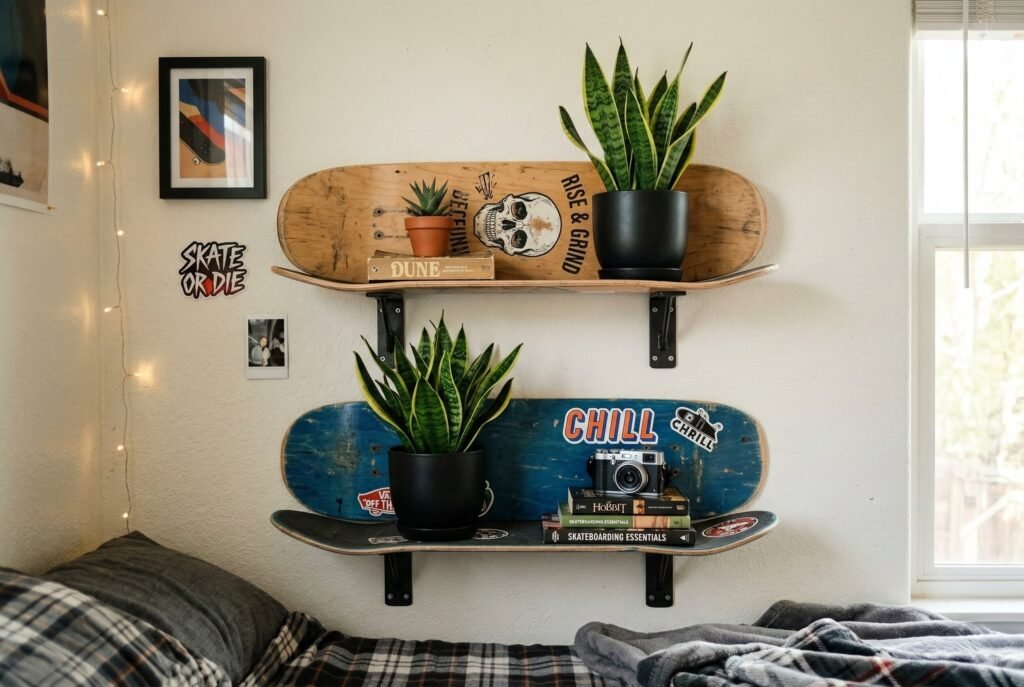
For a quirky, youthful, or street-style vibe, repurposing old skateboard decks as wall shelves is a fantastic, creative project. You can buy specialized wall brackets that hold the curved ends of a skateboard securely in place.
The natural curve of the board keeps pots safely nestled in the center. You can use boards with heavily scratched graphics for a gritty look, or sand them down to the bare maple wood for a cleaner finish. This is a brilliant idea for kids’ rooms, game rooms, or creative studios.
Best Plants for this Shelf: Resilient, easy-care plants like the ZZ Plant, Sansevieria (Snake Plant), or funky-looking succulents like the Euphorbia.
13. Pegboard Wall Systems
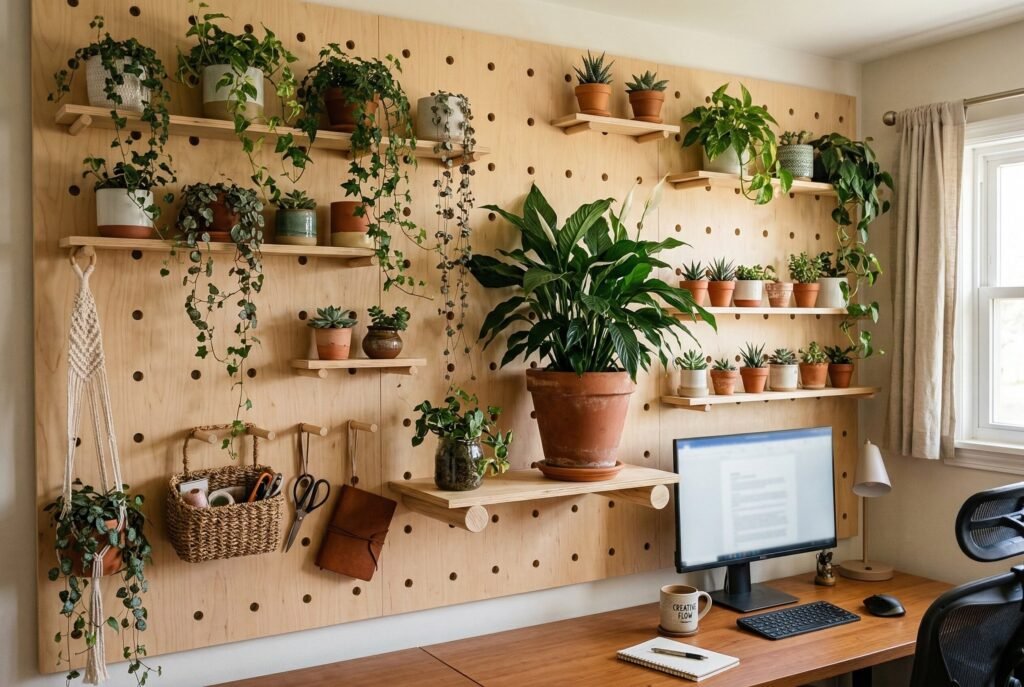
A pegboard wall is the ultimate modular plant shelf system. By covering a section of your wall (or the entire wall) with a wooden pegboard, you can insert wooden dowels to support flat shelves wherever you want them.
The beauty of a pegboard is that you can change your plant display daily without ever picking up a drill. As your trailing plants get longer, simply move the shelf higher up the pegboard. It offers a clean, craft-room aesthetic that is highly organized and completely customizable.
Best Plants for this Shelf: A massive variety! Mix and match hanging plants, upright tropicals, and small terrariums to create a full, floor-to-ceiling living wall.
14. (Bonus) Built-in Architectural Niche Shelves
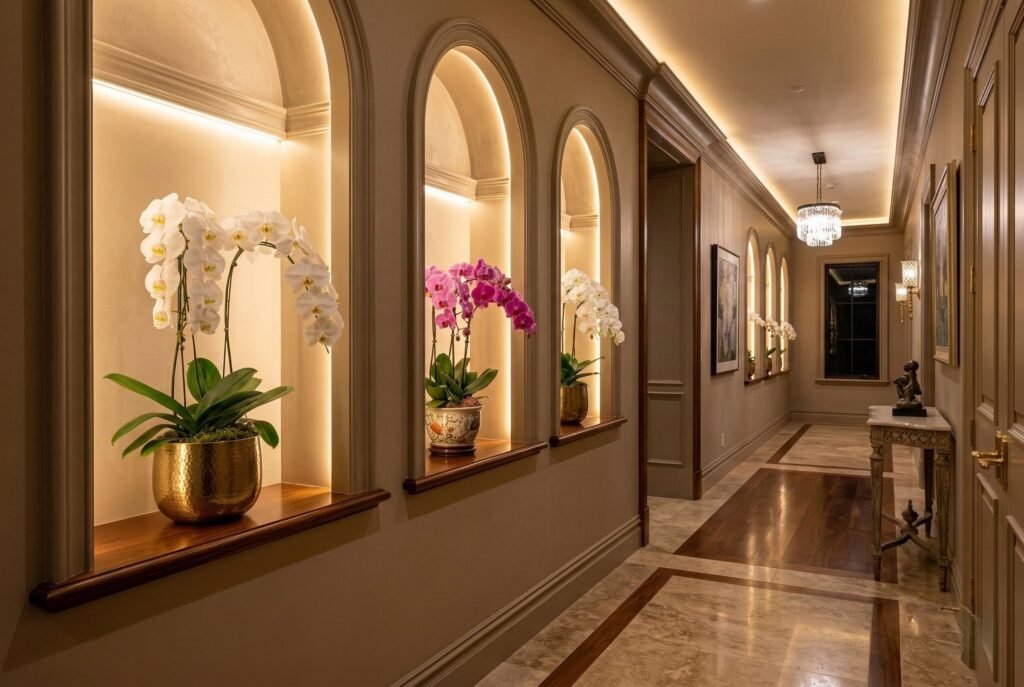
If you are renovating or building a home, consider framing out built-in wall niches specifically for plants. These recessed spaces in the drywall can be lined with wood or tile and fitted with custom lighting (like LED grow light strips hidden at the top of the niche).
This is the most seamless, luxurious way to display plants, making them feel like an integral part of the home’s architecture rather than an afterthought.
Best Plants for this Shelf: High-humidity lovers or showcase plants that benefit from overhead grow lights, like Anthuriums, rare Philodendrons, or beautifully staged Orchids.
Essential Plant Wall Shelf Maintenance Tips
Having a wall full of plants looks beautiful, but it requires a different care approach than plants sitting on the floor or a windowsill. Here are crucial tips to keep your wall garden thriving.
Master the Art of Watering
The biggest risk of wall shelves is water damage. If your pots have drainage holes (which they should for plant health), water will leak out and ruin your shelves, paint, or floors.
Always use a two-pot system: keep the plant in a cheap plastic nursery pot with drainage holes, and place that inside a decorative outer pot (cachepot) that has no holes. When it is time to water, take the plastic pot out, water it at the sink, let it drain completely, and then return it to the shelf.
Dust the Leaves Regularly
Plants on high shelves gather dust, which blocks their pores and hinders photosynthesis. Every few weeks, use a damp microfiber cloth to gently wipe down the leaves. For trailing plants with hundreds of tiny leaves, taking them to the shower for a gentle, room-temperature rinse is much faster.
Rotate Your Plants
Plants naturally grow toward the nearest light source. If they sit statically on a wall shelf, the front will become lush and bushy, while the back against the wall will become bare and leggy. Give your pots a quarter-turn every time you water them to ensure even, balanced growth.
Monitor Temperature and Humidity
Heat rises, meaning the air near the top of your walls and ceiling is often warmer and drier than the air near the floor. Monitor your high-shelf plants closely; they may need more frequent watering or a daily misting to combat the dry air, especially during the winter when home heating systems are running.
Safety and Installation Guide for Wall Shelves
No matter how beautiful your setup is, it will quickly turn into a disaster if your shelves come crashing down. Houseplants, especially right after watering, are surprisingly heavy. Proper installation is non-negotiable.
Find the Studs
Drywall alone cannot support the weight of wooden shelves, heavy ceramic pots, and wet soil. Use a reliable electronic stud finder to locate the vertical wooden beams (studs) behind your drywall. Whenever possible, screw your shelf brackets directly into these studs for maximum load-bearing capacity.
Use the Right Wall Anchors
If you absolutely must place a shelf where there is no stud, you must use heavy-duty drywall anchors. Skip the cheap plastic sleeves that come free with shelf kits. Invest in toggle bolts or threaded drywall anchors that are specifically rated for heavy weights (look for anchors rated for 50 lbs or more).
Check Weight Limits
Every shelf bracket has a weight limit. Calculate the total weight of your shelf, the pots, the plants, and the water. Water is heavy; a plant that weighs 5 pounds dry might weigh 8 pounds immediately after a deep watering. Always err on the side of caution and over-engineer your shelf supports.
Add Lip Protection
If you live in an area prone to earthquakes, or if you have curious cats that manage to jump onto high surfaces, consider adding a small wooden or metal lip to the front edge of your shelves. This simple barrier will prevent pots from vibrating or being nudged off the edge.
Conclusion
Creating a plant wall shelf display is one of the most rewarding home decor projects you can undertake. It allows you to express your creativity, care for living things, and transform dull, empty walls into vibrant, refreshing focal points. Whether you prefer the sleek look of invisible acrylic, the rustic charm of industrial pipes, or the flexibility of a pegboard, there is a perfect shelving solution for your space and your botanical collection.
Start by analyzing the light in your room, choosing the right shelves to match your aesthetic, and carefully selecting plants that will thrive in that specific environment.