

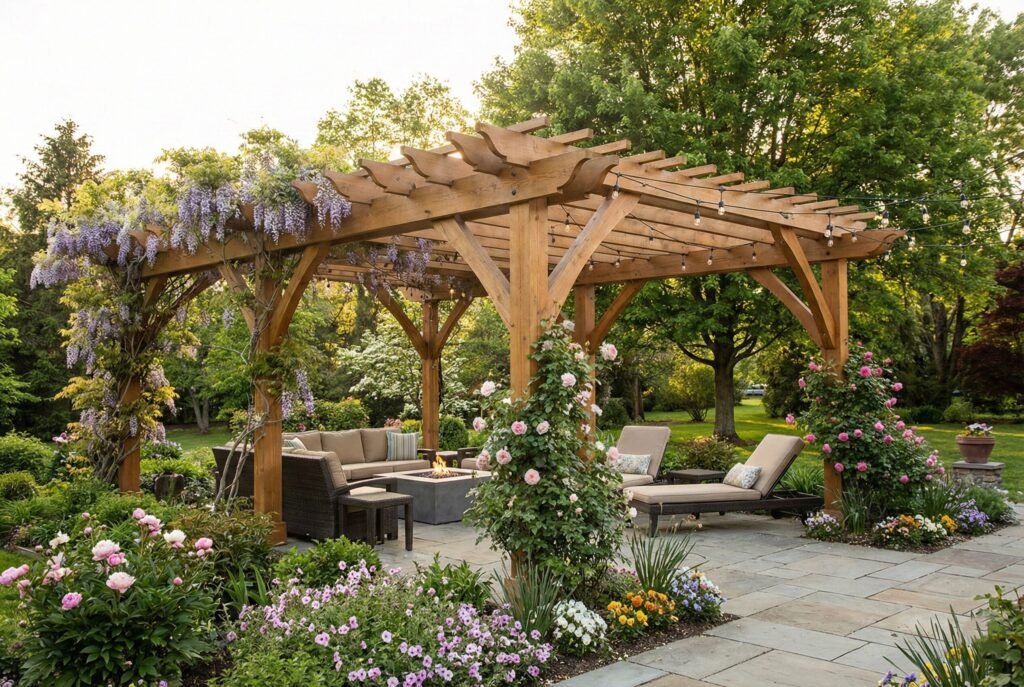
If you look at your backyard and feel like something is missing, you are not alone. A plain lawn or an empty patio can feel uninviting, especially during the hot summer months. The solution is often a pergola. A pergola is an outdoor structure featuring support columns and a roofing grid of beams and rafters. It provides partial shade, defines your outdoor living space, and adds immense visual appeal to your property.
Whether you want a cozy corner to relax with your dog, an outdoor dining area, or a stylish frame for climbing plants, a pergola is the ultimate backyard upgrade. This guide will walk you through the most beautiful pergola ideas to transform your outdoor space, along with tips on materials, sizing, and styling.
What is a Pergola and Why Do You Need One?
Before diving into the design ideas, it is helpful to understand the core benefits of adding a pergola to your landscape design.
A pergola does not have a solid roof like a gazebo or a pavilion. Instead, its slatted roof allows sunlight to filter through while still offering relief from direct UV rays. Here are a few reasons to consider building one:
Defines Your Space: A pergola acts like an outdoor room. It creates a clear boundary for a seating area, an outdoor kitchen, or a dining space, making your yard feel more organized and purposeful.
Increases Property Value: Well-built outdoor structures are highly attractive to homebuyers. A beautifully designed backyard increases the overall curb appeal and resale value of your home.
Provides Shade and Comfort: By adding a canopy, climbing vines, or choosing a louvered roof, you can control the amount of shade, making your patio comfortable even on hot afternoons.
Enhances Landscaping: Pergolas are the perfect support system for climbing plants like ivy, wisteria, or grapevines, blending architecture with nature.
14+ Beautiful Pergola Design Ideas
Here is a list of creative and functional pergola ideas to inspire your backyard makeover.
1 The Classic Cedar Wood Pergola
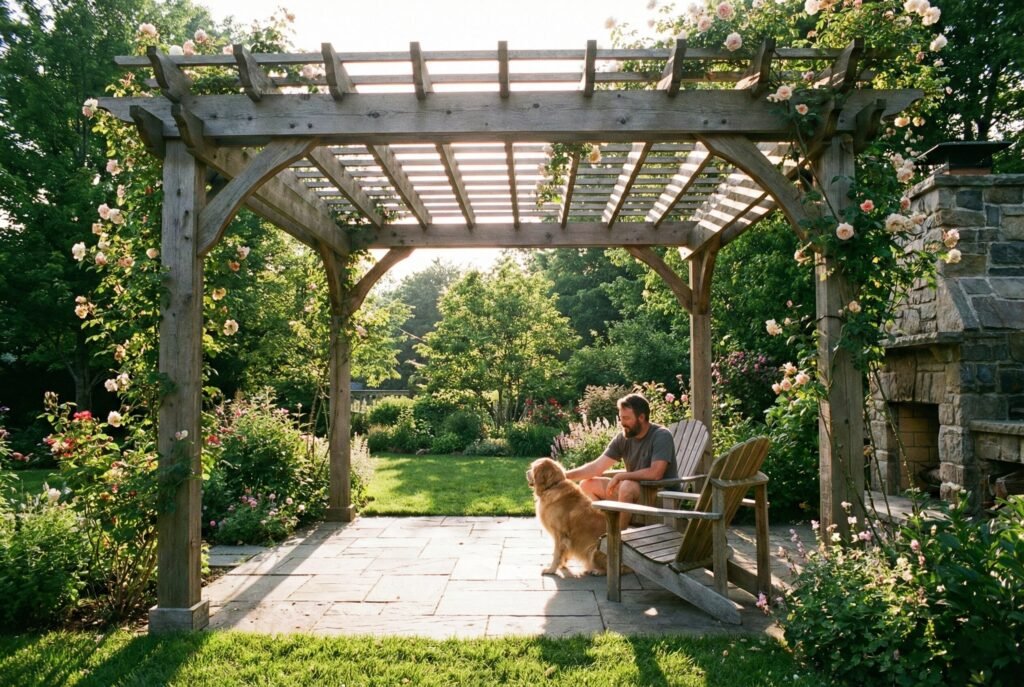
Cedar is the traditional choice for pergolas because it naturally resists rot, decay, and insects. A classic wood pergola brings a warm, rustic charm to your yard. You can leave it untreated to weather into a beautiful silvery gray or stain it to match your home’s exterior. This style works perfectly over a wooden deck or a stone patio.
2 Modern Minimalist Metal Pergola
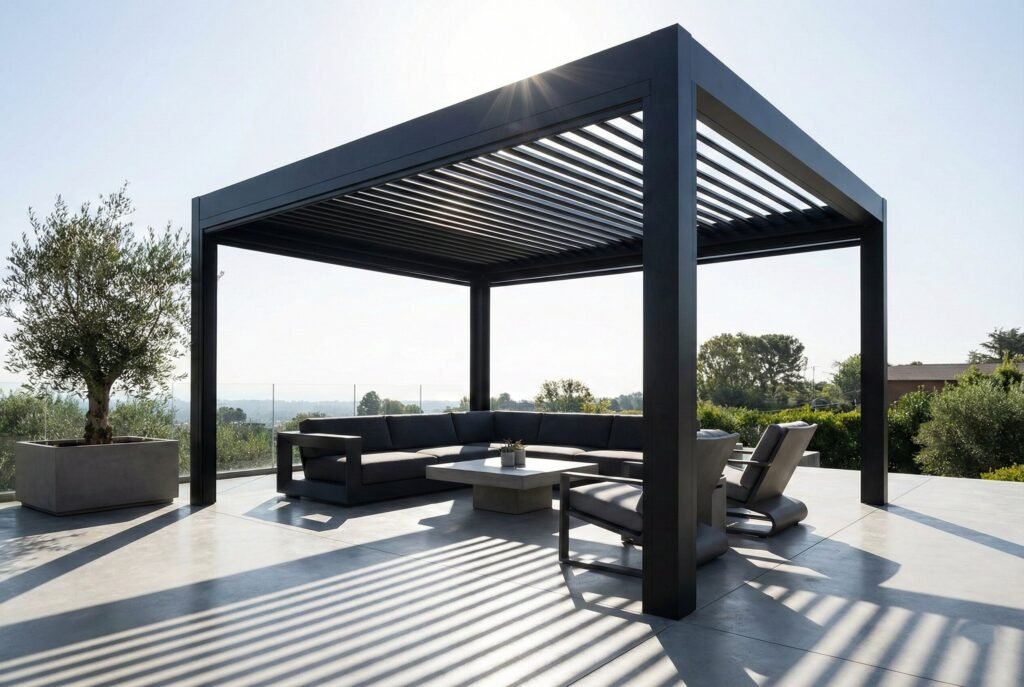
If your home has a contemporary design, a modern metal pergola is the way to go. Built from powder-coated aluminum or steel, these structures feature clean, straight lines and a sleek finish, usually in matte black, charcoal, or white. Metal pergolas require very little maintenance and will never warp or rot.
3 The Attached Patio Extension
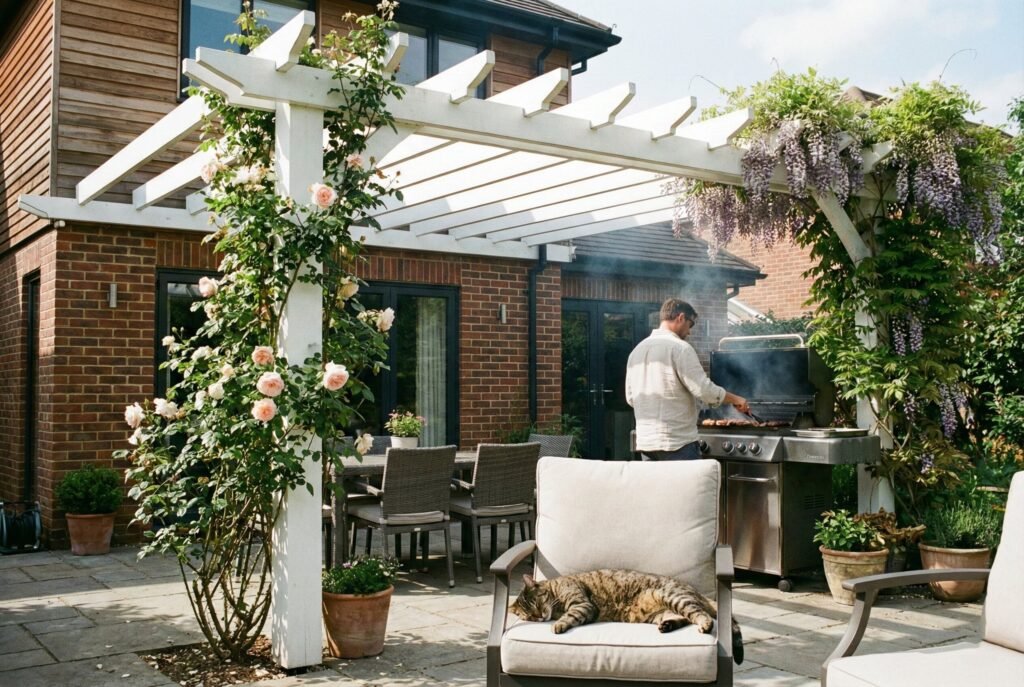
An attached pergola connects directly to the side or back of your house, extending your indoor living space outward. This is a highly efficient use of space and provides immediate shade right outside your back door. It is ideal for covering a patio where you do your daily grilling or enjoy your morning coffee.
4 The Poolside Cabana Pergola
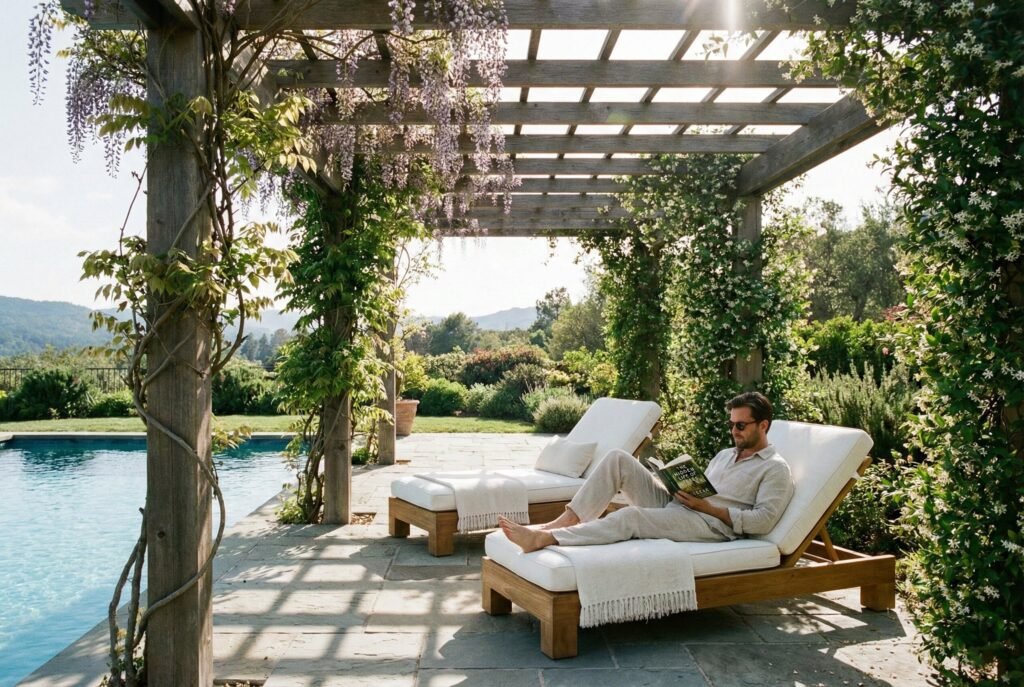
Turn your swimming pool area into a luxury resort by adding a pergola right at the water’s edge. A poolside pergola provides a much-needed shaded retreat from the glaring sun. You can furnish it with comfortable lounge chairs, a small outdoor refrigerator, and plenty of plush towels.
5 Romantic Pergola with Climbing Vines
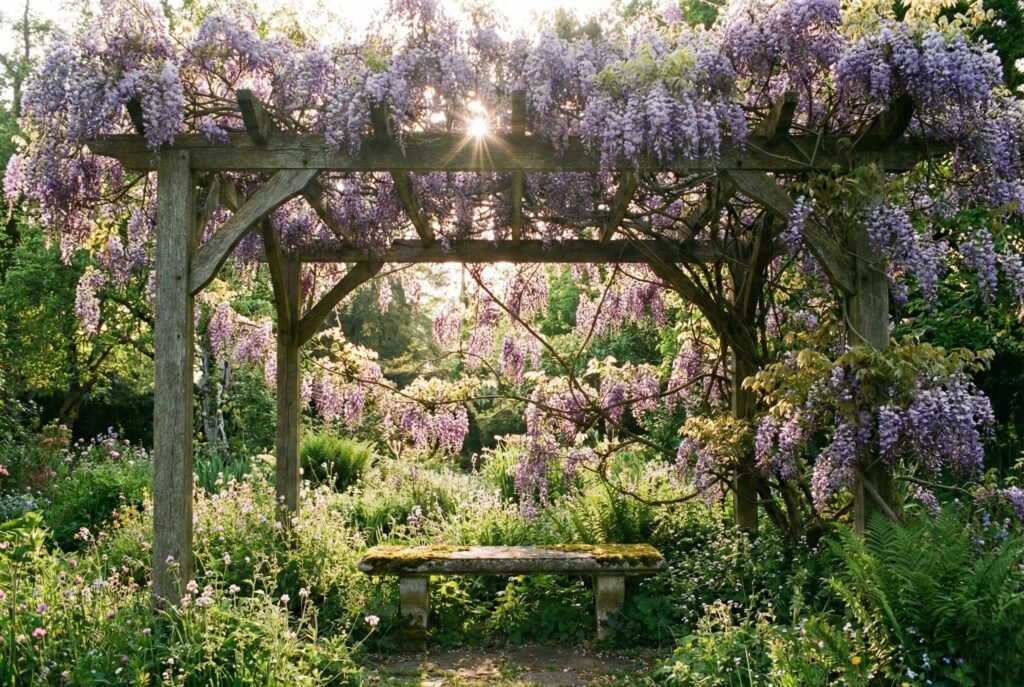
For a garden aesthetic that feels like a fairy tale, design a pergola specifically to support climbing plants. Wisteria, climbing roses, jasmine, and bougainvillea will eventually grow up the columns and weave through the roof beams, creating a living roof that offers deep, cool shade and a wonderful floral scent.
6 The Smart Louvered Roof Pergola
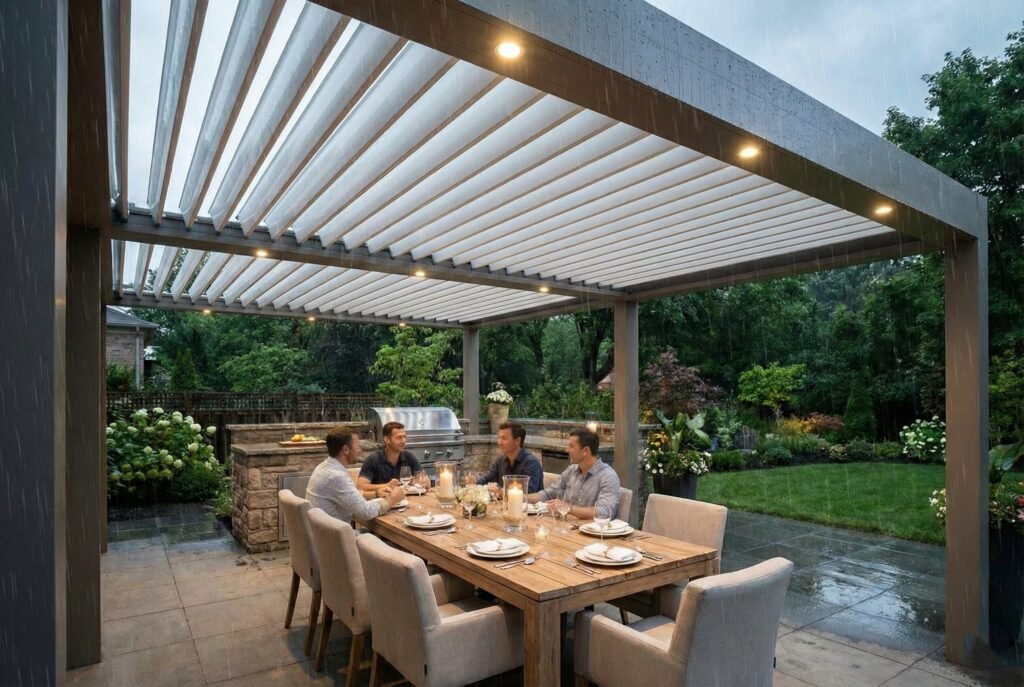
A louvered pergola takes outdoor living to the next level. Unlike a static slatted roof, a louvered roof features motorized or manual slats that you can tilt. You can open them completely to let the sun in, angle them for partial shade, or close them entirely to create a waterproof roof during a sudden rainstorm.
7 The Freestanding Garden Pathway Pergola
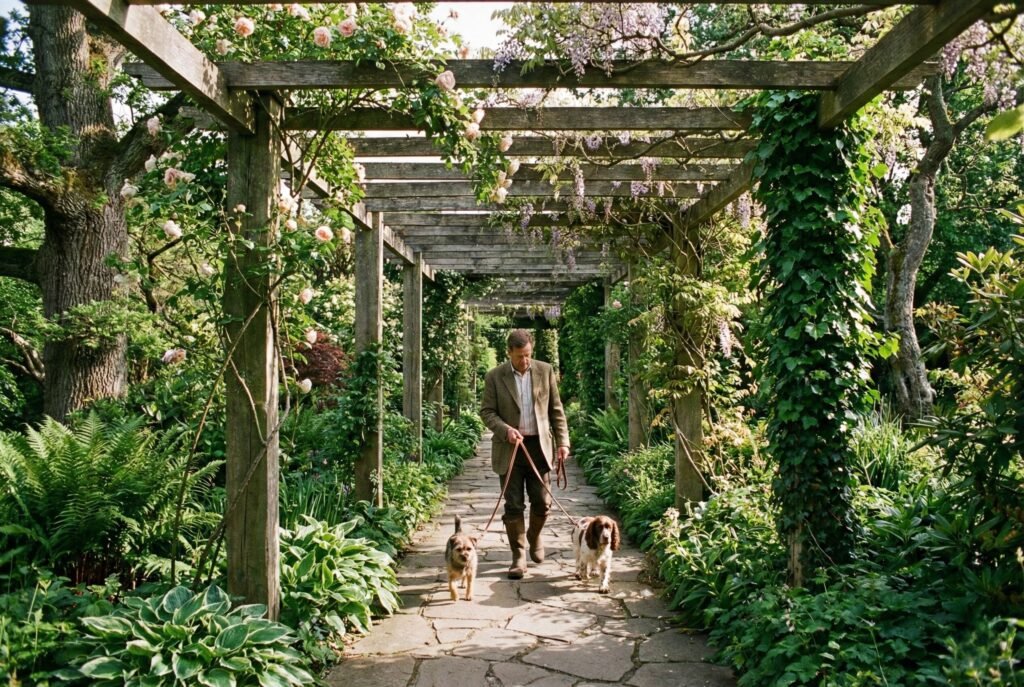
Pergolas do not just belong on patios. A narrow, freestanding pergola can be placed over a garden pathway or at the entrance to your backyard to act as a grand entryway. This is often referred to as an arbor. It guides the eye through your landscape design and creates a sense of depth.
8 Outdoor Kitchen and Bar Pergola
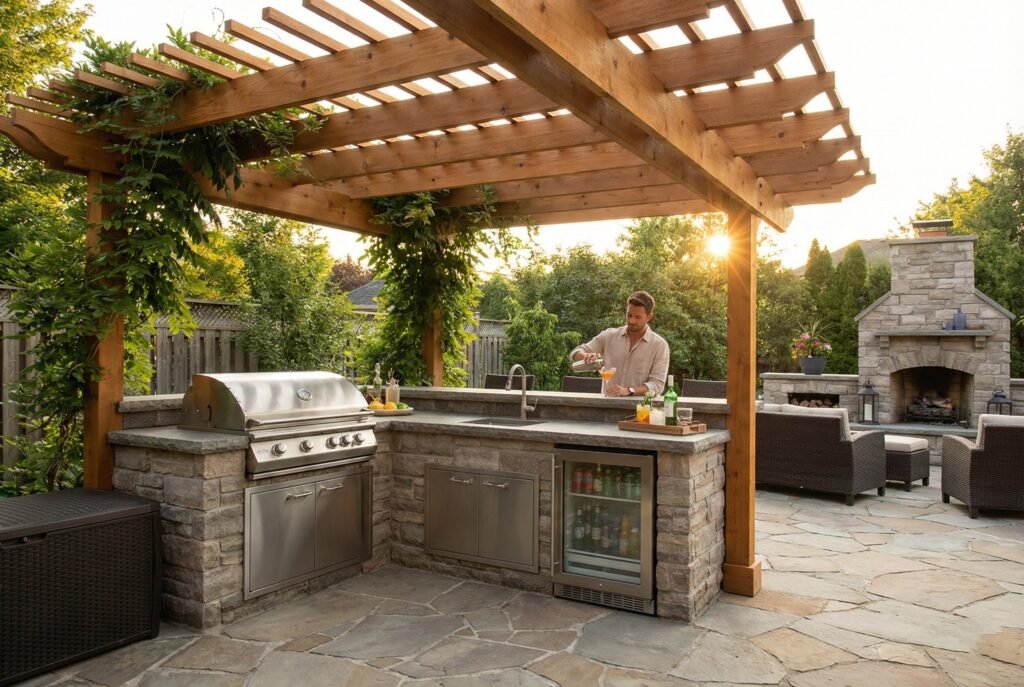
If you love cooking and entertaining, dedicate your pergola to an outdoor kitchen. Building a pergola over your grill, pizza oven, and outdoor bar island protects your expensive equipment from the elements and provides a comfortable shaded area for the chef.
9 The Cozy Corner Pergola
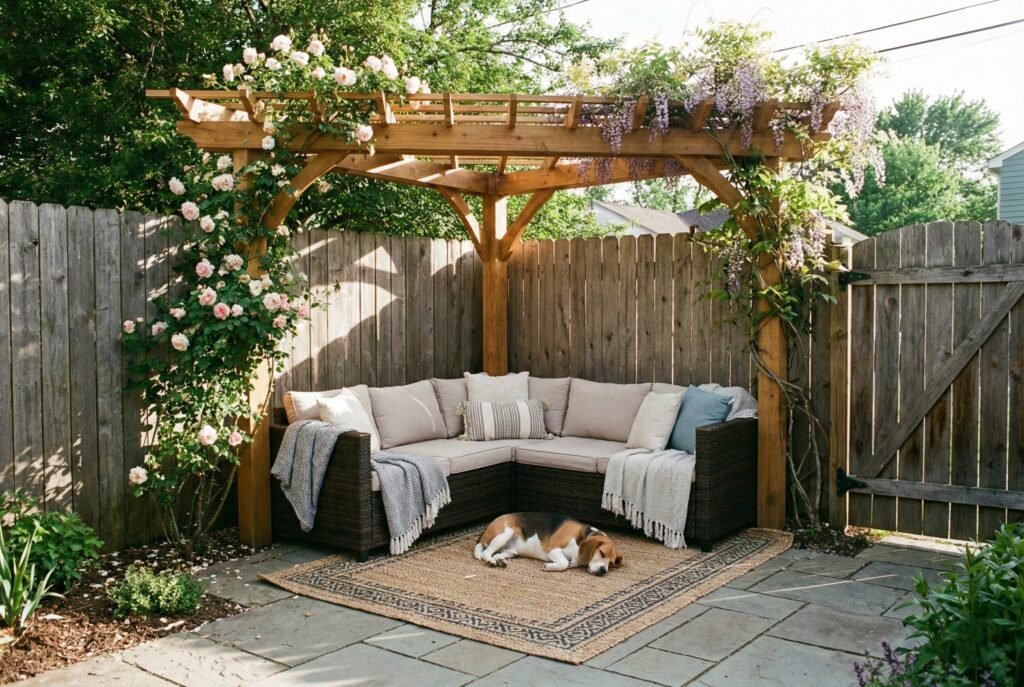
You do not need a massive backyard to enjoy a pergola. A corner pergola is built with a triangular or L-shaped roof designed to tuck neatly into the corner of your yard or patio. This maximizes your usable square footage while creating a cozy, secluded reading nook or conversation pit.
10 Pergola with a Built-In Fire Pit
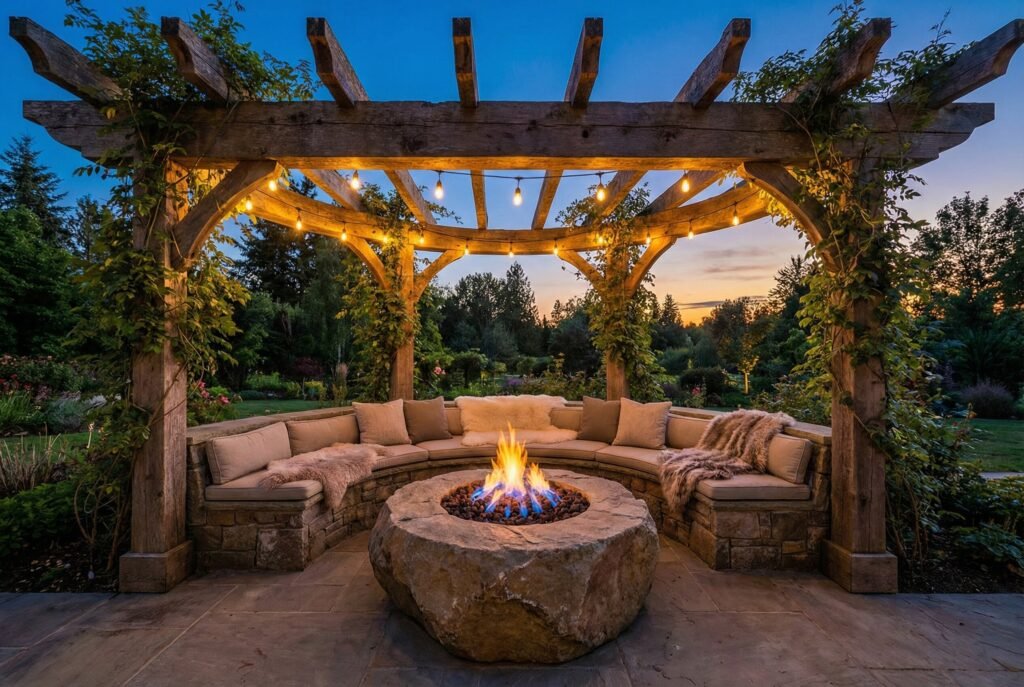
Combine the daytime shade of a pergola with the nighttime warmth of a fire pit. By placing a fire pit in the center of your pergola seating area, you create a space that is perfect for late-night gatherings. Just make sure the pergola roof is high enough and ventilated properly to handle the heat and smoke safely.
11 Bamboo Tropical Oasis Pergola
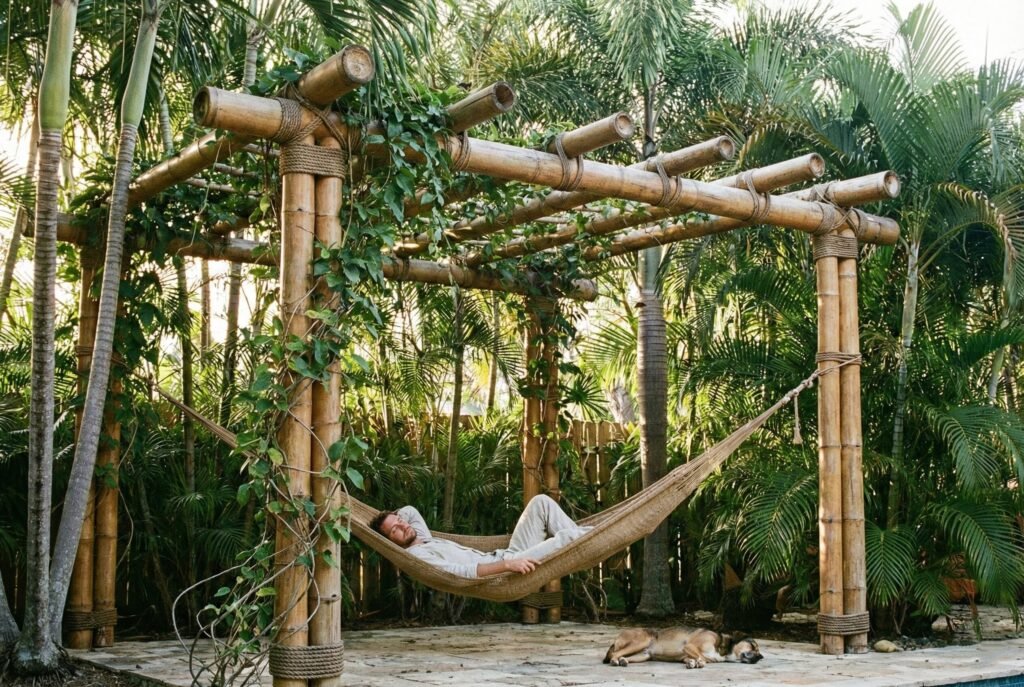
For a tropical, beach-inspired look, use bamboo. Bamboo poles can be used as the roofing material over a standard wooden frame, or the entire structure can be crafted from thick bamboo stalks. This style provides excellent, dense shade and pairs perfectly with tropical plants like palms and ferns.
12 The Drape and Curtain Pergola
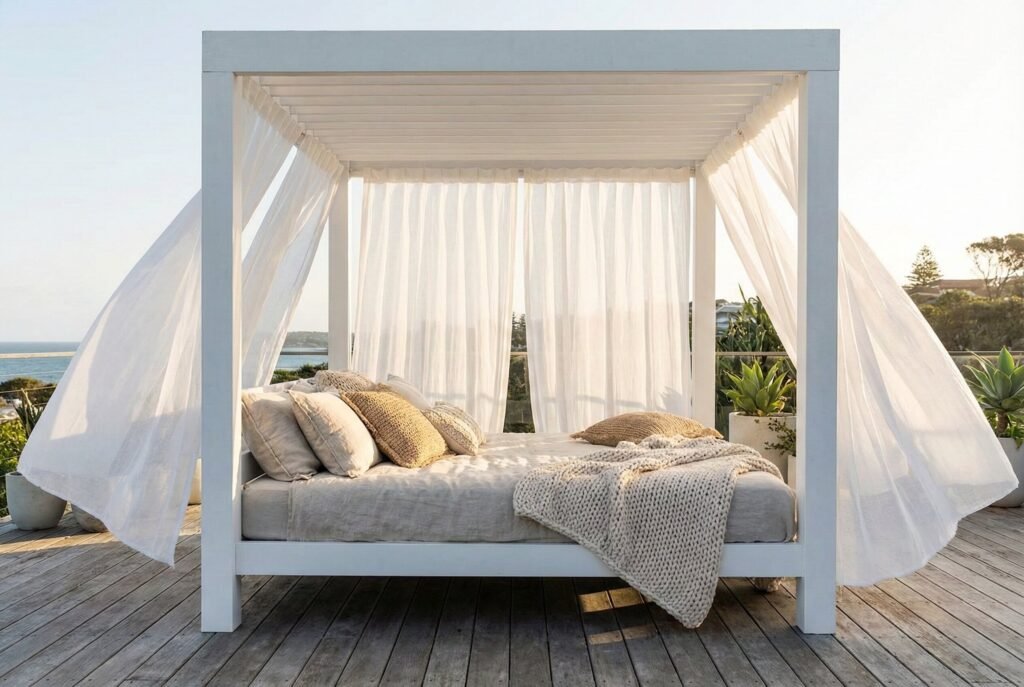
Adding outdoor curtains to the sides of your pergola instantly softens the look of the heavy wood or metal beams. Drapes add a layer of privacy, block out harsh wind, and can be tied back elegantly when not in use. Choose weather-resistant outdoor fabrics that will not fade in the sun.
13 High-Contrast Two-Tone Pergola
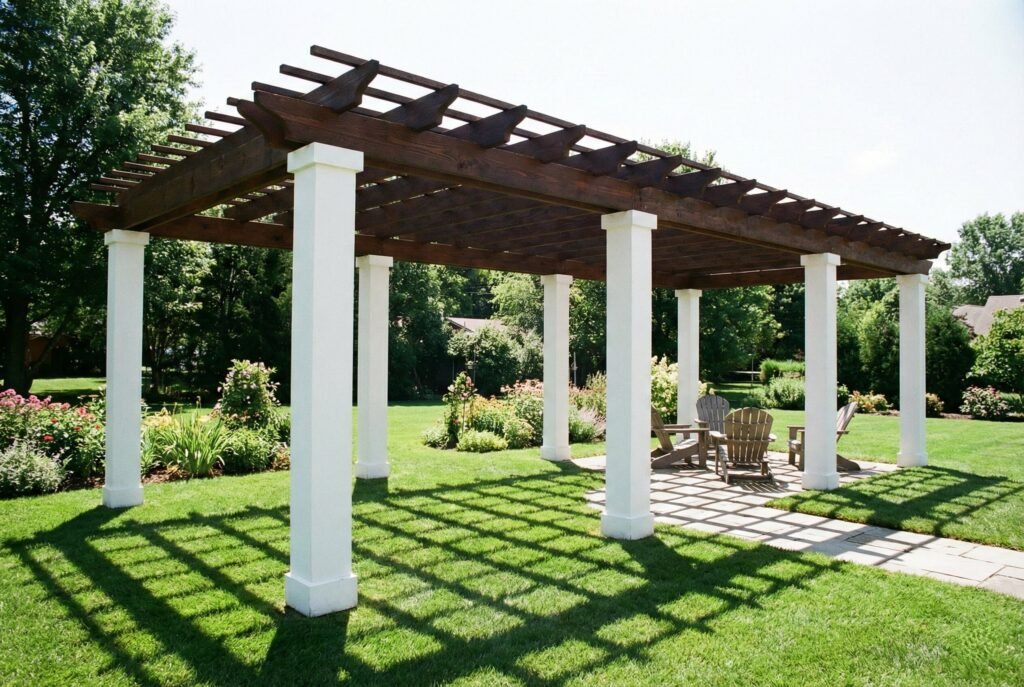
Break away from solid colors by using a two-tone design. For example, paint the support columns a crisp white to match your home’s trim, but leave the overhead beams stained in a dark walnut wood finish. This creates a striking visual contrast that elevates the architectural feel of the structure.
14 The Shade Sail Pergola Hybrid
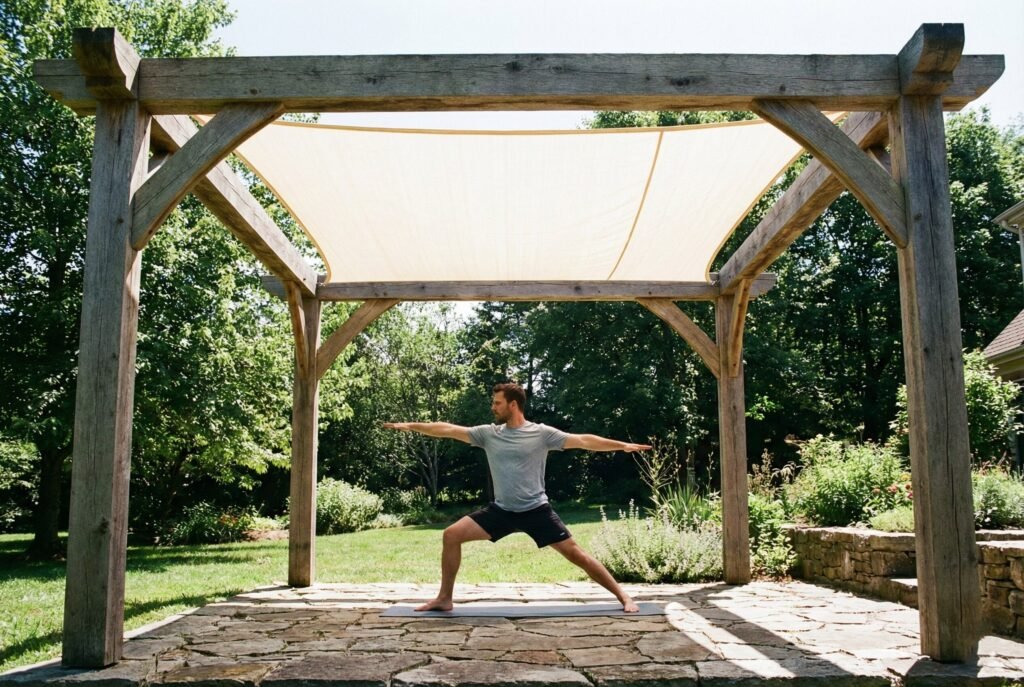
Instead of standard wooden rafters, stretch a heavy-duty fabric shade sail across the top of your pergola frame. This is an excellent, cost-effective way to get maximum UV protection and full shade coverage without the expense of a louvered roof. The fabric can be easily removed and washed at the end of the season.
Bonus Idea: The Integrated Planter Box Pergola
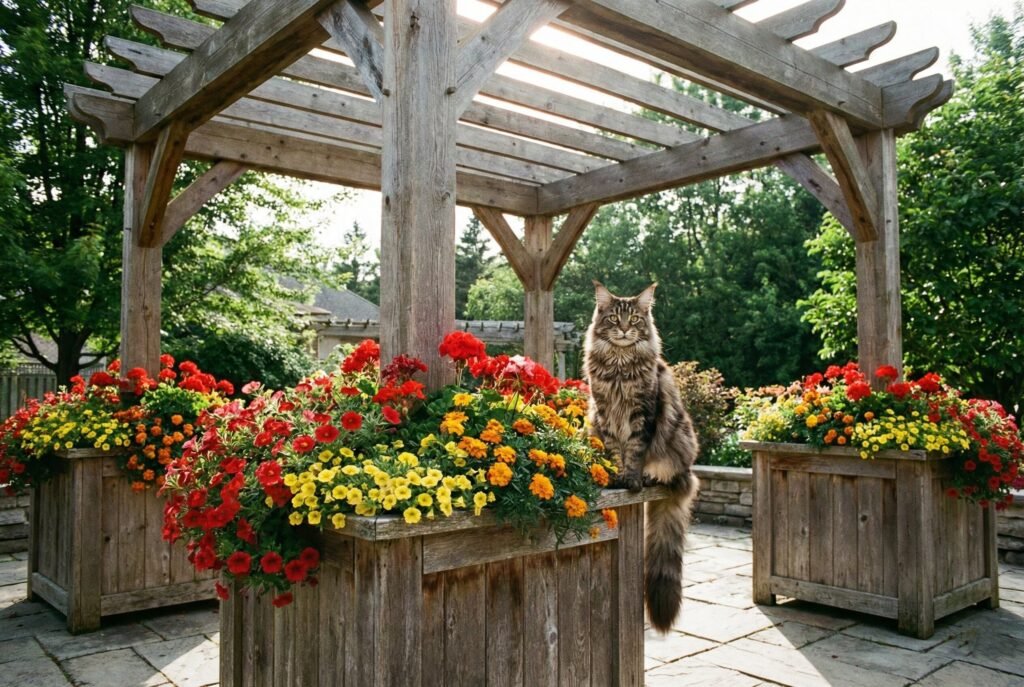
Anchor your pergola columns with heavy, built-in wooden planter boxes. This not only adds structural stability to the pergola, eliminating the need to dig deep concrete footings in some cases, but also gives you immediate planting space for flowers, herbs, or the base of your climbing vines.
How to Choose the Right Pergola Material
Selecting the right material is the most important decision you will make when planning your yard upgrade. Your choice will dictate the price, maintenance level, and lifespan of your pergola.
Wood
Pros: Highly customizable, easy to paint or stain, offers a classic and natural look, generally more affordable upfront.
Cons: Requires regular maintenance, including sealing, staining, or painting to prevent rot and weather damage.
Best Wood Types: Cedar, redwood, and pressure-treated pine.
Vinyl
Pros: Extremely low maintenance. It will not rot, warp, or attract insects. It simply needs to be washed down with a hose occasionally.
Cons: Limited color options (usually only white or off-white). It can sometimes look like plastic and may lack the premium feel of real wood or metal.
Metal (Aluminum and Steel)
Pros: Aluminum is lightweight, will never rust, and offers a sleek modern look. Steel is incredibly strong and durable. Both require almost zero maintenance when powder-coated.
Cons: More expensive than basic wood. Steel can rust if the protective coating is scratched and not repaired.
Fiberglass
Pros: Incredibly strong, lightweight, and weather-resistant. It can span much longer distances without needing center support columns, making it ideal for large patios. It can be painted any color.
Cons: Typically, the most expensive pergola material on the market.
Important SEO Considerations for Pergola Planning
To ensure your backyard project goes smoothly, keep these key factors in mind before building.
Check Local Building Codes and Permits: Depending on your city or homeowners association (HOA), you may need a permit to build an outdoor structure. Freestanding pergolas under a certain size often do not require permits, but attached pergolas almost always do.
Measure Your Outdoor Space: Ensure your patio or deck can accommodate the footprint of the pergola. Leave at least a few feet of walking space around the exterior of the structure to avoid a cramped feeling.
Consider Sun Orientation: Track how the sun moves across your yard during the day. You want to angle the rafters of your pergola so they block the most intense afternoon sunlight.
Think About Foundation and Footings: A pergola is heavy and acts like a sail in high winds. It must be securely anchored. This usually means sinking the posts into concrete footings in the ground or using heavy-duty brackets bolted directly into a concrete patio or deck joists.
Easy Maintenance Tips to Keep Your Pergola Looking New
Once your beautiful new yard feature is installed, a little bit of upkeep will ensure it lasts for decades.
Clean the Roof Annually: Leaves, pine needles, and debris can gather on top of the rafters. Sweep the top of the canopy at least once a year to prevent moisture buildup that can lead to rot or mold.
Inspect for Pests: If you have a wood pergola, regularly check the base of the posts and the joints for signs of termites, carpenter bees, or ants.
Wash the Columns: For vinyl and metal pergolas, a simple wipe-down with warm water and mild dish soap will remove dirt and bird droppings. For wood pergolas, a gentle power wash on a low setting will prepare the wood for a fresh coat of stain.
Trim Climbing Plants: If you are growing vines on your structure, prune them back aggressively in the late winter or early spring. If vines get too thick, their weight can actually damage the roof beams.
Conclusion
Adding a pergola is one of the most effective ways to upgrade your yard, boost your property value, and create an outdoor living space you will actually use. Whether you choose a classic cedar design, a modern metal frame, or a cozy corner retreat, the right pergola will completely transform how you experience your backyard.
Take your time choosing the right materials, consider how you want to use the space, and do not be afraid to add personal touches like climbing plants, string lights, or comfortable seating.